


 русский
 Español
 Français
Home / News / Industry News / Why Coating Adhesion on Aluminum and Stainless Steel Is Harder to Achieve — and How to Address It
Industry News

Forms a stable, dense oxide layer almost immediately on exposure to air. This passive oxide acts as a barrier between the metal and the coating, limiting the interfacial chemical interactions that drive strong adhesion.
The chromium-rich passive film that gives stainless steel its corrosion resistance is chemically inert and low in surface energy — both properties that make it difficult for coatings to wet and bond effectively.
Zinc surfaces can be reactive in some conditions, but their texture and the zinc oxide/carbonate layer that develops create an interface that behaves very differently from steel, often resulting in adhesion that degrades faster under humidity or impact.
Plated layers such as chrome, nickel, or gold are extremely smooth and chemically stable — a combination that minimises mechanical interlocking and reduces the chemical bonding sites available to the coating.
Mechanical abrasion and chemical pre-treatment improve adhesion by roughening the surface or creating more reactive sites — but these effects are sensitive to process consistency. In a high-throughput line coating multiple substrate types simultaneously, or where part geometry limits surface treatment coverage, the results can vary significantly between batches and across a single part. A formulation-level adhesion solution works independently of pre-treatment variability.
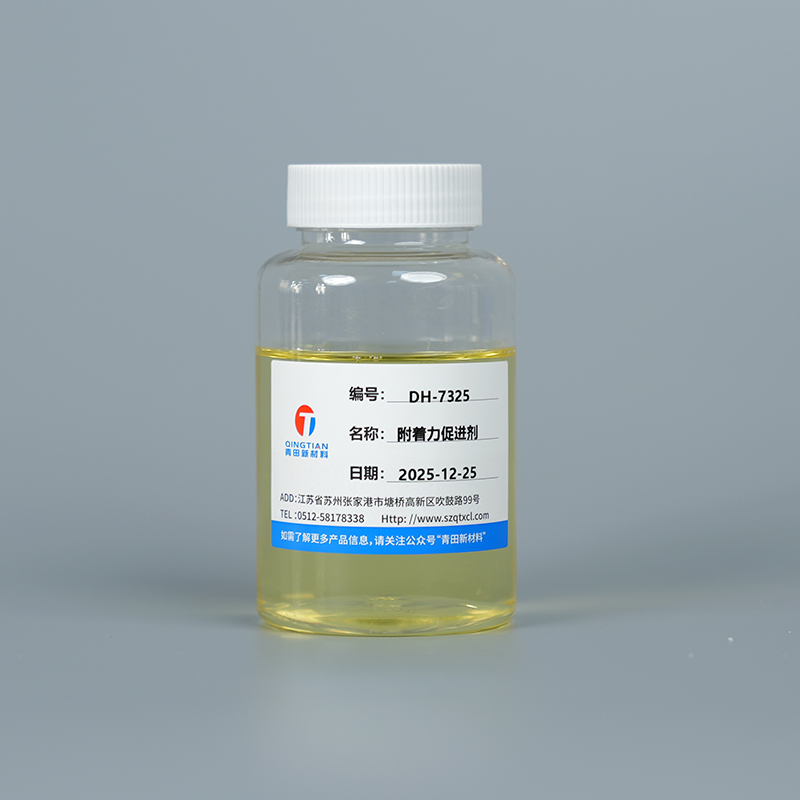
ADP is an adhesion promoter specifically designed for difficult-to-coat metal substrates — aluminum, zinc, stainless steel, and electroplated surfaces — where the passive surface chemistry limits interfacial bonding. It works at the coating-substrate interface to improve the quality and durability of that bond, with benefits that carry through to impact resistance, flexibility under bending, and solvent wipe resistance.
| Adhesion to Difficult Metals | Improves bonding at the coating-substrate interface on aluminum, zinc, stainless steel and electroplated surfaces |
| Impact Resistance | Supports better film integrity under mechanical impact — reducing chipping and delamination at the point of impact |
| Flexibility Under Bending | Helps the film maintain adhesion when the substrate is bent or formed, reducing crack initiation at the interface |
| Solvent Wipe Resistance | Contributes to improved surface durability against repeated solvent cleaning or wiping cycles |
| Baking Condition Flexibility | Can help reduce the temperature requirement of the baking step, supporting lower-energy or heat-sensitive substrate applications |
| Substrate | Adhesion Improvement | Impact Resistance | Solvent Wipe Resistance |
| Aluminum | Good | Good | Good |
| Zinc / Galvanized | Good | Good | Good |
| Stainless Steel | Good | Good | Good |
| Electroplated Surfaces | Good | Good | Good |
Can ADP replace phosphating or other chemical pre-treatment steps?
ADP is a formulation additive that improves adhesion through the coating system itself — it is not a direct replacement for substrate pre-treatment, but it can supplement pre-treatment or compensate for variability in pre-treatment consistency. The best approach depends on the specific production environment and adhesion specification.
Is it suitable for use in both primer and topcoat layers?
Yes — because it addresses the substrate-coating interface, it is most commonly used in primer formulations, but can also be evaluated in direct-to-metal topcoat systems depending on the coating architecture.
Does it affect pot life or storage stability?
At normal dosage levels, ADP is formulated to be compatible with standard coating formulations without significantly affecting pot life or shelf stability. A storage stability check on the specific formulation is always recommended before production use.
Which coating systems is it compatible with?
ADP has been evaluated across a range of industrial coating systems. Please request technical data for specific compatibility information relevant to your resin type and cure system.
The adhesion challenges on aluminum, stainless steel, zinc, and electroplated surfaces are rooted in substrate surface chemistry — not coating quality. Formulation-level adhesion optimization addresses the root cause that surface preparation alone cannot fully control.
Facing adhesion failures on aluminum, stainless steel, or electroplated surfaces? Request technical information on ADP adhesion promoter for your specific substrate and system.
Explore Adhesion Promoters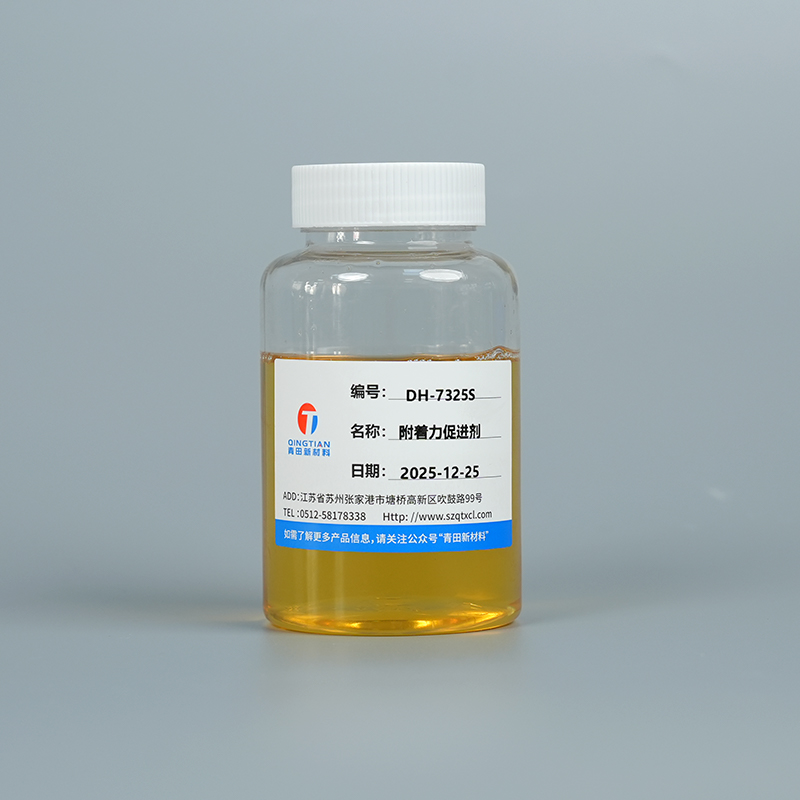
 Wholesale Paint/ Coating Additives Manufacturers
Custom Industrial Chemical Solutions Suppliers
Wholesale Paint/ Coating Additives Manufacturers
Custom Industrial Chemical Solutions Suppliers