русский
 Español
 Français
Industry News
Open a paint container that has sat in a warehouse for three months, and you may find a hard, dense layer of pigment at the bottom. Re-dispersing that sediment wastes time, can leave lumps in the coating, and is a common quality complaint in the paint industry. An anti-settling agent is the functional additive that prevents this problem: it keeps pigment, filler, and other solid particles suspended in the liquid formulation, so the paint stays uniform from the first day of storage to the final application.
What Is an Anti-Settling Agent?
An anti-settling agent, also called an anti-sedimentation or suspension agent, is a coating additive designed to stop pigment and filler particles from settling to the bottom of a container during storage. It works by modifying the rheology of the liquid paint: at rest, the formulation builds internal structure to hold particles in place; under the shear of stirring, pumping, or spraying, that structure relaxes so the paint flows and levels normally.
Anti-settling agents are not conventional thickeners, even though most of them raise viscosity. The goal is a reversible network, strong enough to support solids when the paint is stationary but weak enough to break down under mechanical force. If a paint becomes hard to pour or apply, it has been over-thickened, not properly structured.
Why Do Pigments Settle in Paints and Coatings?
Settling is gravity acting on density differences. Most pigments and fillers are denser than the resin solution around them, so they drift downward over time. Stokes' law gives three practical rules:
- Particle size matters most. Settling rate is proportional to the square of particle radius: a particle twice as large settles roughly four times faster.
- The density gap between the particle and the liquid sets the driving force. Heavy pigments such as barium sulfate settle faster than lighter organic pigments.
- Viscosity resists settling. The more viscous the medium, the slower any particle moves through it.
Temperature amplifies all of this. Warm storage lowers viscosity and increases molecular motion; cold storage can trigger pigment flocculation. This is why one formula can stay stable for months in a mild climate yet form hard sediment after a single hot season in an unconditioned warehouse.
How Do Anti-Settling Agents Work?
Anti-settling agents operate through three mechanisms, and most commercial products combine at least two.
The first and most important is the formation of a three-dimensional network. Many agents build a loose, cage-like structure throughout the liquid. At rest, this network traps pigment particles and holds them in position; under stirring or pumping, it breaks down and viscosity drops; when shear stops, it rebuilds. This reversible behavior is called thixotropy, and it is why a well-formulated paint can be thick in the can yet still spray, brush, and level smoothly.
The second mechanism is increased low-shear viscosity. Some agents make the liquid highly resistant to flow at very low shear rates, so particles barely move over months of storage. Think of a seed suspended in honey: it is still denser, but the medium prevents it from going anywhere.
The third mechanism is adsorption onto particle surfaces. Polymeric agents attach to the pigment surface and form a protective layer that increases the effective volume of the particle and prevents tight packing. Even when some settling occurs, the sediment stays soft and loose, and brief agitation re-disperses it.
High-performance systems usually combine the first and third mechanisms: the agent anchors to the particle surface with one end while the rest of the molecule joins the network. The result is physical support plus long-term re-dispersibility.
Main Types of Anti-Settling Agents
Anti-settling agents fall into three broad families — inorganic materials, organic waxes, and polymers — with composite products that combine families growing in popularity.
Inorganic agents: fumed silica and organoclays. Fumed silica forms a three-dimensional network through hydrogen bonds between surface silanol groups. It performs especially well in polar solvent systems. Organoclays, notably organic bentonite, work by exfoliating layered clay platelets into thin sheets that build a thixotropic network. They are a workhorse in solvent-based industrial coatings: efficient, economical, and compatible with most resin systems.
Organic waxes: polyamide and polyethylene waxes. Polyamide wax is a standard in solvent-based paints: it swells when heated in the solvent and forms a fibrous network on cooling. The result is strong anti-settling performance with relatively little effect on leveling. Polyethylene waxes, commonly supplied as micronized powders, create a softer structure and appear often in printing inks and industrial finishes.
Polymer agents: cellulose ethers and associative thickeners. Cellulose ethers such as ethyl hydroxyethyl cellulose (EHEC) thicken water-based formulations and keep pigment suspended through a combination of viscosity increase and network formation. Polyurethane associative thickeners and acrylic emulsion thickeners do similar work in modern waterborne paints and let the formulator shape the entire rheological profile rather than adding one isolated function. For aqueous formulations, the DH6930S water-based anti-settling agent from Suzhou Qingtian is a representative polymer-type option designed for direct use in latex and water-reducible coatings.
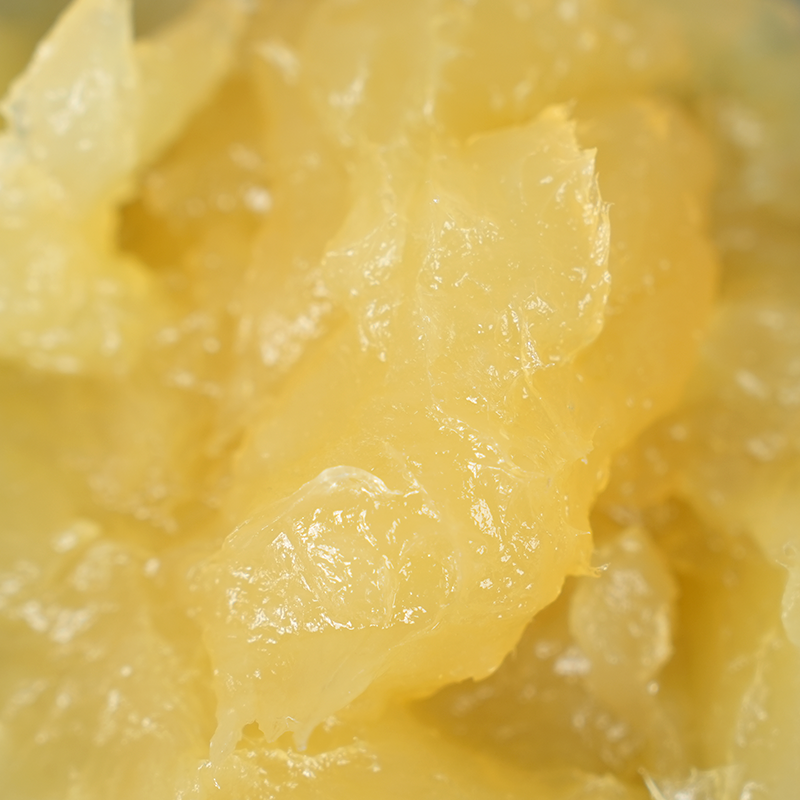 Custom DH-6930S Water-based Anti-settling Agent Suppliers, Factory - Suzhou QingSuzhou Qingtian New Material Co., Ltd. is China DH-6930S Water-based Anti-settling Agent Suppliers and Factory, details:Excellent thixotr...View Product →
Composite and functionalized agents. Compounded products combine inorganic particles, organic wax, and polymeric dispersants in a single additive to solve several problems at once, such as anti-settling with anti-sagging or controlled matting. They suit formulations with multiple performance targets and limited room for separate additions.
Solvent-Based vs. Water-Based Anti-Settling Agents
The chemical environment of a solvent-based paint differs fundamentally from that of a waterborne system, and that difference dictates the choice of anti-settling agent.
Solvent-based systems. Organoclays, polyamide waxes, and fumed silica are the established choices. Organoclays need a polar activator and sufficient shear to exfoliate. Polyamide waxes must reach an activation temperature during grinding to swell and build their network. Fumed silica requires high dispersion energy to break apart agglomerates before it can form a network. All are proven, yet each demands specific process conditions. Formulators seeking a ready-optimized product for solvent-borne coatings can evaluate the DH6900 anti-settling agent for solvent-based systems.
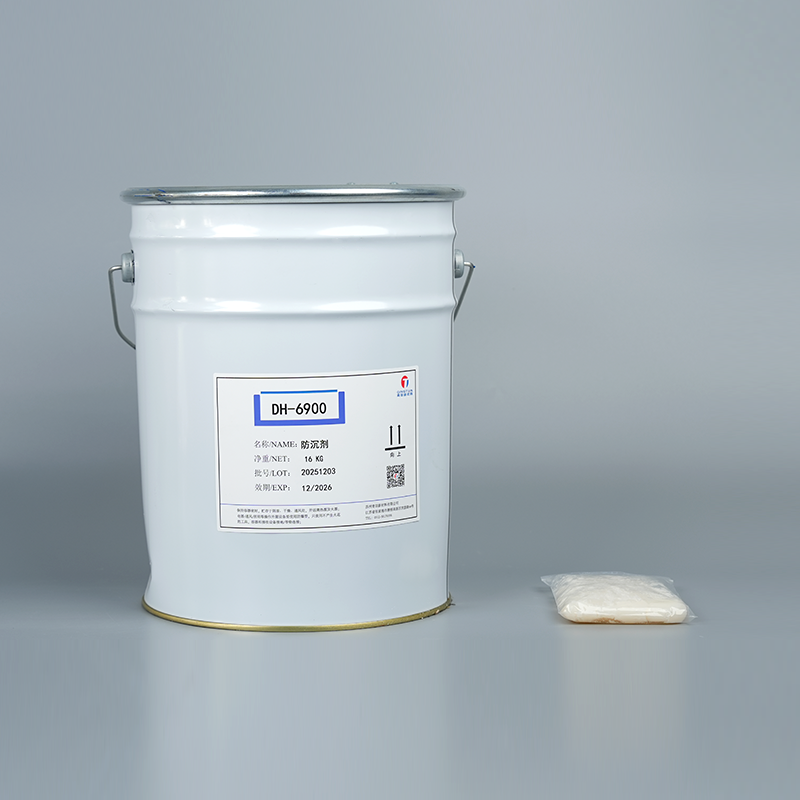 Custom DH-6900 Anti-settling Agent Suppliers, Factory - Suzhou Qingtian New MateSuzhou Qingtian New Material Co., Ltd. is China DH-6900 Anti-settling Agent Suppliers and Factory, details:Forms a gel network structure ...View Product →
Water-based systems. Water compatibility comes first. Associative polyurethane thickeners, alkali-swellable acrylic thickeners, cellulose ethers, and water-dispersible wax emulsions are the usual choices. These agents interact directly with the continuous water phase and often deliver the entire rheological profile of the paint rather than only anti-settling behavior. In practice, the thickener and anti-settling agent in a waterborne formulation are often the same product. A practical starting point is the water-based anti-settling agent solutions from Suzhou Qingtian, available in multiple grades for different resin and pigment systems.
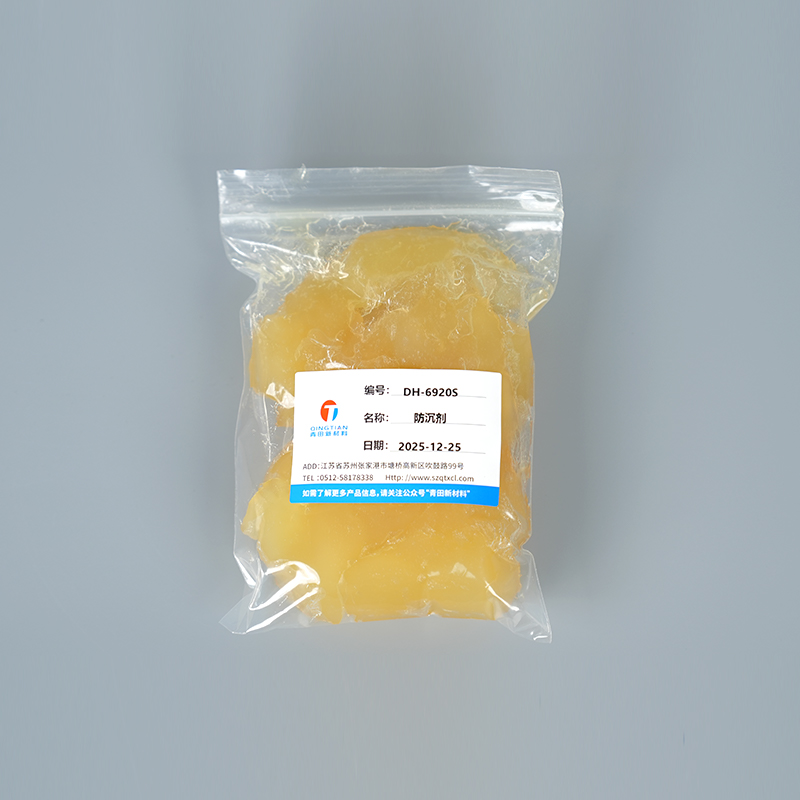
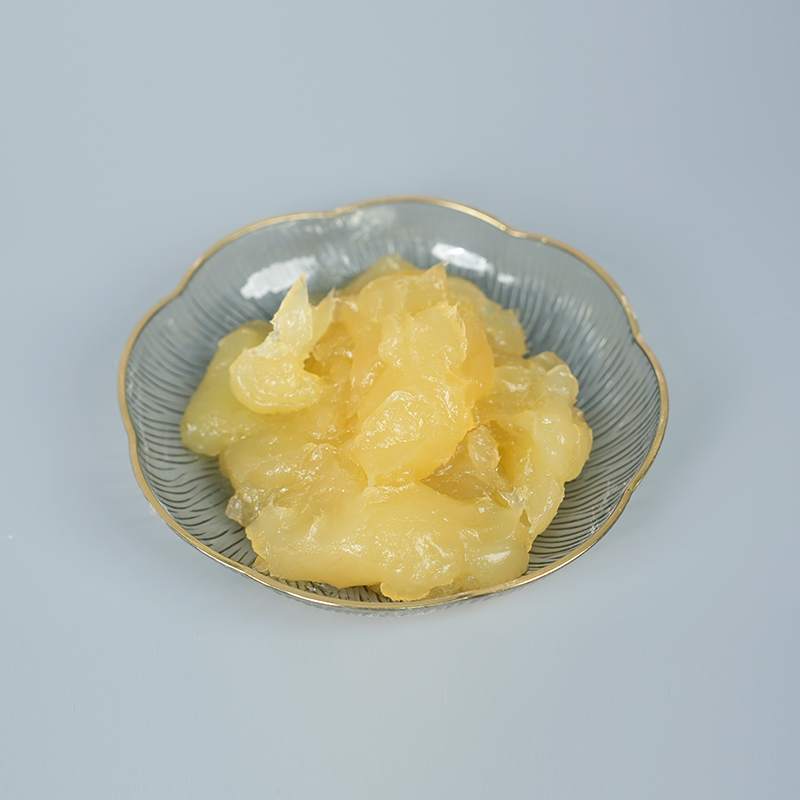
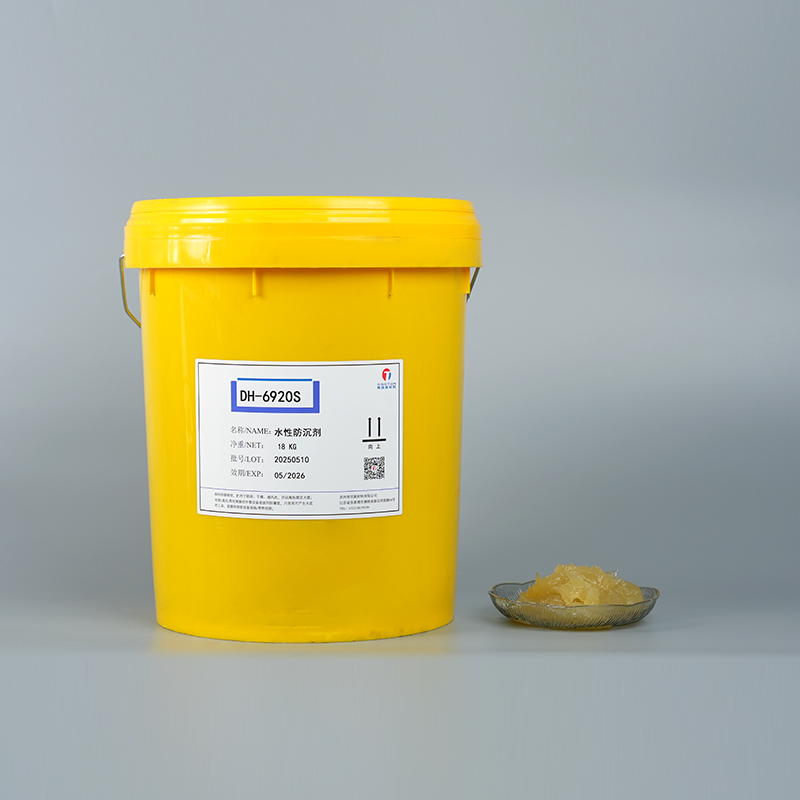 Custom DH-6920S Water-based Anti-settling Agent Suppliers, Factory - Suzhou QingSuzhou Qingtian New Material Co., Ltd. is China DH-6920S Water-based Anti-settling Agent Suppliers and Factory, details:Excellent thixotr...View Product →
| Consideration | Solvent-Based Systems | Water-Based Systems |
|---|---|---|
| Typical agent types | Organoclay, polyamide wax, fumed silica | PU associative thickeners, acrylic thickeners, cellulose ethers, wax emulsions |
| Activation method | Heat, shear, or polar activator | Simple dispersion; some acrylic types need pH adjustment |
| Typical dosage (total formula weight) | 0.2% – 2.0% | 0.1% – 2.0% |
| Main risk | Under-activation causing weak structure | Over-thickening or foam during incorporation |
| Film property impact | Low if properly dispersed | May affect gloss and water resistance at higher dosage |
How to Choose the Right Anti-Settling Agent for Your Formulation
Selection starts with the system, not with the additive. Work through this checklist before comparing products:
- Resin system type. Solvent-borne, water-borne, and solvent-free formulations each restrict the list of compatible agent families. An organoclay will not function well in a waterborne acrylic; a polyurethane thickener will create little structure in an aliphatic solvent system.
- Pigment and filler characteristics. Density, particle size, and shape set the strength of the settling drive. High-density pigments such as barium sulfate and zinc phosphate need stronger anti-settling support than lighter organic pigments.
- Target rheological profile. Decide whether the paint should be thixotropic, pseudoplastic, or near-Newtonian. The anti-settling agent is a major contributor to this profile and must be selected together with the thickener and dispersant.
- Compatibility with other additives. Dispersants modify particle surfaces and can strengthen or weaken the anti-settling network; leveling agents and defoamers may also interfere. Test the full additive package early.
- Film performance requirements. When gloss and smoothness are critical, choose an agent with minimal effect on leveling. When the coating is applied at high film build, the anti-settling agent should also offer sag resistance.
- Storage and logistics conditions. High-temperature warehouses, long transit times, and vibration accelerate settling. An agent that barely passes lab storage tests may fail under real supply-chain conditions.
Apply this framework first, then evaluate individual products. To compare formulated options across both solvent and water systems, browse the anti-settling agents product range.
Anti-Settling Agent Dosage and Incorporation Tips
Dosage is product-specific, but a general industry reference range is 0.1% to 3.0% by weight of the total formulation; most anti-settling agents work in the 0.2% to 1.5% portion of that range. Exceeding the supplier's recommendation can cause over-thickening, poor leveling, reduced gloss, or difficulty pumping and applying the paint.
Incorporation method matters as much as dosage:
- Add the anti-settling agent during the pigment dispersion stage, before the letdown, so it experiences the highest shear of the process.
- For temperature-activated waxes, reach and hold the supplier-specified activation temperature long enough for full swelling.
- For organoclays, add the polar activator in the recommended ratio; without it, the clay will not exfoliate and the network will not develop.
- For water-based associative thickeners, dilute the product before addition and adjust pH when the product type requires it.
- Premix fumed silica or wax powders with resin or solvent before charging the mill to prevent lumping.
- Verify every new combination with a storage stability test; four weeks at 50°C is a common screening protocol.
Final dosage and procedure must be confirmed against the supplier's technical datasheet and validated on your own paint. An anti-settling agent interacts with resin, pigment, dispersant, and solvent at the same time; only a real storage test on the actual formulation will prove the choice.
Work With a Trusted Anti-Settling Agent Supplier
An anti-settling agent rarely works alone. It combines with dispersants, thickeners, defoamers, and leveling agents; its performance depends as much on the supplier's technical guidance as on the product chemistry. When evaluating a supplier, look for a product line that covers both solvent-based and water-based systems, formulation-level technical support, and a willingness to help diagnose storage-stability problems rather than simply sell another drum of additive.
Suzhou Qingtian New Material Co., Ltd. supplies anti-settling solutions for both solvent-borne and waterborne coatings, with grades designed for straightforward incorporation and consistent performance. If you are dealing with pigment settling, hard sediment, or unstable viscosity, review the available product range first, then discuss the testing protocol with the technical team before scaling up.