


 русский
 Español
 Français
Home / News / Industry News / Label Ink Adhesion Normal at Printing — Why Does It Shed After Refrigeration?
Industry News

In food label, beverage packaging, daily chemical label, and medical label printing, a consistent pattern is encountered: the label has normal adhesion immediately after printing, all tests meet requirements — but after cold storage or freezing, the ink begins to shed, peel, or can be separated from the substrate even by light scratching.
In most cases, this is not caused by the ink itself. The problem is the combined result of adhesion system, substrate characteristics, environmental change, and formulation matching acting together.
After printing is complete: ink adhesion is normal, film appearance is complete, ambient-temperature testing meets requirements. But these only indicate stable performance under ambient conditions — they cannot guarantee the same adhesion effect after entering cold storage or freezing environments.
After entering the cold storage environment: temperature drops, substrate contracts, and the ink layer also changes accordingly. If the dimensional change of ink and substrate is not synchronised, interfacial stress gradually increases and adhesion may decline.
When products are taken from a cold environment, water vapour in the air readily forms condensation on the label surface. Long-term exposure to cold-warm cycling: moisture continuously penetrates the interface, local bonding strength decreases, and ink becomes more prone to shedding. Cold environments therefore test not only low-temperature resistance but also moisture resistance.
Common label materials — PET, PP, PE, synthetic paper, coated paper — differ in surface energy, shrinkage rate, and low-temperature resistance. Even using the same ink, final performance may differ significantly across substrates.
Beyond substrate, the ink system is equally critical. If resin-substrate compatibility is insufficient, the adhesion system is incomplete, or flexibility is poor — adhesion decline and ink shedding are more likely in low-temperature environments.
Because when the product leaves the factory: the ink is cured, ambient adhesion is normal, and appearance has no abnormality. After cold storage, transport, and cold-warm cycling: materials continuously contract and expand, interfacial stress continuously changes, and adhesion performance gradually declines — hidden problems gradually reveal themselves.
Label ink shedding after cold storage is fundamentally the combined result of low-temperature environment, cold-warm cycling, substrate characteristics, and ink adhesion system acting together. When analysing cold-storage ink shedding, beyond the ink itself, substrate type, adhesion system, additive matching, and actual service environment all need comprehensive evaluation to improve long-term label stability in cold environments.
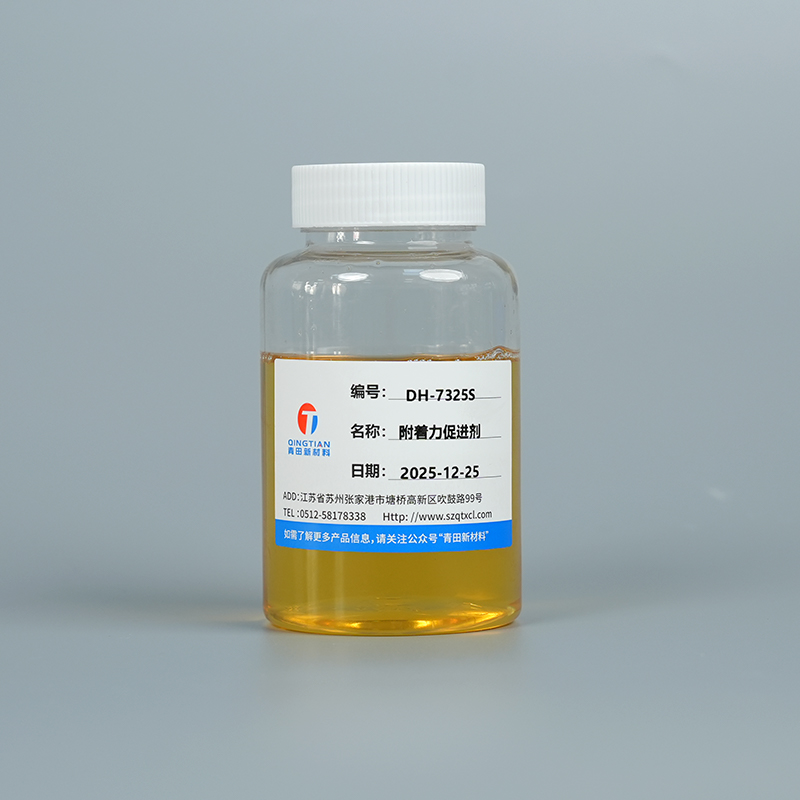
 Wholesale Paint/ Coating Additives Manufacturers
Custom Industrial Chemical Solutions Suppliers
Wholesale Paint/ Coating Additives Manufacturers
Custom Industrial Chemical Solutions Suppliers