


 русский
 Español
 Français
Home / News / Industry News / fx Carbon Black and Titanium Dioxide Not Dispersing Well? Here Is How to Fix It
Industry News

In coating and ink production, whether pigments can be fully wetted and stably dispersed directly affects system viscosity, hue, gloss, and storage stability. Titanium dioxide, lithopone, iron oxide, and carbon black, if inter-particle agglomeration remains present during dispersion, easily cause an unstable system state.
This influence does not only show during the production stage — it can further be reflected in the final coating film, for example as uneven surface, gloss reduction, or colour non-uniformity. Improving the wetting and dispersion state of pigments is therefore an important step in enhancing coating film performance.
Inadequate bonding between pigment particles and resin easily forms agglomeration, affecting subsequent grinding and dispersion efficiency.
Unstable pigment dispersion causes changes in system viscosity and reduced colour consistency between batches.
Pigments not maintaining a stable dispersed state readily develop settling, caking, or particle re-agglomeration after extended storage.
Non-uniform pigment distribution affects coating film surface state — uneven surface and localised gloss loss may appear, ultimately affecting coating appearance.
When facing insufficient pigment dispersion, some formulations attempt improvement by extending grinding time or increasing dispersion speed. However, if the wetting compatibility between pigment and resin is itself insufficient, purely increasing mechanical action can often only solve part of the problem, and may also increase production time and energy consumption.
It is therefore more effective to start from the interfacial state between pigment and resin — using an appropriate dispersing additive to improve pigment wetting and stable dispersion — helping to reduce agglomeration and keep the system in a more uniform state, rather than relying solely on equipment shear intensity.
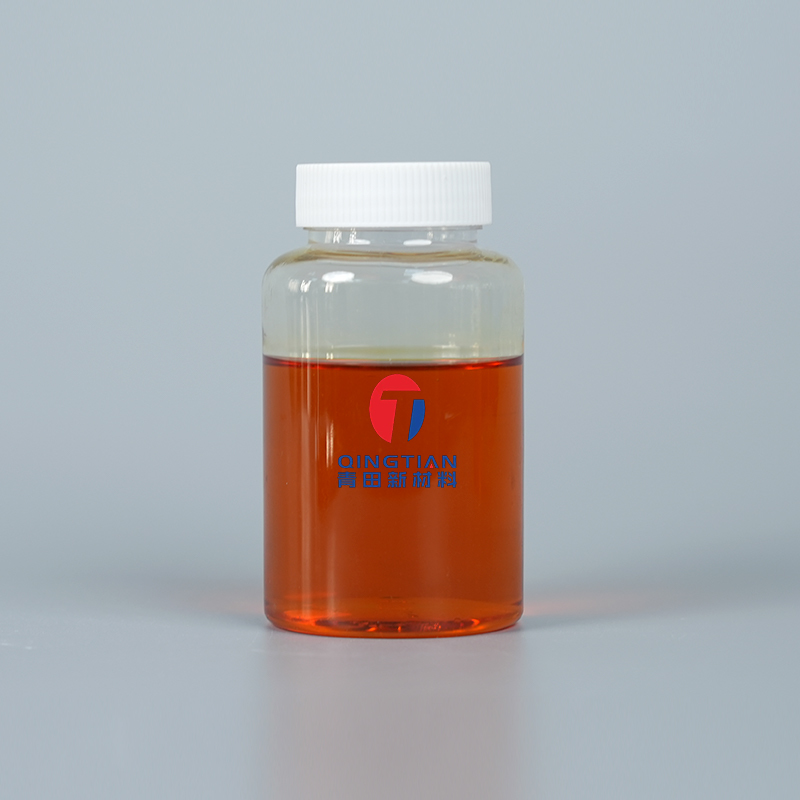
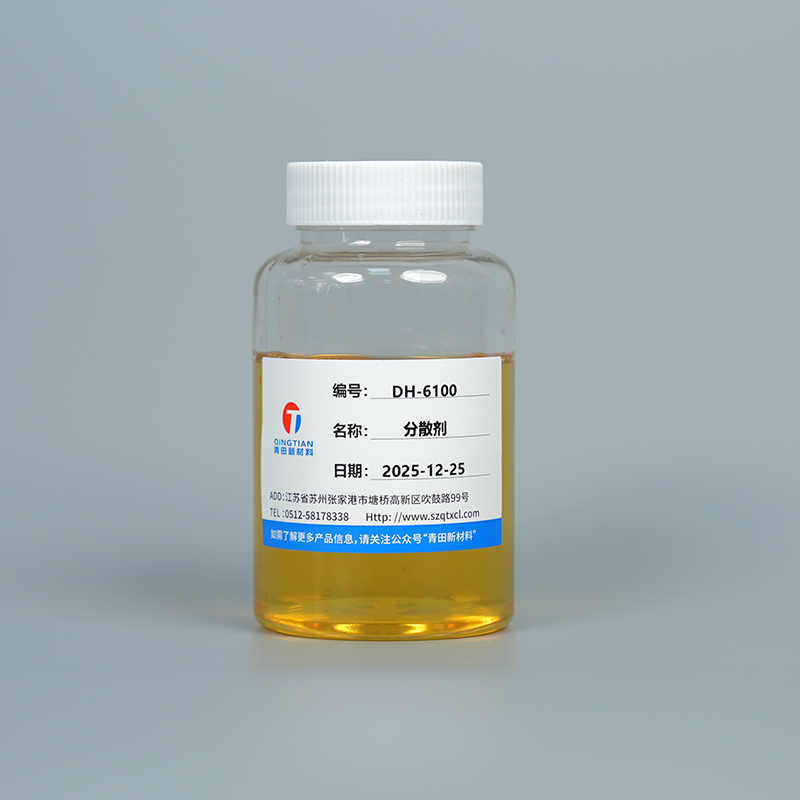
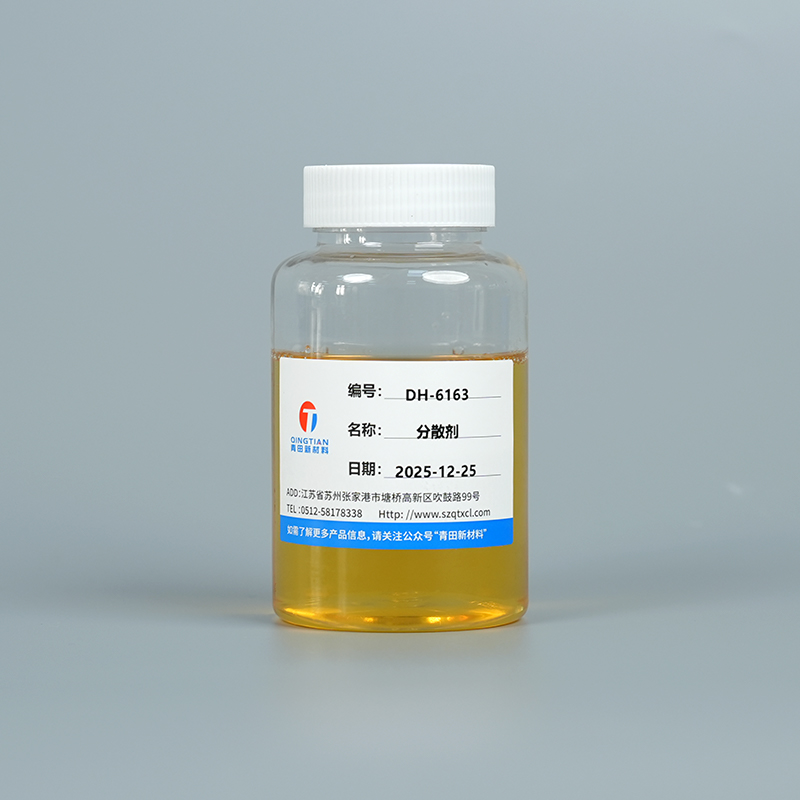
DH-5033 is a polymeric dispersant with special pigment-affinity groups, applicable for titanium dioxide, lithopone, iron oxide, carbon black, and other pigment and filler systems. By improving the wetting and affinity between pigment particles and the polymer, it helps pigments disperse more uniformly in the system, thereby improving system viscosity stability and hue consistency.
In coating applications, DH-5033 can help improve the pigment dispersion state, reduce settling, flooding, re-coarsening, and caking problems, while helping to improve coating film surface state and gloss performance. For paints that have already developed swelling or gelation, post-addition is also possible depending on the system condition — stirring or grinding can help improve the paint state.
Additionally, this product can reduce the system baking temperature to some degree, and provides auxiliary improvement for coating film water resistance, hardness, adhesion, and anti-ageing performance.
More uniform distribution reduces viscosity fluctuation and hue inconsistency between batches
Reduces settling, re-coarsening, and caking tendency during extended storage
Improves coating film surface state and gloss performance
Contributes to water resistance, hardness, adhesion, and anti-ageing performance
Helps reduce system baking temperature — supports more energy-efficient production
Can be post-added to paints with swelling or gelation, helping to restore system state
Pigment dispersion does not only affect grinding efficiency — it further determines system viscosity stability, hue consistency, and final coating film appearance. For titanium dioxide, iron oxide, carbon black, and other pigments, improving wetting and dispersion state helps reduce settling, re-coarsening, and flooding. Appropriate use of a brightening dispersant can improve dispersion stability and coating film performance starting from the pigment interface.
 Wholesale Paint/ Coating Additives Manufacturers
Custom Industrial Chemical Solutions Suppliers
Wholesale Paint/ Coating Additives Manufacturers
Custom Industrial Chemical Solutions Suppliers