


 русский
 Español
 Français
Home / News / Industry News / Anti-Settling Agent Already Added — Why Is My Product Still Separating After Storage
Industry News

An anti-settling agent works by building a loose internal network — often described as a weak gel or three-dimensional structure — that holds suspended particles in place against gravity. At the time of production, this network is freshly formed and particle distribution is even, so the product looks completely stable. But gravity never stops acting on the particles, and over weeks or months in a sealed drum, even a well-built network can gradually lose its ability to fully resist that pull.
Larger or denser particles keep moving downward at a slow rate even within a stabilized system, gradually building a concentration gradient from top to bottom.
The spatial structure that suspends particles can relax over time, reducing the support it provides and allowing particles to move and re-agglomerate more easily.
Temperature swings, heat/cold cycling, long static storage, and transport vibration all place additional load on a system that was stable under controlled production conditions.
As particles accumulate near the bottom, contact between them increases, accelerating local agglomeration and widening the gap between the upper and lower layers.
What starts as a loose, easily re-stirred sediment becomes more tightly packed the longer it sits, making re-dispersion progressively harder.
Because the network is intact and particle distribution is even at the point of filling, none of these effects are visible on day one — they only become apparent after extended storage.
| Early Storage (Days) | Sediment, if any, is loose and soft — light stirring restores a uniform, ready-to-use product |
| Mid-Term Storage (Weeks) | Concentration gradients begin forming; a clear top layer or thicker bottom layer may become visible |
| Extended Storage (Months) | Sediment compacts and particle-to-particle bonds strengthen, requiring stronger mechanical mixing to re-disperse |
| Long-Term / Warehouse Storage | Hard caking or a rigid sediment layer can form, in severe cases resisting normal stirring entirely |
Because the failure mode is time-dependent, evaluating an anti-settling agent only on day-one appearance is not sufficient. A system intended for products that may sit in a drum for months should be assessed on its ability to maintain network strength under temperature cycling, resist compaction, and remain easy to re-disperse after extended static storage — not just on initial viscosity build.
If a product passes settling tests after one week, is it safe for long-term storage?
Not necessarily. Many separation issues only appear after extended storage because the underlying network weakens gradually. Accelerated storage testing (heat cycling, extended static storage) gives a more reliable picture.
Can re-stirring fully restore a settled product?
In early-stage settling, yes — light mixing usually restores uniformity. Once compaction has progressed for months, restoring full performance may require more intensive mechanical dispersion or, in severe cases, may not be fully reversible.
Does increasing the dosage of anti-settling agent always solve long-term separation?
Higher dosage can help, but it can also affect viscosity, flow, and application properties. Matching the anti-settling system to the specific particle type, density, and expected storage duration is usually more effective than simply increasing dosage.
Which product types are most affected by this issue?
Coatings, pigment pastes, printing inks, adhesives, and other particle-suspension systems are all subject to this behavior, particularly formulations containing high-density fillers, pigments, or metallic particles.
When separation appears after storage despite an anti-settling agent already being present, the root cause is usually long-term suspension stability, not a missing additive.
Dealing with separation, hard caking, or short shelf life in your suspension system? Our team can review your formulation and recommend an anti-settling solution engineered for long-term storage.
Explore Anti-Settling Agents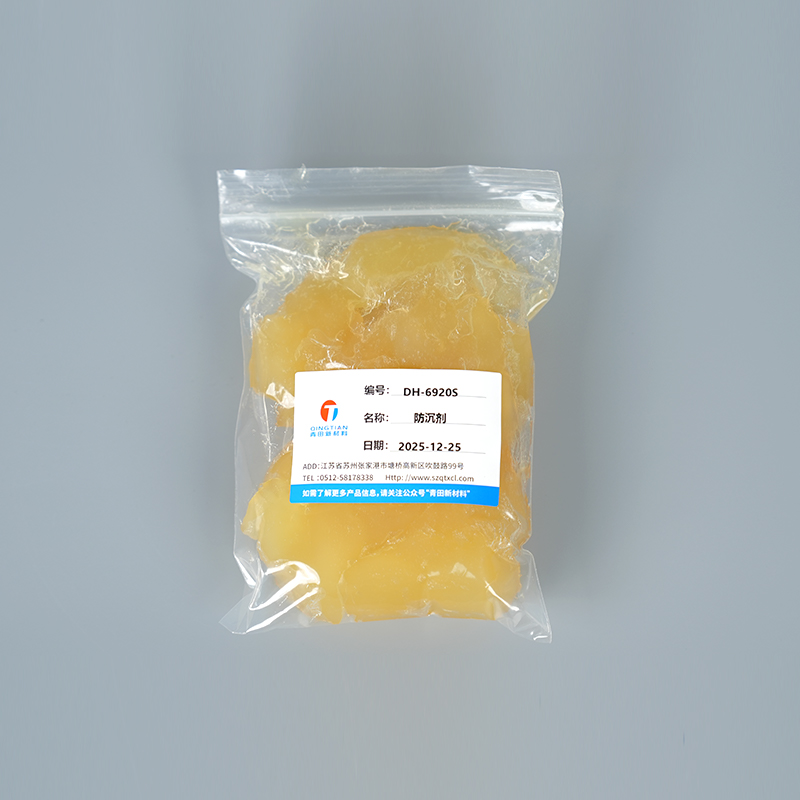
 Wholesale Paint/ Coating Additives Manufacturers
Custom Industrial Chemical Solutions Suppliers
Wholesale Paint/ Coating Additives Manufacturers
Custom Industrial Chemical Solutions Suppliers