


 русский
 Español
 Français
Home / News / Industry News / Stainless Steel, Aluminium, Electroplated Parts — Why Do Coatings Always Peel on These Substrates
Industry News

The chromium-oxide passive film that prevents corrosion is chemically inert and low-energy — both properties that limit the interfacial bonding reactions that coatings depend on for adhesion. Mechanical abrasion helps, but the passive layer reforms quickly on exposure to air.
Aluminium develops a dense, stable oxide layer almost immediately. Like stainless steel, this layer provides corrosion protection but acts as a barrier between the metal and the coating at the interface where adhesion is formed.
Zinc surfaces develop zinc oxide and zinc carbonate layers on exposure. These affect the surface chemistry differently from iron oxide and create interface conditions that standard coating adhesion chemistry is often not optimised for.
Chrome, nickel, and gold plating are smooth, chemically stable, and have very low surface roughness — minimising both mechanical interlocking and chemical bonding opportunities for the applied coating.
Glass is hydrophilic and can be chemically reactive under the right conditions, but standard organic coating adhesion chemistry is not inherently optimised for a silicate surface without specific interfacial agents.
The standard responses to adhesion problems on difficult substrates — raising resin content, extending baking time, or increasing temperature — improve the bulk mechanical properties of the film and the completeness of cure, but do not change what happens at the coating-substrate interface. If the interface lacks adequate chemical bonding sites or compatibility with the substrate surface chemistry, no amount of bulk film optimization can compensate for the weak interfacial bond.
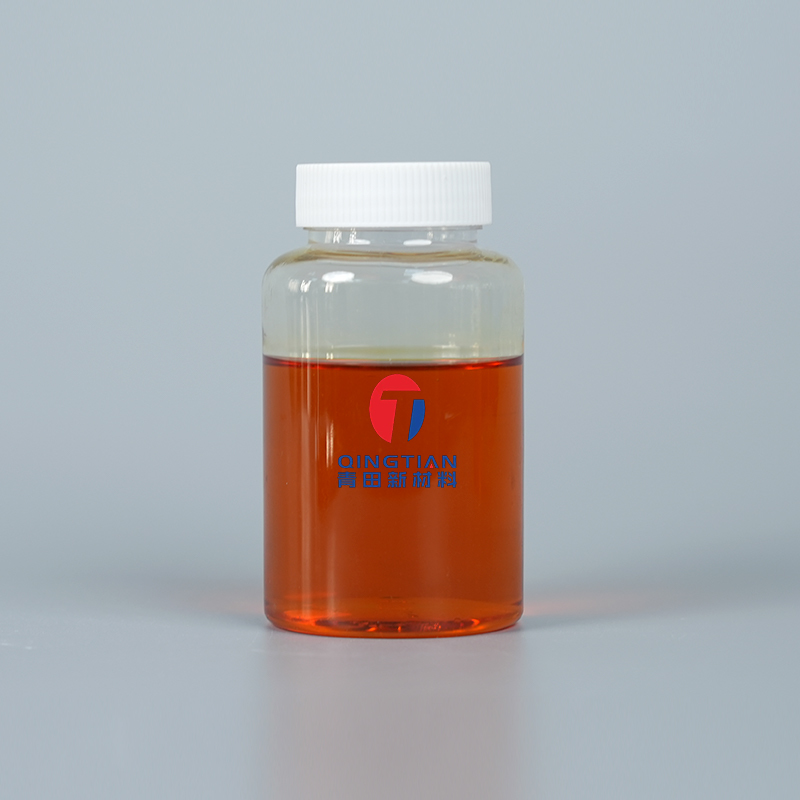
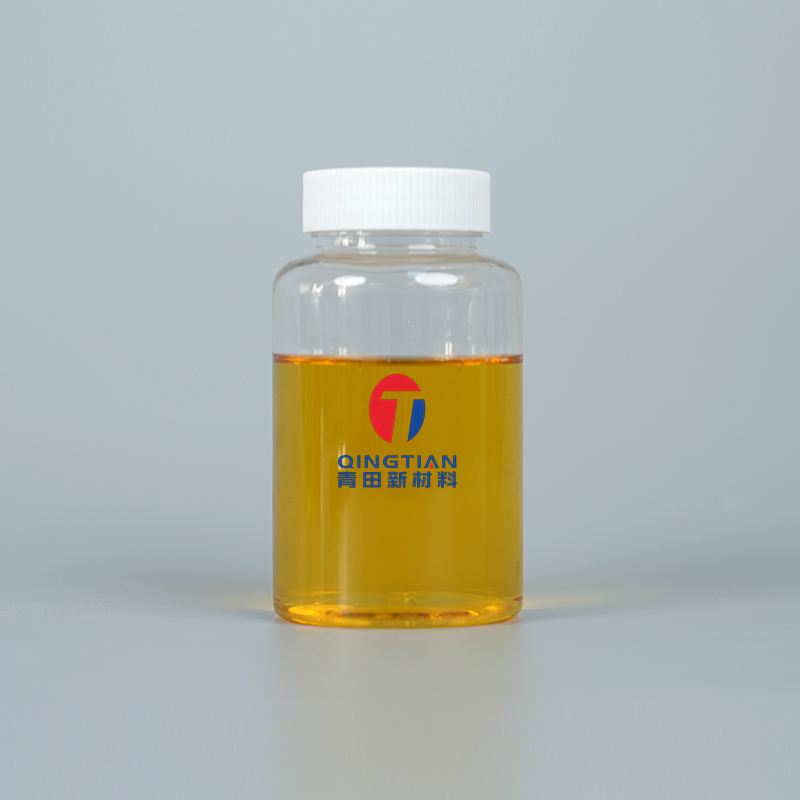
DH-7325 uses an epoxy polymer structure to improve the bonding between coating and difficult inorganic substrates — aluminium, zinc, stainless steel, electroplated surfaces, and glass. It works at the coating-substrate interface, improving the interfacial compatibility that determines adhesion strength, chemical resistance, and corrosion protection durability.
| Adhesion to Difficult Substrates | Improves bonding to aluminium, zinc, stainless steel, electroplated surfaces, and glass at the coating-substrate interface |
| Chemical and Media Resistance | Stronger interface bonding supports improved resistance to chemical exposure and liquid immersion |
| Corrosion Protection | Reduced interface permeability to moisture and ions improves corrosion protection durability |
| Flexibility and Elongation | Contributes to improved film flexibility and elongation performance, supporting forming and bending after coating |
| Storage Stability | Good formulation compatibility with limited effect on storage stability of the base system |
| System Compatibility | Applicable in alkyd-amino and acrylic-amino baking systems, and medium/high-temperature single- and two-component industrial coatings |
Can DH-7325 be used on all five substrate types simultaneously in a mixed-substrate production line?
Yes — its adhesion improvement mechanism operates through interfacial chemistry that is relevant across aluminium, zinc, stainless steel, electroplated surfaces, and glass. In mixed-substrate production environments, it can provide a more consistent baseline adhesion without requiring separate formulation optimisation for each substrate type.
Does it replace the need for surface pre-treatment on difficult substrates?
DH-7325 improves adhesion through the formulation, complementing rather than replacing surface pre-treatment. On difficult substrates, both interfacial chemistry (through the additive) and surface condition (through pre-treatment) contribute to the final adhesion result, and both remain relevant.
Is it suitable for direct-to-metal application without a primer?
Its adhesion improvement is applicable in both primer and direct-to-metal topcoat formulations. For applications requiring both adhesion and corrosion protection, use in a primer system typically delivers better overall performance than in a topcoat alone.
Will it affect the gloss or colour of the finished coating?
At normal dosage levels, DH-7325 is formulated to improve interfacial adhesion without significant effect on the visual properties of the cured film. A drawdown evaluation on the specific formulation is recommended to confirm.
Paint peeling on stainless steel, aluminium, zinc, and electroplated surfaces is an interfacial problem — the passive or chemically stable surfaces that make these materials useful also limit the bonding mechanisms that coatings rely on. Bulk resin and cure adjustments don't reach the interface where the problem originates.
Coating stainless steel, aluminium, electroplated parts, or glass and experiencing adhesion or corrosion durability issues? Request technical data on DH-7325 adhesion promoter.
 Wholesale Paint/ Coating Additives Manufacturers
Custom Industrial Chemical Solutions Suppliers
Wholesale Paint/ Coating Additives Manufacturers
Custom Industrial Chemical Solutions Suppliers