русский
 Español
 Français
Industry News
Higher pigment loading changes more than color.
When pigment addition goes up, slurry may thicken, flow worse and show unstable color. Dispersant choice affects pigment wetting and dispersion, and also storage state and film appearance. DH-6602S suits water-based and oil-based systems and can be used to improve color development, gloss and dispersion of pigments and fillers.
1
Introduction: why higher pigment content makes formulation harder
In coatings and inks, raising pigment loading helps adjust color, hiding or other appearance requirements, but the flow state of the slurry may change with the pigment ratio. Some formulations behave normally during initial tinting, then show higher viscosity, harder grinding or lower flow as more pigment goes in. Even when the color is as expected, final film gloss, color development and storage state may not meet requirements. These phenomena relate to the nature of the pigment, particle interactions, how well the dispersant matches and the grinding process. So dispersion cannot be judged by color uniformity alone; look also at slurry processing state and film performance.
2
More pigment: the slurry may not keep its original flow
Pigment particles need space in the liquid phase. As loading increases, contact and interaction between particles can increase, so viscosity rises and flow falls. This may be more pronounced with high-specific-surface-area pigments. Particle surfaces must be fully wetted; if dispersant level or adsorption does not match what the pigment needs, particles form aggregates that further affect grinding and processing. When pigment loading rises, evaluate dispersant demand at the same time instead of simply carrying over the ratio used at low pigment content.
3
A slurry that looks even can still give gloss differences
Dispersion state affects pigment distribution in the coating, and also film flatness and light reflection. If particles are unevenly distributed, or the system re-aggregates in storage, differences in color, gloss and surface state may appear after application. For coatings with high appearance requirements, judging dispersion by color after grinding is often not enough. In real formulations, observe fineness, color development, gloss and state after storage together, rather than using a single index to decide if the dispersant fits.
4
Changes during storage also affect later use
Some pigment slurries are in good condition when just made, but after standing may show viscosity change, settling or difficult redispersion. This may relate to pigment surface properties, dispersant adsorption and interactions with other components in the formulation. A dispersant takes part in wetting and dispersion during grinding and should also be evaluated for stability during storage.
5
Selecting a dispersant: what to look at
Set the dosage by pigment. Specific surface area, surface chemistry and oil absorption differ between pigments, and so does dispersant demand. Inorganic pigments, organic pigments and different types of carbon black should not use the same ratio. For high-surface-area pigments, a gradient test comparing viscosity, color development and storage state at different dosages helps find the range for the formulation.
Combine grinding performance with film performance. Beyond smooth grinding, watch final film appearance and media resistance. If the formulation has requirements for gloss, water or oil resistance, make comparison panels under uniform application conditions and observe gloss, color consistency and film changes after water immersion or contact with oils.
Check water-based and oil-based fit. The two differ in continuous-phase composition, pigment wetting conditions and other additive combinations. Even if one dispersant can be used in both, verify them separately. After changing resin, solvent or pigment type, reassess dosage and addition sequence.
6
DH-6602S dispersant: application reference
DH-6602S is a dispersant usable in water-based and oil-based systems. According to the product data, application features include color development, gloss, slurry flow and storage stability, and it can be used for grinding inorganic pigments and fillers and zinc powder.
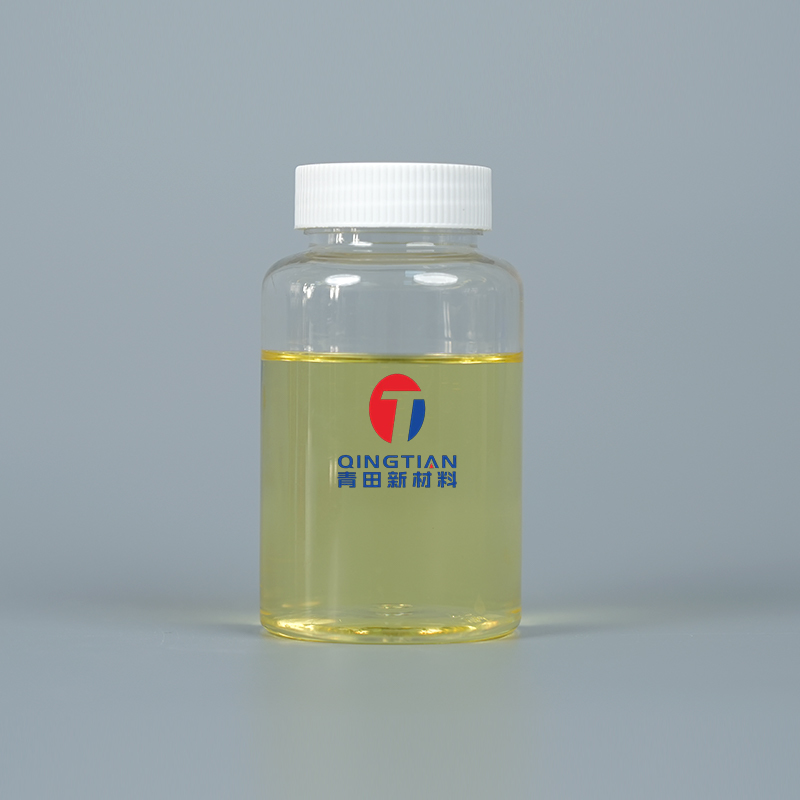
| Appearance | Yellow viscous liquid |
| Specific gravity | 1.05 g/cm³ |
| Boiling point | ≥ 100°C |
| Gardner color | ≤ 8 |
| Non-volatile content | 60% |
Reference dosage
| Inorganic pigment | 2%–6% |
| Organic pigment | 30%–75% |
| Low-surface carbon black | 40%–80% |
| High-surface carbon black | 80%–150% |
These ratios are arranged from the ranges listed in the product data. In use, confirm the basis on which the percentages are measured, and run small tests according to pigment characteristics and formulation conditions. The product data also gives a reference calculation: dispersant dosage (g) = pigment specific surface area (m²/g) ÷ 500 × pigment weight (g).
Suggested addition: first add DH-6602S to the grinding base (water) and mix well, then add the pigment for grinding. For different resin systems and pigment combinations, adjust dosage, grinding conditions and combination with other additives through comparison tests.
A dispersant cannot replace complete formulation design. Water resistance, oil resistance and gloss of the film are also affected by resin, crosslinking system, pigment ratio and film-forming conditions, and results should rest on actual tests.
7
Frequently Asked Questions
Why does viscosity rise as pigment is added?
Particles occupy space in the liquid, and contact and interaction between them can increase, so the slurry may thicken and flow less.
Is an even-looking slurry enough to confirm good dispersion?
No. Fineness, color development, gloss and state after storage should be observed together.
Can the same dosage ratio be used for all pigments?
No. Inorganic pigments, organic pigments and different carbon blacks differ in demand and should not use the same ratio.
How should DH-6602S be added?
Add it to the grinding base (water) and mix well first, then add the pigment for grinding.
Summary. After pigment loading rises, slurry viscosity, color development, gloss and storage state may all change at once. Improving them means considering pigment surface characteristics, dispersant dosage, grinding process and formulation compatibility together. DH-6602S can be used for pigment dispersion in water-based and oil-based systems and is suited to formulation tests around slurry flow, color development, gloss and storage performance. A reasonable dosage gradient, with samples compared after grinding and after storage, shows how well it fits a specific formulation.