


 русский
 Español
 Français
Home / News / Industry News / Conductive Carbon Black Paste Has High Viscosity — The Problem May Be in the Dispersion Stage
Industry News

Graphene, carbon nanotubes, and conductive carbon black are increasingly used in conductive coatings, functional inks, and waterborne pastes. But these powders readily form agglomerates after entering liquid systems. If the wetting process is insufficient, subsequent dispersion is easily affected, further causing paste viscosity changes, non-ideal flow state, and re-coarsening after storage — particularly when increasing the carbon nanomaterial addition level, as inter-particle interaction strengthens further.
Graphene and carbon nanotubes have large specific surface areas and readily agglomerate in waterborne systems. If the powder surface is not fully wetted, the effect of mechanical dispersion is also easily limited.
As carbon nanomaterial addition increases, inter-particle contact and interaction also increases — the paste readily develops thickening, which is a problem frequently faced when raising solid content in conductive pastes.
Some pastes show a good state right after dispersion, but after standing for a period develop viscosity change, re-coarsening, or settling — indicating that although the powder was temporarily broken up, the subsequent stable state needs further adjustment.
Conductive pastes need their flow state adjusted according to coating, spraying, or printing process requirements. Too high viscosity increases application difficulty; excessive flow may affect paste spreading on the substrate.
For difficult-to-disperse powders such as graphene and carbon nanotubes, some formulations increase RPM or extend dispersion time to strengthen mechanical action. This approach can help agglomerates break down, but after the powder is separated, maintaining a relatively stable dispersed state is still needed. If particles readily re-agglomerate after coming back into contact, simply increasing mechanical dispersion time cannot fundamentally change the system state. Therefore, mechanical dispersion, powder wetting, and dispersion stabilisation need to be considered together.
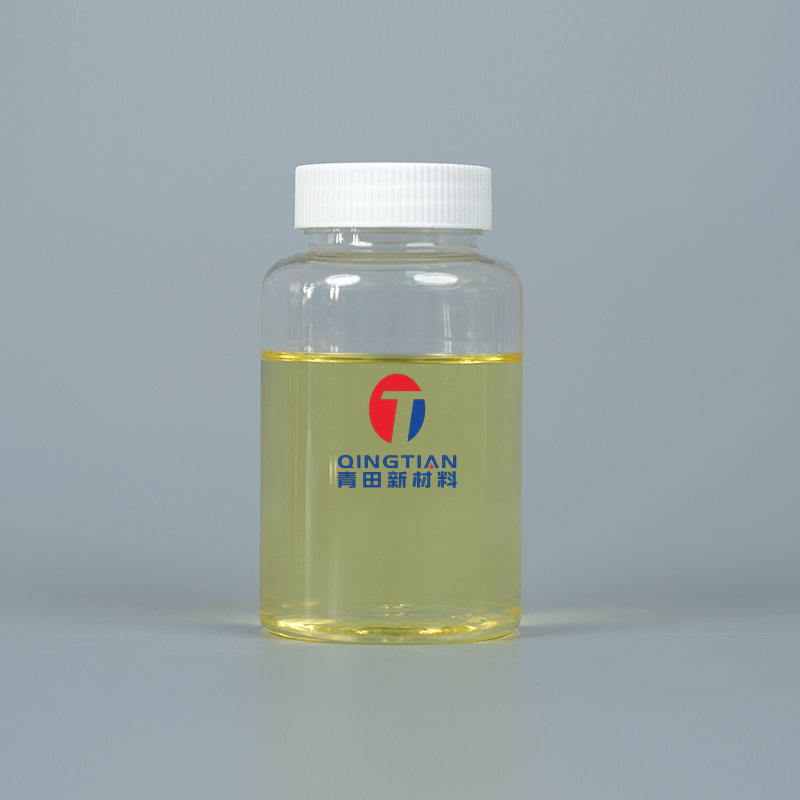
DH-6552W is a waterborne system dispersant that can be used for graphene, carbon nanotubes, conductive carbon black, and high-surface-area carbon black powders. For waterborne carbon nanomaterial pastes, the powder first needs to be well wetted before it can be further dispersed through mechanical action. DH-6552W can participate in this process, making powder dispersion in waterborne media easier to carry out.
In terms of paste state, the product can also help the system form a certain thixotropic character — which is a useful reference for formulations that need to balance static stability with application flowability. Additionally, DH-6552W has good compatibility with acrylic resin, epoxy resin, and alkyd resin systems. In actual application: first allow the dispersant to fully mix with the water phase, then gradually add the carbon nanomaterial powder; observe viscosity changes during dispersion and adjust addition speed accordingly; also observe viscosity, fineness, settling, and re-coarsening after standing — not only the freshly prepared paste.
The difficulty in dispersing graphene, carbon nanotubes, and conductive carbon black is related to their powder characteristics and strong agglomeration tendency. Therefore, formulation adjustment for conductive paste cannot only rely on increasing shear force — it needs to simultaneously consider powder wetting, dispersion state, and paste rheology. DH-6552W can be used in waterborne carbon nanomaterial paste systems, improving powder wetting and dispersion state while balancing thixotropy and storage performance.
 Wholesale Paint/ Coating Additives Manufacturers
Custom Industrial Chemical Solutions Suppliers
Wholesale Paint/ Coating Additives Manufacturers
Custom Industrial Chemical Solutions Suppliers