


 русский
 Español
 Français
Home / News / Industry News / High-Pigment Carbon Black Always Hard to Disperse — Here's the Structural Reason Why
Industry News

All carbon blacks are challenging to disperse, but high-pigment grades — selected specifically for their depth of black and masstone performance — have the highest surface area per unit mass and the strongest tendency to form dense, tightly bonded agglomerate structures. These structures require significantly more energy and more effective dispersant coverage to break apart and stabilize than lower-surface-area carbon black types.
The combination of high oil absorption and poor initial wetting drives grind viscosity far above practical limits — slowing mills, stressing equipment, and often requiring more solvent than the final formulation can accept.
When carbon black is not fully dispersed to primary particles, the color development is incomplete — the masstone appears grey rather than deep black, and the undertone (blue or brown) cannot be accurately reproduced.
Poorly stabilized systems require significantly longer mill passes to reach target fineness — increasing energy consumption and reducing production throughput per unit of finished colorant.
Even after reaching a passing fineness reading, inadequately stabilized carbon black can re-agglomerate during storage — returning to a coarser particle distribution that affects both appearance and stability of the final application.
DH-6030 is a novel block polymer dispersant designed with multiple adsorption sites that provide strong, multi-point anchoring to carbon black and other high-surface-area pigment surfaces. This adsorption architecture — contrasted with conventional linear or random polymer dispersants — helps the molecule cover pigment surfaces more effectively, resist desorption under the thermal and mechanical stress of milling, and maintain stabilization through storage.
| Grind Viscosity Reduction | Multi-point adsorption improves initial wetting efficiency, reducing the viscosity spike typical of high-pigment carbon black during milling |
| Milling Time | Better early-stage wetting means less time is needed to achieve target fineness — shortening the overall grind cycle |
| Jetness and Color Development | More complete primary particle separation improves masstone depth, jetness, and undertone accuracy |
| Storage Stability | Strong adsorption reduces the tendency for re-agglomeration during storage, maintaining fineness and color consistency over time |
| System Universality | Compatible with both waterborne and solventborne colorant and coating systems — also evaluated in automotive, plastic, and ink applications |
| Pigment Scope | Suitable for high-pigment carbon black and also applicable to organic and inorganic pigments requiring strong dispersant anchoring |
Why does extending grind time not fully solve carbon black dispersion problems?
Longer grind time breaks up agglomerates mechanically but cannot stabilize the dispersed particles against re-agglomeration — that requires adsorbed dispersant covering the newly created particle surfaces. Without adequate dispersant coverage, particles reform agglomerates as fast as mechanical energy breaks them apart, so the system reaches a practical ceiling on fineness that more grinding time cannot push through.
What is the difference between a block polymer dispersant and a conventional polymer dispersant?
Conventional polymer dispersants have randomly distributed anchor groups along a single chain. Block polymer architectures concentrate anchor groups in defined segments, creating a more organized and stronger adsorption structure at the pigment surface — which improves both adsorption strength and resistance to desorption under stress.
Can DH-6030 be used in both waterborne and solventborne colorant systems?
Yes — it has been evaluated for compatibility in both waterborne and solventborne systems, which is one of the practical advantages of a universal colorant dispersant over system-specific products that require separate dispersants for each carrier type.
Will it affect the let-down compatibility of the finished colorant?
The universal compatibility of the block polymer architecture generally supports broader let-down compatibility across different paint base systems compared to strongly anionic or cationic conventional dispersants. Compatibility testing with the specific target base systems is still recommended as standard practice.
High-pigment carbon black's combination of extreme surface area, strong inter-particle attraction, and high oil absorption makes it fundamentally more demanding than other pigments — and exposes the limits of dispersant systems that work adequately for less challenging pigment types.
Struggling with high grind viscosity, long mill times, insufficient jetness, or storage re-agglomeration in carbon black or high-surface-area pigment systems? Request technical data and a sample of DH-6030.
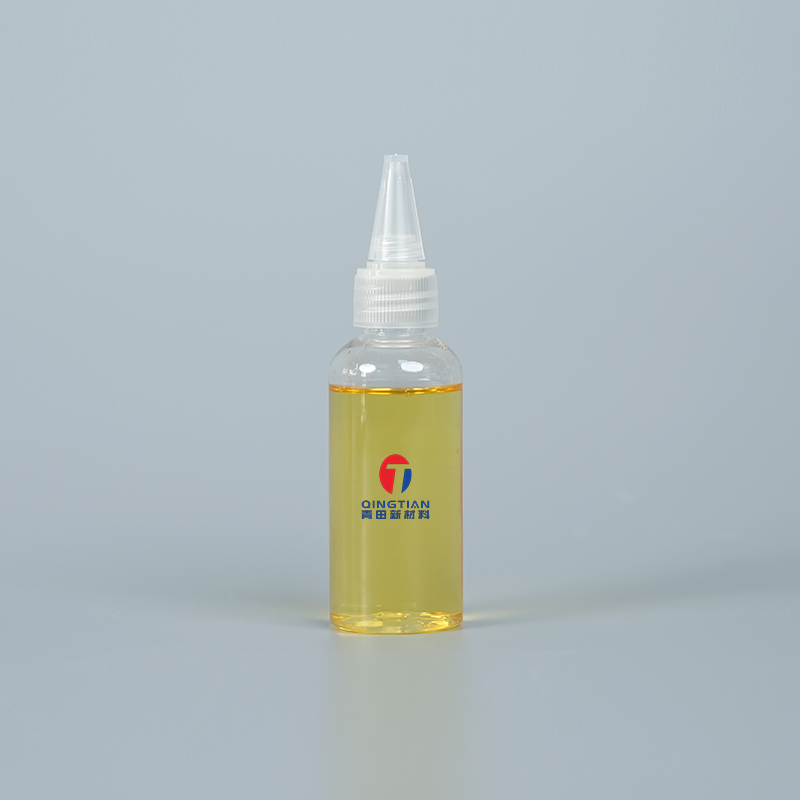
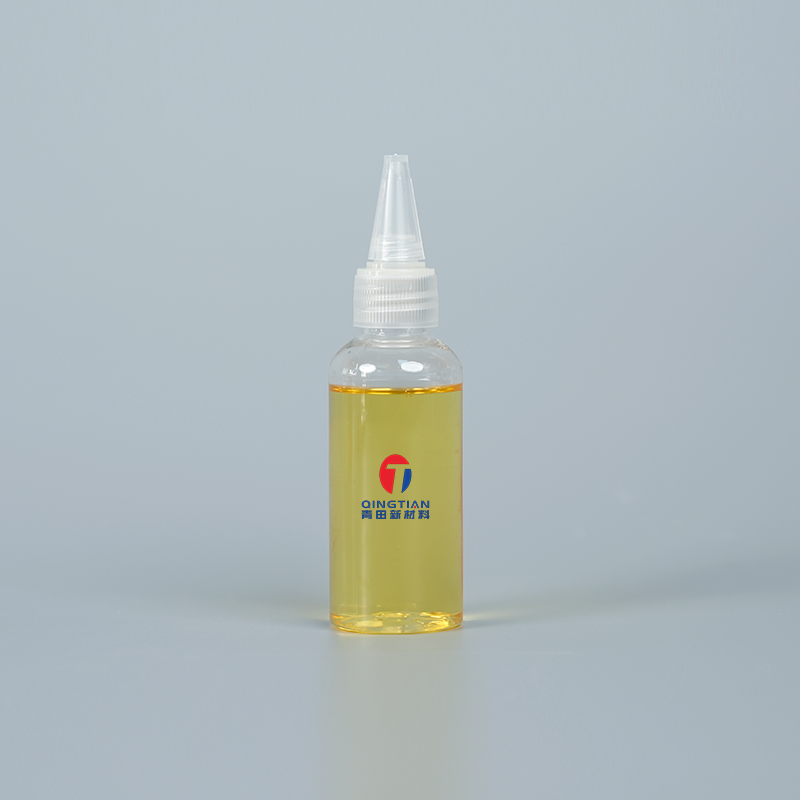
 Wholesale Paint/ Coating Additives Manufacturers
Custom Industrial Chemical Solutions Suppliers
Wholesale Paint/ Coating Additives Manufacturers
Custom Industrial Chemical Solutions Suppliers