русский
 Español
 Français
Industry News
Waterborne Coatings
Sealants
Adhesives
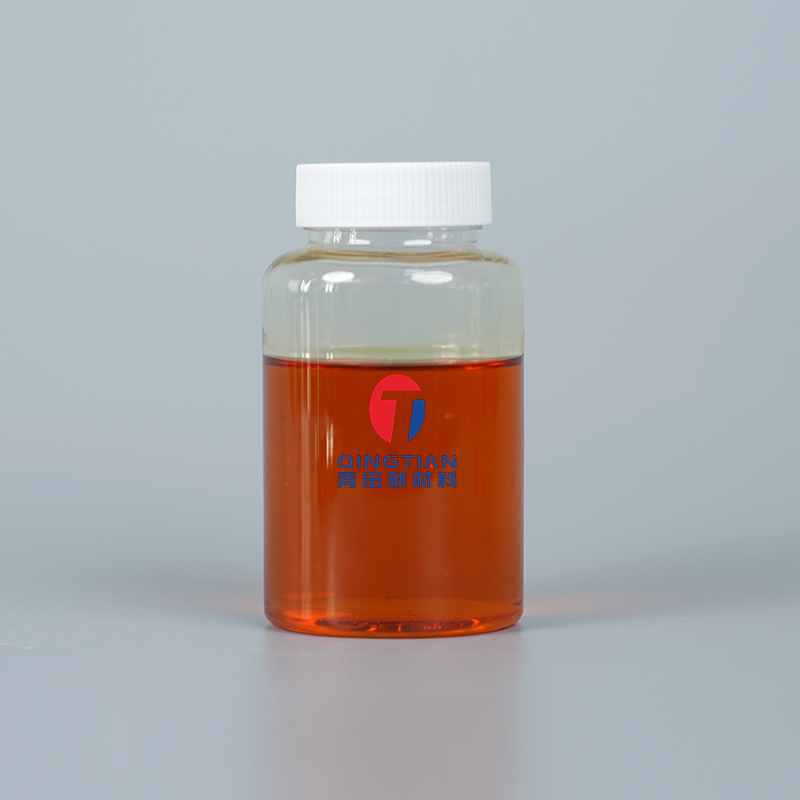
DH-7269S
In waterborne coatings, sealants, and adhesive systems, inorganic fillers can impart specific physical properties — but fillers and polymers do not inherently have good compatibility. If filler surface wetting is insufficient, particles readily agglomerate, potentially forming weak zones inside the material. When the film encounters moisture, external force, or temperature change, these interfacial defects may manifest as adhesion reduction, cracking, or insufficient mechanical strength. Filler dispersion and interfacial bonding are two interrelated problems.
Inorganic Filler Agglomeration
Insufficient interaction between filler surface and waterborne resin — particles cannot maintain uniform distribution, affecting system stability.
Film Adhesion Below Target
Weak bonding between filler and polymer reduces the overall interfacial bonding effect, causing adhesion performance to decline.
Mechanical Performance Affected
Non-uniform filler dispersion easily causes stress concentration, causing fluctuation in flexural, tensile, and impact performance.
Insufficient Storage Stability
Some fillers re-agglomerate during extended storage, causing system state change and affecting subsequent application consistency.
Why Simply Increasing Dispersant Is Not Always Enough
For waterborne systems, what is more important is improving the interfacial relationship between filler and polymer. On one side, the filler needs to be fully wetted and stably dispersed; on the other side, the filler also needs to form better bonding with the resin. Only when both aspects are improved simultaneously can the comprehensive performance of the system be further enhanced.
DH-7269S: Epoxy-Modified Polysiloxane Waterborne Additive
DH-7269S is an epoxy-modified polysiloxane waterborne additive that can be used to improve the compatibility state between inorganic fillers and polymers. By enhancing filler wetting and dispersion effects, it helps reduce particle agglomeration, enabling fillers to be distributed more uniformly in the system.
DH-7269S also has good epoxy reactivity, which can further promote interfacial bonding between filler and polymer, helping to improve material flexural strength, tensile strength, impact strength, and elasticity. In waterborne coatings, sealants, and adhesives, it can also be used to improve metal surface treatment effects, and provides auxiliary improvement for system adhesion and storage stability. Recommended dosage: 0.5%–3.0% of total formulation.
| Filler Dispersion | Improves wetting and dispersion of inorganic fillers — reduces agglomeration and improves system uniformity |
| Interfacial Bonding | Epoxy reactivity promotes bonding between filler and polymer, strengthening the interface |
| Mechanical Performance | Helps improve flexural, tensile, impact strength, and elasticity |
| Film Adhesion | Auxiliary improvement for coating film adhesion performance |
| Storage Stability | Reduces re-agglomeration during storage, maintaining more consistent system state |
| Metal Surface Treatment | Can also be applied to improve metal surface treatment effects in waterborne systems |
By simultaneously improving wetting, dispersion, and interfacial compatibility, filler agglomeration can be reduced — and material adhesion and mechanical performance can be further improved — providing a more stable formulation basis for waterborne coatings, sealants, and adhesive systems.
Frequently Asked Questions
Which inorganic filler types benefit most from DH-7269S treatment?
DH-7269S is effective across a range of inorganic fillers — silica, calcium carbonate, aluminium oxide, talc, and similar mineral fillers all respond to the improved wetting and interfacial bonding mechanism. The degree of improvement depends on the specific filler surface chemistry and particle size — a small-scale trial with the specific filler at target loading is recommended before production use.
Does DH-7269S affect the cure profile of waterborne systems?
At normal dosage levels, DH-7269S provides interfacial bonding improvement through its epoxy groups without significantly altering the overall cure profile. In two-component systems where cure kinetics are precisely controlled, a cure study at the target dosage is recommended to confirm that the addition does not affect pot life or crosslink development.