Adhesion performance of a coating is related to more than substrate treatment. The resin system, interlayer bonding and the crosslinking state of the film also matter. When a coating must balance adhesion, water resistance, salt-spray resistance and mechanical properties, an adhesion promoter can be used to adjust the formulation. DH-7326N is suited to amino baking enamels, two-component polyurethane and similar systems.
Why initial adhesion can look fine while later tests differ
Background
Normal initial adhesion after application and drying does not mean the coating keeps the same state after long use or other tests. After soaking in water at room temperature, salt-spray testing or repeated wiping, adhesion may change. In multi-coat systems, bonding between primer and topcoat may also be insufficient. Real performance cannot be judged from a single adhesion test. Besides substrate cleanliness and surface treatment, resin system, film crosslinking state and interlayer bonding deserve a place in formulation analysis. For coatings with several performance requirements, an adhesion promoter is one adjustment option.
Substrate vs. interlayer adhesion
Substrate adhesion is the bond between the film and metal, plastic or another coated material; interlayer adhesion is the bond between different coating layers. The interfaces differ, and so do the influencing factors. Even if adhesion on the substrate meets requirements, bonding between a later coat and the layer beneath may still be insufficient. In multi-coat systems, examine the two separately and do not judge the whole system from one test result.
Contact with water
Water may enter through the film or the coating edge and affect the interface between coating and substrate. The degree of change depends on film structure, degree of cure, substrate treatment and coating composition. If the coating must withstand soaking or boiling-water tests, look beyond initial adhesion and observe the film before and after treatment under the relevant test conditions. To improve this, first check the curing process and coating structure, then evaluate whether the resin and adhesion promoter are well matched.
Mechanical stress
In use, a coating may be stretched, bent, impacted or wiped repeatedly. If the elongation and mechanical properties of the film do not match the service conditions, cracks or local peeling may follow even when initial adhesion was acceptable. Formulation design should therefore consider adhesion, elasticity, tensile strength and wipe resistance together, not adjust a single index.
Where to start improving overall coating performance
First
Check substrate treatment and application. Oil contamination, an unsuitable surface state, unreasonable recoat intervals or insufficient curing conditions can all affect final adhesion.
Second
Check resin system and coating structure. For amino baking enamels, two-component polyurethane and similar systems, evaluate the formulation against resin composition, curing conditions and actual service requirements.
Finally
Add an adhesion promoter and examine its effect on substrate adhesion, interlayer bonding and film mechanical properties. If water, salt-spray or wipe resistance is also needed, arrange the corresponding tests so that only initial adhesion is not improved while later service conditions are ignored.
DH-7326N adhesion promoter: application characteristics
Product
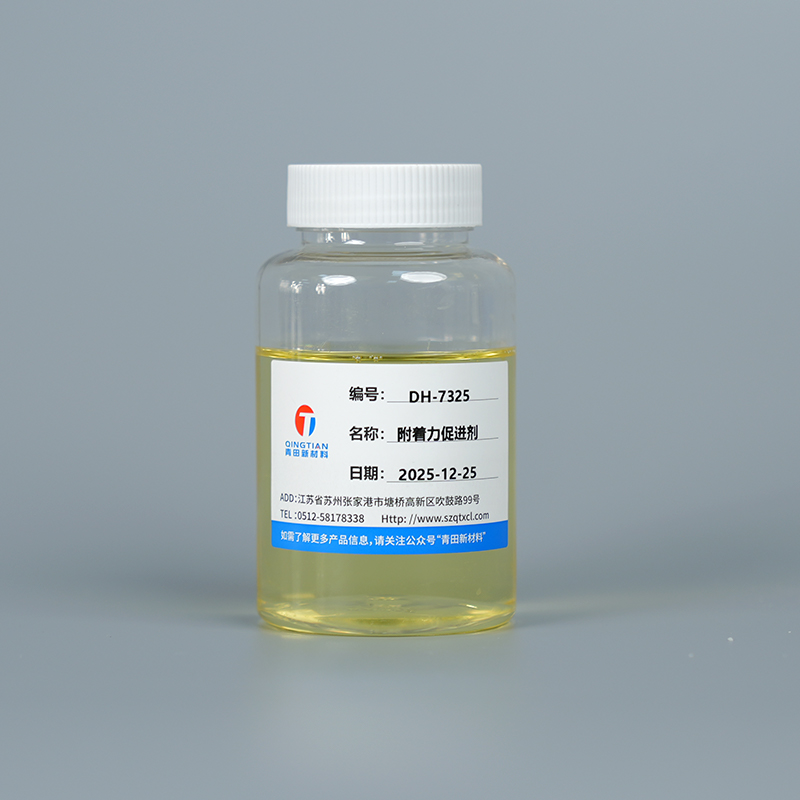
DH-7326N is a polyether-modified siloxane copolymer. According to the product data, it does not hydrolyze, can form good bonding with the contact surface, helps raise film crosslink density, and does not affect storage stability of the system.
Use
It can be used to improve substrate adhesion and interlayer adhesion, and to help raise tensile strength, elasticity, mechanical properties and wipe resistance of the film. Coating systems that undergo room-temperature water soaking, salt-spray or boiling-water tests can also be evaluated with it, depending on the formulation. It suits amino baking enamels and two-component polyurethane (2K PU). For two-component systems, the product data also notes that it helps extend pot life; the actual change needs verification in the specific formulation.
Physical data
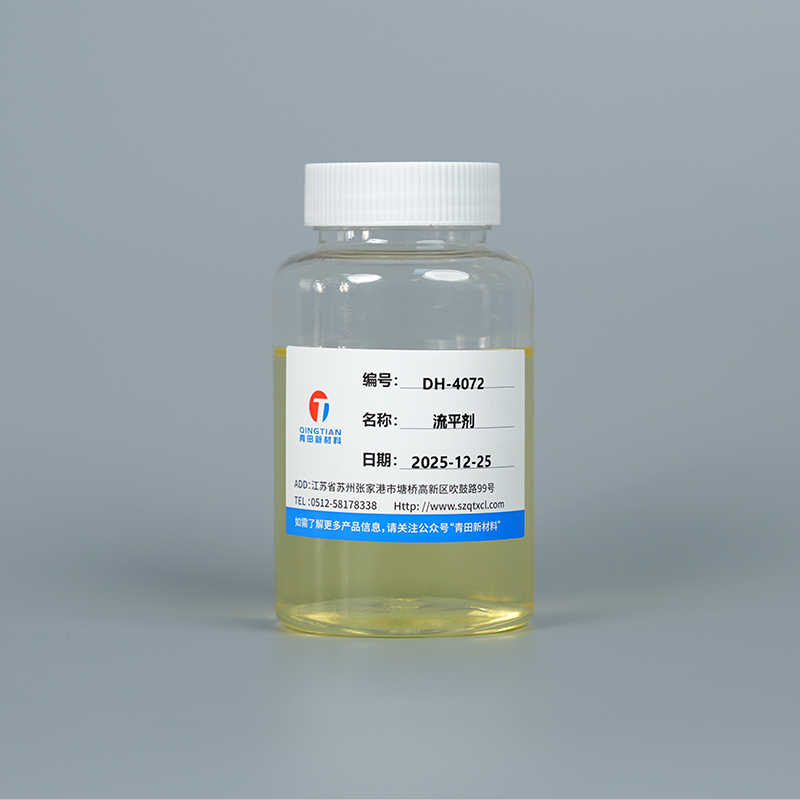
AppearanceSlightly yellow to transparent liquid
Solid content75% ± 2%
Acid value40–60
Color≤ 1
Viscosity3000–12000 mPa·s (25°C)
Suggested dosage0.5%–1.5% of total coating
Testing
Set up a blank and control samples with different addition levels in the existing formulation, and test initial adhesion, interlayer adhesion, water soaking, salt-spray and wipe resistance. For two-component systems, also record usable time after mixing and observe application state and final film performance. An adhesion promoter cannot replace proper substrate treatment and curing process, and the specific addition level should be set according to resin type, coating structure and test results.
Frequently Asked Questions
Q1
Does normal initial adhesion guarantee later performance?
No. After water soaking, salt-spray testing or repeated wiping, adhesion may change, so real performance cannot be judged from one test.
Q2
Why test substrate and interlayer adhesion separately?
Their interfaces and influencing factors differ, and good substrate adhesion does not rule out insufficient bonding between layers.
Q3
Which systems does DH-7326N suit?
According to the product data, amino baking enamels and two-component polyurethane (2K PU), at a suggested 0.5%–1.5% of total coating.
Q4
Can an adhesion promoter replace substrate treatment?
No. It cannot replace proper substrate treatment and curing process.
Summary. Coating adhesion is not decided by the substrate alone. Film-to-substrate bonding, bonding between coats, and the film's own crosslinking state and mechanical properties can all influence the result. When initial adhesion, interlayer bonding, water resistance and salt-spray resistance must all be met, work through substrate treatment, resin pairing and adhesion promoter selection step by step. DH-7326N can be used in amino baking enamels, two-component polyurethane and similar systems; the application effect should be confirmed through formulation trials and the matching performance tests.


 русский
 Español
 Français

 Wholesale Paint/ Coating Additives Manufacturers
Custom Industrial Chemical Solutions Suppliers