


 русский
 Español
 Français
Home / News / Industry News / What to Do When Multiple Pigments Cause Floating Color and Color Flooding
Industry News

In solvent-based coatings and ink systems, mixing multiple pigments often triggers floating color, color flooding, and sedimentation — affecting color uniformity, batch consistency, and application performance.
Differences in particle density, particle size, and surface chemistry between pigment types can destabilize a multi-pigment system. The result: uneven color distribution, settling, and poor batch-to-batch reproducibility. For manufacturers supplying industrial, automotive, or decorative coatings, controlling these defects is a quality prerequisite.
After application, pigments migrate to different film layers, creating uneven color distribution visible at edges or under raking light.
Higher-density pigments sediment during storage and form difficult-to-redisperse deposits at the container bottom.
Unstable pigment distribution during production causes the same formulation to produce different hues across production runs.
Pigments that appear well-dispersed after milling re-agglomerate during storage or application, reversing initial quality gains.
DH-5104 is an anti-floating dispersant based on a special unsaturated carboxylic acid–silicone copolymer structure. It is engineered for solvent-based coating and ink systems where multiple pigments — including titanium dioxide and organic pigments — are used together. By adsorbing onto pigment surfaces, it equalizes surface energies of dissimilar pigments, reduces differential migration, and promotes uniform co-dispersion throughout the film-forming process.
| Product | Chemical Basis | Compatible Systems | Addition Method |
| DH-5104 | Unsaturated carboxylic acid–silicone copolymer | Alkyd / Polyester / PU / Epoxy / Acrylic solvent-based systems; Inks | Grinding stage or post-addition |
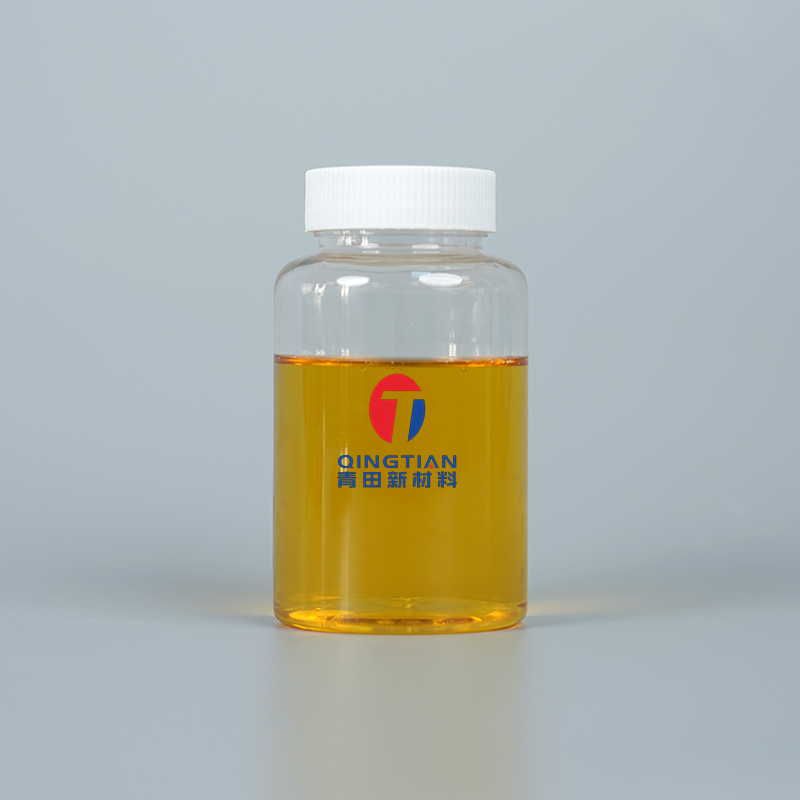
DH-5104 molecules anchor onto pigment particle surfaces, forming a protective stabilizing layer around each particle type.
The copolymer structure equalizes the surface energies of dissimilar pigments, preventing differential migration between pigment species.
Pigments remain uniformly distributed throughout the film-forming process and during storage — delivering consistent color from batch to batch.
Floating color and color flooding are among the most disruptive defects in multi-pigment solvent-based systems. By incorporating DH-5104 anti-floating dispersant, formulators can improve pigment co-dispersion stability, minimize sedimentation, achieve consistent color across batches, and extend the effective shelf life of finished coatings — without changing the base formulation significantly.
Our technical team can recommend optimized addition levels and provide formulation guidance for your specific system.
 Wholesale Paint/ Coating Additives Manufacturers
Custom Industrial Chemical Solutions Suppliers
Wholesale Paint/ Coating Additives Manufacturers
Custom Industrial Chemical Solutions Suppliers