русский
 Español
 Français
Industry News
Anti-settling at rest, anti-sagging and leveling in application: water-based coatings and inks ask for different rheology at each stage. DH-7512W liquid thixotropic anti-settling agent can be used to adjust rheological behavior in water-based coatings, inks and water-based color pastes.
In water-based coatings and inks, storage stability of pigments and fillers and the application state often have to be considered together. If the structure at rest is insufficient, pigments and fillers may gradually settle and cause uneven concentration between top and bottom. If flow during application is unsuitable, sagging may occur after spraying or coating vertical surfaces. The formulation must also keep some leveling ability so the film surface is not left with obvious undulation.
These requirements are not identical, so simply raising viscosity may not solve everything. Adjusting rheology, so the coating flows differently at rest and under shear, is a direction worth considering in formulation optimization.
Why anti-settling, anti-sagging and leveling go together
1
Settling at rest is not only low viscosity
Settling of pigments and fillers relates to particle size, density difference, dispersion state and the rheology of the continuous phase. Without enough structural support at rest, pigments and fillers drift toward the container bottom. Even raising viscosity with an ordinary thickener may not give an ideal storage state. Analyze it through filler characteristics, dispersion and rheological structure, not a single viscosity value.
2
Sagging on vertical surfaces relates to flow after shear
Once sprayed on a vertical surface, the coating is subject to gravity. If the wet film lacks resistance to flow after application, it may move downward and sag. Rheology additives can adjust system structure to help the wet film hold its shape at rest, but if the recovery of structure after application does not match the formulation, leveling may be affected. So judge sag resistance not only by thickness in the container but also by wet film after spraying and final film appearance.
3
Anti-settling and leveling are not a simple trade-off
Some formulations store better after an anti-settling additive but show insufficient flow on the film surface, which may relate to additive level, the original resin system, pigment and filler content and interaction with other rheology components. Thixotropic additives aim for structure at rest, flow during stirring or application shear, and gradual structure recovery once the force weakens. Whether a formulation can balance all three still needs to be judged through storage and application tests.
What to check when choosing a thixotropic anti-settling agent for water-based systems
- Compatibility. Resin type, pigment and filler surface properties and other additives can all affect final rheology.
- Main goal. To reduce settling, observe layering, settling and redispersion before and after storage; to improve vertical application, check wet-film sag resistance.
- Leveling and appearance. After settling improves, still watch for orange peel, brush marks or other surface changes. Comparison tests at different dosages find the range for the current system.
DH-7512W water-based thixotropic anti-settling agent
DH-7512W is a liquid modified polyurea rheology additive. According to the product data, it gives strong thixotropy at a fairly low dosage, can improve anti-settling of pigments and fillers and sag resistance of the film, and takes leveling into account. It suits water-based coatings and ink systems, and can also be used in making water-based matting paste and water-based color paste. In practice, examine different dosages according to settling, application method and leveling needs.
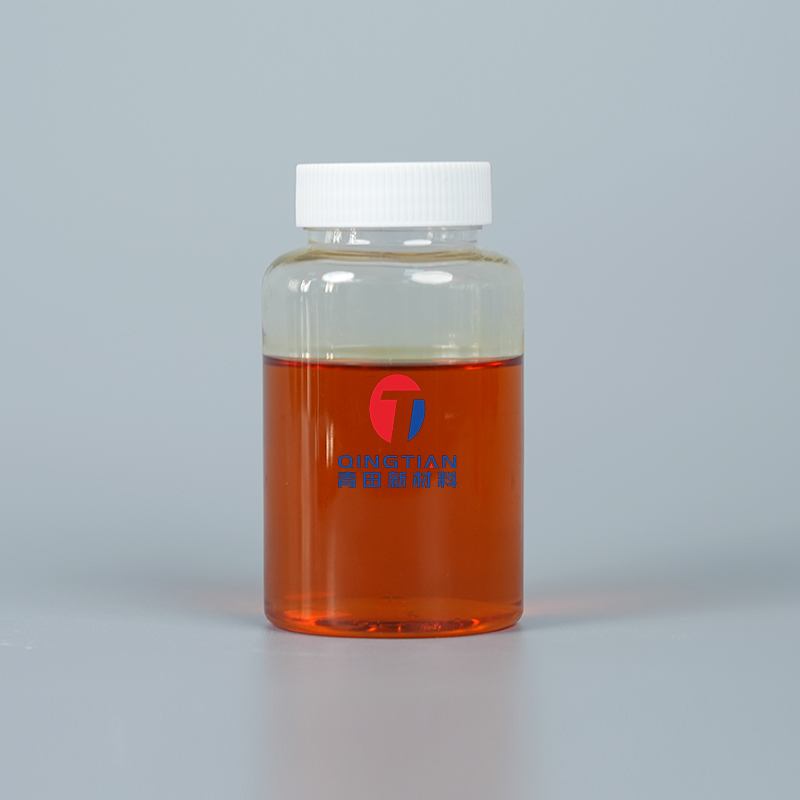
AppearanceYellow liquid
CompositionModified polyurea compound
Active content52%
Density1.10–1.14 g/cm³
SolventN-methylpyrrolidone (NMP)
Suggested dosage, anti-settling0.3%–1.5% of total formulation
Suggested dosage, anti-sagging0.3%–3.0% of total formulation
The ranges correspond to different goals; the actual dosage should be set from the formulation and test results. Start from a low dosage and adjust step by step, with a control containing no additive. Storage tests can observe settling, layering and redispersion; application tests check vertical sagging, wet-film flow and dry-film appearance. For water-based color pastes and matting pastes, also evaluate against the dispersion state of the pigment or matting powder. The product data lists the solvent as NMP, so confirm suitability against the solvent requirements of the target system, regulatory requirements and end use; being suited to water-based systems is not a reason to ignore this.
Frequently Asked Questions
Does raising viscosity solve settling, sagging and leveling together?
Not necessarily. These requirements are not identical, so simply raising viscosity may not solve them all.
What type of additive is DH-7512W?
A liquid modified polyurea rheology additive that, per the product data, gives strong thixotropy at a fairly low dosage.
Which systems can it be used in?
Water-based coatings and inks, as well as water-based matting paste and water-based color paste.
What should be confirmed regarding its solvent?
The listed solvent is NMP, so suitability should be confirmed against the target system's solvent requirements, regulatory requirements and end use.
Summary
Anti-settling, anti-sagging and leveling in water-based coatings are interrelated but cannot all be measured by one viscosity index. Judge adjustments from pigment and filler characteristics, structure at rest, flow during application and final film appearance. DH-7512W water-based thixotropic anti-settling agent can be used in water-based coatings, inks, matting pastes and color pastes. By separating anti-settling from anti-sagging goals and running comparison tests at different dosages, its suitability for an existing formulation can be judged.