


 русский
 Español
 Français
Home / News / Industry News / Slurry Fineness Passes Specification — So Why Does the Final Surface Still Show Particles
Industry News

A fineness-of-grind (FOG) measurement captures the particle size distribution at one specific moment — when the sample is taken from the mill or tank. It is a snapshot, not a continuous measurement, and it cannot account for what happens to the slurry after that point: during transfer, storage, coating, drying, or sintering. Particle re-agglomeration — the tendency of fine particles to come back together after being dispersed — is the most common reason why a slurry passes its fineness test and still produces a rough surface.
Fine particles have a high surface-area-to-volume ratio and a natural tendency to reduce their total surface energy by coming together — the driving force for re-agglomeration is always present.
The dispersion state established during milling gradually adjusts during storage, allowing particles that were kept separate by mechanical energy to move back toward one another.
Transfer pumping, recirculation loops, coating heads, and casting processes all apply forces that can re-distribute particles and allow micro-clusters to form and grow.
Temperature fluctuation and humidity changes during storage alter the balance of forces keeping particles apart, making re-agglomeration more likely in systems without robust stabilization.
Micro-agglomerates — clusters of particles just slightly above the original dispersed particle size — are often too small to register clearly on a standard FOG grind gauge, yet large enough to produce visible surface texture after drying or sintering. The gap between the detection threshold of common fineness instruments and the particle size at which surface defects become visible is precisely where this problem lives.
| Dispersant Selection | The choice of dispersant and dosage determines how effectively particles are kept apart after milling — this is the most direct lever for controlling re-agglomeration |
| Solid Loading | Higher solid content increases particle contact frequency, raising the probability of re-agglomeration — particularly in high-concentration ceramic or electronic slurries |
| Storage Duration | The longer the slurry is held between milling and application, the more time re-agglomeration has to progress |
| Process Shear History | Pumping, recirculation, and coating application all introduce shear that can break or create particle clusters depending on the dispersion stability |
| Temperature During Storage | Elevated storage temperatures generally accelerate re-agglomeration; controlled cool storage can help maintain stability longer |
Should I extend milling time to prevent surface particles?
Longer milling can achieve finer particle sizes, but if the dispersion is not stabilized against re-agglomeration, the particles will simply come back together during storage or processing. Milling time and dispersant stabilization need to be optimized together.
How can I tell whether the particles on the surface came from re-agglomeration or were always there?
Testing the slurry at multiple time points after milling — immediately, after 24 hours, and after longer storage — and comparing FOG readings can help identify whether particle size is increasing after the mill, which points to re-agglomeration rather than incomplete initial dispersion.
Does reducing solid loading always reduce surface particle defects?
Lower solids reduce particle contact frequency, which can help, but it also affects other properties such as film thickness and drying behavior. Improving dispersant stabilization is usually a more targeted approach.
Can sintering or drying conditions affect the appearance of surface particles?
Yes — higher temperatures or faster drying can lock in particle clusters that might otherwise have partially dispersed during a slower process. However, sintering or drying profile changes typically manage the symptom rather than addressing the underlying re-agglomeration.
Surface particle defects after a passing fineness test are almost always a post-milling stability problem — not a milling failure.
Seeing surface particle or roughness defects in ceramic, electronic or functional coating systems despite passing fineness tests? Our team can help review your dispersant system and stabilization strategy.
Explore Dispersant Solutions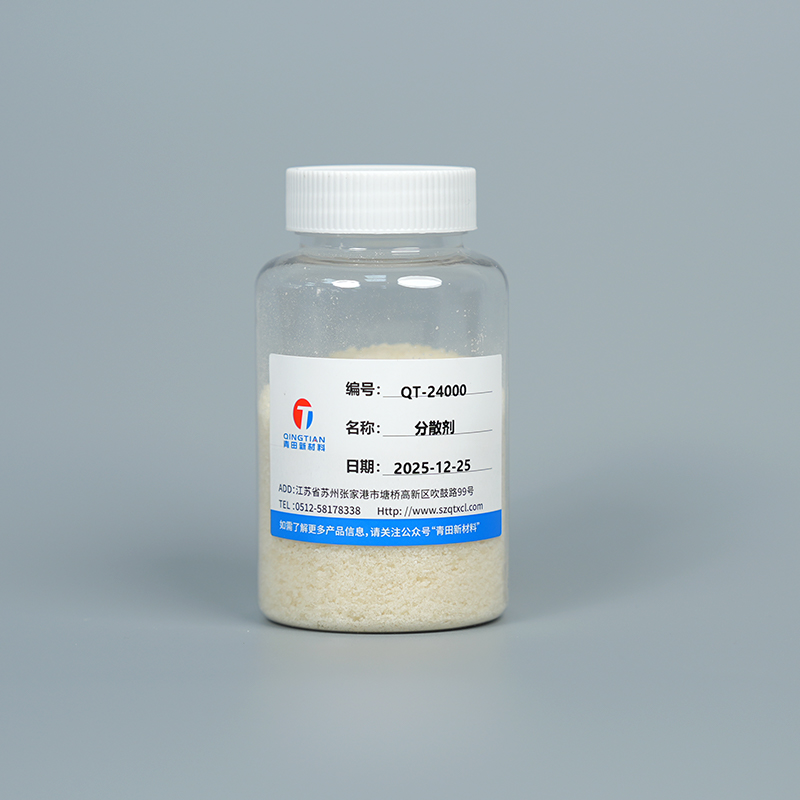
 Wholesale Paint/ Coating Additives Manufacturers
Custom Industrial Chemical Solutions Suppliers
Wholesale Paint/ Coating Additives Manufacturers
Custom Industrial Chemical Solutions Suppliers