русский
 Español
 Français
Industry News
Coating performance on aluminum, zinc, stainless steel and plated surfaces is affected by substrate surface state, coating wetting and the properties of the film itself. If film adhesion is insufficient, or the film cracks and peels after impact, check both substrate treatment and formulation. ADP metal adhesion promoter can be used to improve coating adhesion on many hard-to-adhere metal surfaces.
Substrate treated, yet the film still lets go
In metal coating, aluminum, zinc, stainless steel and plated parts can all present adhesion problems. Some workpieces look normal at first after cleaning and spraying, but under cross-cut, bending, impact or later use the film still shows lifted edges or local peeling.
This does not necessarily mean the substrate was not cleaned well. The oxide layer on the metal, residual oil, surface energy and the film-forming character of the coating can all affect bonding. Also, even a film that adheres may crack on bending or impact if its own extensibility is insufficient. Metal coating therefore has to consider both interfacial adhesion and the mechanical behavior of the film.
Common reasons for poor adhesion
Metal surfaces are not all alike
Aluminum, zinc, stainless steel and plated parts are all metal substrates, but their surface composition and state differ. Oxide layers, processing oil, polishing residue and pretreatment all affect contact between coating and substrate. If something that hinders wetting is present, a stable interface may be hard to form even when the coating has some adhesion ability. When paint falls off, first check cleaning, degreasing, surface treatment and drying, then decide whether formulation changes are needed.Adhering is not the same as surviving impact
Adhesion and film extensibility are different dimensions. Under bending, collision or mechanical stress, a film that cannot follow substrate deformation may crack, and in severe cases peel locally. Even a fair initial adhesion test does not show the coating stays intact under every kind of stress. For workpieces facing stamping, bending or transport knocks, check extensibility, impact performance and actual processing conditions as well.Solvent resistance follows cure state
Metal coatings sometimes go through solvent rub tests. Whether a film withstands some solvent contact depends on resin type, degree of crosslinking, bake conditions and curing time. If the film is under-cured, or resin and curing system do not match, rubbing can cause loss of gloss, softening or color change. When solvent rub results are poor, check the curing process and resin system; whether the problem is solved cannot be judged by adding adhesion additive.A path to better metal coating performance
1 Pretreatment by substrate
Different metals need treatment matched to material and processing state. Check that degreasing is sufficient, that no residue remains and that treated workpieces are not contaminated again. For plated parts, confirm plating type and surface state; do not simply reuse conditions from other metals.
2 Adjust with a promoter
When the pretreatment flow has been checked but adhesion still falls short, consider evaluating a metal adhesion promoter. Such additives can improve bonding to particular metal surfaces; results still depend on substrate state, resin composition, additive compatibility and curing conditions. Where impact and bending matter, also check film extensibility, not only initial adhesion.
3 Combine the tests
Prepare panels on the actual metal substrate and compare under unified application and curing conditions. Adhesion test: observe bonding between film and substrate. Impact or bend test: check film integrity after mechanical action. Solvent rub test: evaluate resistance to the relevant solvent per end-use requirement. Together they show whether the problem is interface adhesion, film mechanics or curing.
ADP metal adhesion promoter: application reference
ADP is an additive for improving metal coating adhesion; the product data list aluminum, zinc, stainless steel and plated surfaces as suitable substrates. According to the data, its features include improved film adhesion, added extensibility and impact resistance, and help in raising solvent rub resistance; in suitable formulations, the possibility of lowering bake temperature can also be evaluated. Specific effects must be confirmed by tests in the actual formulation and process.
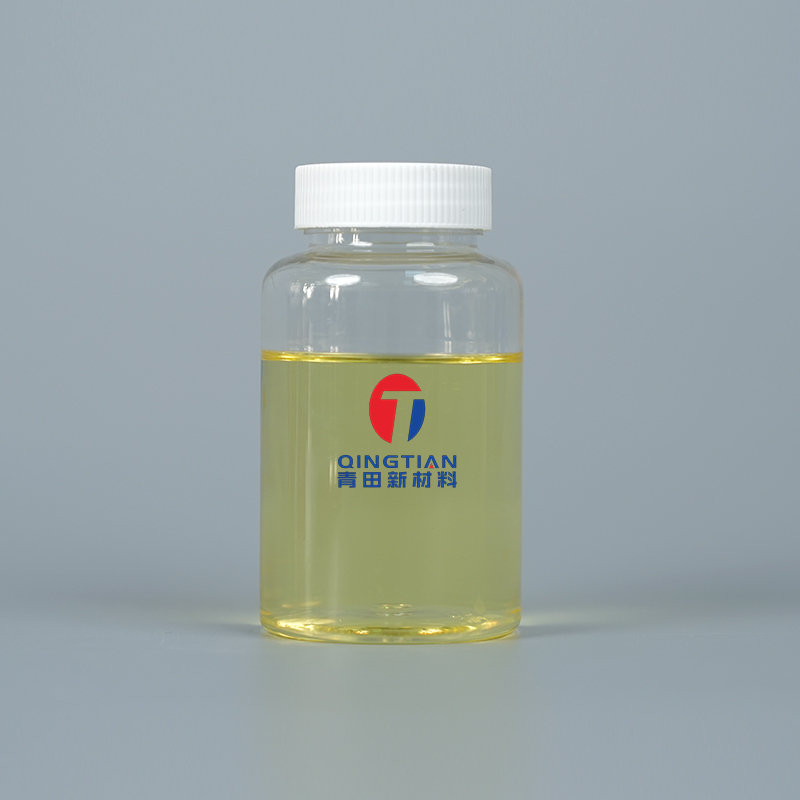
AppearanceClear transparent liquid
Solids80% ± 2
Density1.08-1.10 g/cm³
Acid value55-60 mg KOH/g
Viscosity15-30 (Gardner tube, 25 °C)
SolventIsobutanol
Suggested addition0.5%-1.5% of total coating
- First confirm substrate type and pretreatment state, ruling out surface contamination and similar factors.
- On the existing formulation, set up samples with different addition levels and compare adhesion and film appearance.
- For workpieces with bending or impact requirements, add the matching mechanical tests.
- If bake conditions are to be adjusted, verify cure degree, adhesion and solvent resistance step by step; do not lower bake temperature directly.
- Because ADP uses isobutanol as solvent, also check solvent compatibility, evaporation conditions and related requirements of the system.
Frequently Asked Questions
Does cleaned metal guarantee lasting adhesion? No. Oxide layers, residual oil, surface energy and film-forming character can all affect bonding even after cleaning.
Why can a film that adheres still crack? Adhesion and extensibility are different; a film that cannot follow substrate deformation may crack under bending or impact.
Which substrates does ADP list? The product data list aluminum, zinc, stainless steel and plated surfaces; suggested addition is 0.5%-1.5% of the total coating.
Can bake temperature simply be lowered with ADP? No. Adjust bake conditions step by step, verifying cure, adhesion and solvent resistance.
Summary. Paint loss, cracking after impact and poor solvent rub resistance in metal coating can involve different factors. Substrate pretreatment sets the basic contact conditions, while resin and additive pairing affects interface bonding and film performance. ADP metal adhesion promoter can be used in coating formulations for aluminum, zinc, stainless steel and plated surfaces. In practice, check substrate treatment and curing conditions first, then settle the addition level and process through adhesion, impact and solvent rub tests.