


 русский
 Español
 Français
Home / News / Industry News / Film Adhesion Testing Passes — Why Does It Still Peel After Water Immersion?
Industry News

In industrial coatings, amino baking coatings, and 2K PU systems, substrate adhesion and interlayer bonding directly affect the in-service performance of the film. When the bond between the coating film and the substrate is insufficient, adhesion decline, poor water immersion resistance, and unsatisfactory wipe resistance are likely to occur. An adhesion promoter additive, added in appropriate quantity, can provide adjustment from two directions — interfacial bonding and film structure.
Different metals, plastics, and other substrates have different surface states. If the coating lacks appropriate interfacial bonding with the substrate, the adhesion state may change after water immersion, wiping, or external force.
In multi-coat systems, normal substrate adhesion does not mean interlayer bonding is necessarily ideal. If different resin compositions exist between primer, colour coat, and topcoat, interlayer separation may still occur if the interlayer compatibility and bonding state are inadequate.
When the film is too hard, greater internal stress occurs after bending or impact. If film flexibility is insufficient, long-term adhesion performance may also be affected. Adhesion problems cannot be judged from "hardness" alone as a single indicator.
After the film is immersed in water for an extended period, water may gradually penetrate along the interface between the film and substrate. If the interfacial bonding state is not sufficiently stable, originally minor adhesion problems may become more obvious after water immersion.
Adjusting resin proportion is a common thought when adhesion problems appear. But film adhesion involves more than just the amount of film-forming material — it also relates to resin structure, substrate surface state, and the interfacial bonding between the film and the metal. Simply increasing resin quantity may simultaneously change system viscosity, cure speed, hardness, and workability state without necessarily addressing interfacial bonding.
Therefore, after the resin system is substantially confirmed, it is worth further approaching from adhesion promoter additives — changing the bonding state between the coating film and the metal substrate through small-quantity addition. For baking coating systems, it is also possible to simultaneously observe the influence of the additive after addition on baking temperature, film flexibility, and wipe resistance.
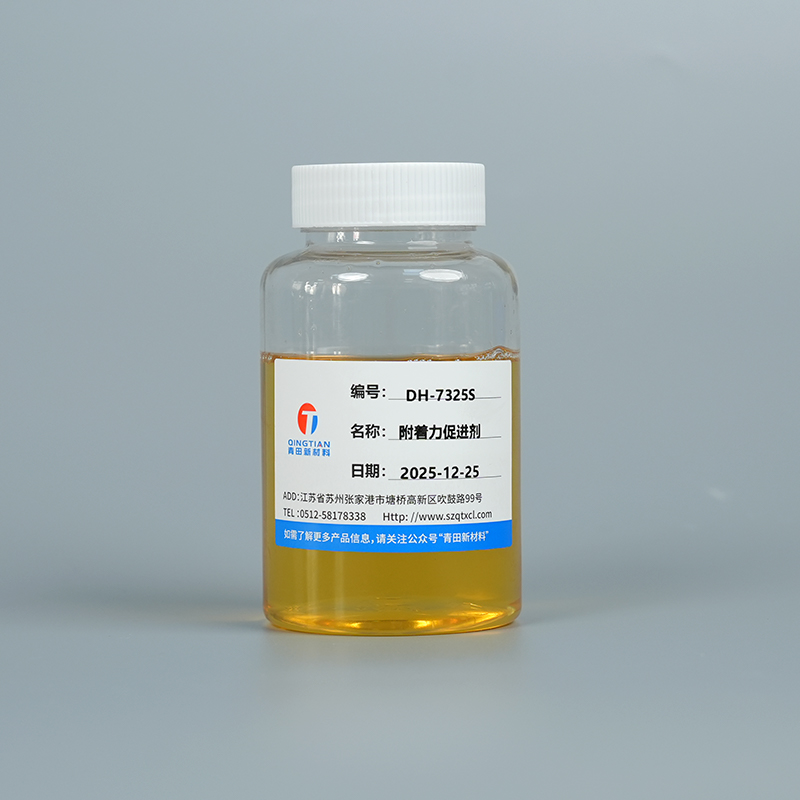
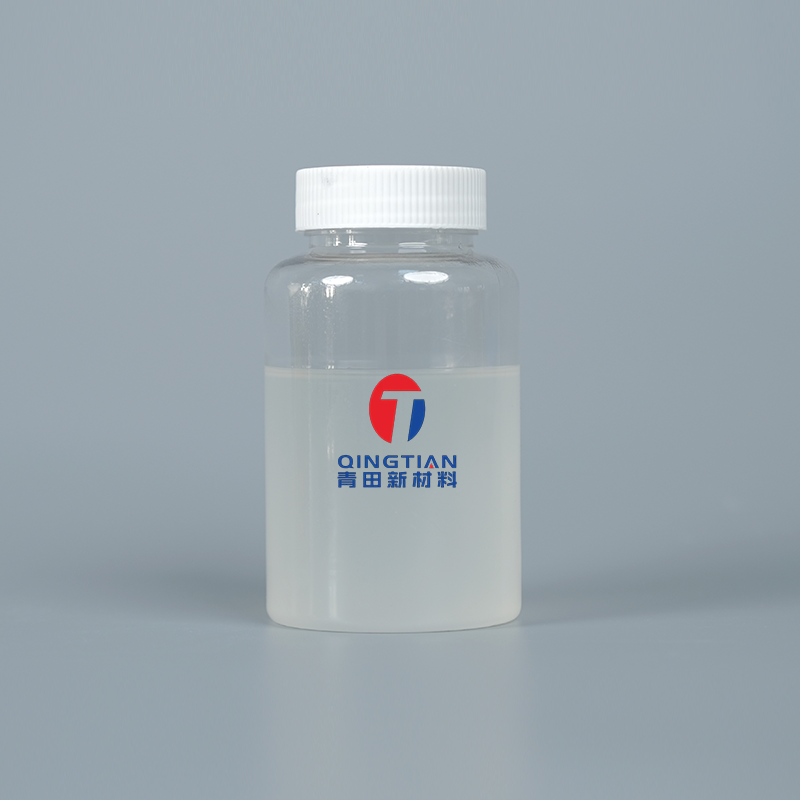
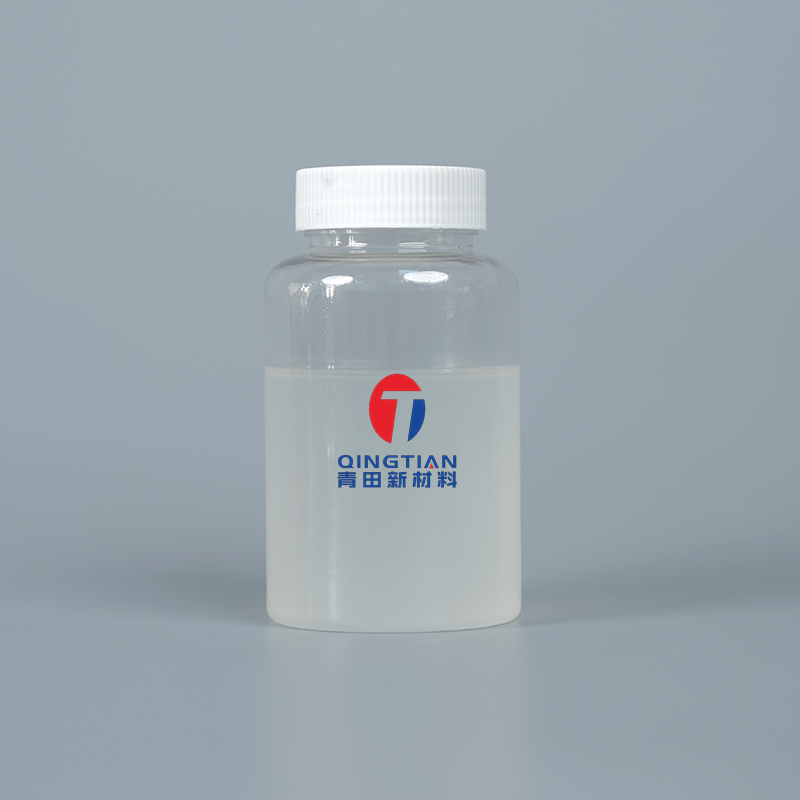
DH-7326N is a polyether-modified siloxane copolymer. It can be understood as a formulation additive that participates in interfacial bonding. After addition to the system, it can help improve the bonding state between the coating film and the substrate, while providing formulation-level adjustment for the film's tensile performance and elasticity.
In amino baking coating and 2K PU systems, it is also worth observing its influence on water immersion, wipe resistance, and salt spray performance. For two-component systems, the change in pot life after addition requires special attention, as the additive may influence the system's storage and application window in addition to the final film. Reference addition: 0.5%–1.5% of total formulation weight. Actual use should be adjusted in combination with resin type, substrate type, and application conditions.
Compare the adhesion state before and after addition under the same resin, pigment, filler, and application conditions.
Simple dry adhesion testing is not sufficient to judge interfacial bonding state. Further observe film changes after water immersion.
For multi-coat systems, separately examine bonding at the substrate–primer and primer–topcoat interfaces.
While improving adhesion, combine bending, impact, and wipe testing to judge whether the overall film state is matched.
When a coating adhesion problem appears, the issue is not necessarily only in the resin itself — substrate surface state, interlayer bonding, and the internal structure of the film all deserve attention. Especially in amino baking coating and 2K PU systems, during water immersion, salt spray, wipe, and mechanical testing, the interfacial bonding state is often more clearly reflected. DH-7326N can be used as an adhesion promoter in the formulation, providing adjustment from the directions of substrate bonding, interlayer adhesion, and film mechanical performance.
 Wholesale Paint/ Coating Additives Manufacturers
Custom Industrial Chemical Solutions Suppliers
Wholesale Paint/ Coating Additives Manufacturers
Custom Industrial Chemical Solutions Suppliers