русский
 Español
 Français
Industry News
What Exactly Is a Dispersing Agent in Water?
You have just finished adjusting a waterborne coating formula. The pigment disperses cleanly on the mill, but after two weeks in storage the can shows a hard sediment that will not stir back, and the drawdown looks patchy. Most formulators have been there, and the culprit is rarely the pigment itself. It is usually a missing or mismatched dispersing agent.
So what is a dispersing agent in water, exactly? In simple terms, a dispersing agent in water is a surface-active additive that helps fine solid particles, such as pigments and fillers, spread out evenly in a water-based system and stay separated over time.
Water is not a neutral background. It has a high surface tension, and most organic pigments and fillers are hydrophobic, meaning they prefer to stick to each other rather than to water. When pigment powder is stirred into water without a dispersing aid, the particles cluster into loose agglomerates to minimize contact with the surrounding liquid. Think of trying to mix cocoa powder into cold milk: it floats on the surface, forms clumps, and resists wetting. A dispersing agent changes that behavior. Its molecules adsorb onto particle surfaces, lower the interfacial tension, and keep the particles apart by giving each one a protective layer.
A dispersing agent in water performs three essential jobs: it wets the particle surface, helps break up agglomerates, and builds a barrier that keeps particles from re-clustering.
How Do Dispersing Agents Work in Aqueous Systems?
The working principle is easiest to understand as a three-step sequence that happens during the dispersion process, from the moment the powder touches the liquid to the finished mill base.
Step 1: Wetting the Particle Surface
When a dry pigment powder is added to water, air clings to the particle surfaces. The dispersing agent lowers the solid-liquid interfacial tension, allowing water to displace the air and penetrate the spaces between particles. This step changes the pigment from a dry, unwettable powder into a liquid-compatible slurry. Wetting happens quickly, but it is essential; without it, the next steps cannot proceed.
Step 2: Breaking Up Agglomerates
Once the surfaces are wetted, mechanical energy is applied through high-speed dissolvers, bead mills, or other grinding equipment. The dispersant does not crush particles by itself. What it does is weaken the internal bonds of agglomerates by adsorbing onto freshly exposed surfaces, which prevents the fragments from sticking back together. In practice, shear and dispersant chemistry work in parallel: the mill provides the energy, and the dispersant keeps the separated particles from re-joining.
Step 3: Stabilizing the Dispersion
After the particles are separated, they immediately try to re-agglomerate because Brownian motion keeps bringing them into contact. The dispersant blocks this through one of two stabilization mechanisms.
Electrostatic vs. Steric Stabilization
Electrostatic stabilization relies on ionic dispersants, such as anionic or cationic types, that adsorb onto particle surfaces and build up an electrical charge. Particles carrying the same charge repel each other, which keeps the system fluid. This mechanism is effective, but it has a weakness: dissolved salts compress the electrical double layer, and pH changes can neutralize the surface charge. In a real coating formula, both are common.
Steric stabilization works differently. Polymeric dispersants attach to the particle through anchor groups while polymer chains extend into the water phase, creating a bulky adsorbed layer. This physical layer prevents particles from approaching close enough to agglomerate, regardless of the ionic environment.
For waterborne coatings, steric stabilization is generally the more reliable route. Tap water, pigment impurities, and the resin system all introduce electrolytes, and pH drifts during formulation are normal. Electrostatic repulsion can be weakened by those factors, whereas steric hindrance remains effective across a much wider range of conditions. That is why most modern waterborne dispersants are high-molecular-weight polymers rather than simple ionic surfactants.
Why Does a Water-Based Coating Need a Dispersing Agent?
A dispersing agent is not an optional extra in a water-based coating. It is the ingredient that keeps the system stable from the grind stage to the finished film. Without it, five practical failures appear, and each one costs time, material, or product quality.
- Pigment settling. Particles slowly sink under gravity and form hard sediment at the bottom of the container. In severe cases, the sediment cannot be re-dispersed by stirring and the batch is wasted.
- Flocculation. Loose clusters reform after grinding, causing viscosity to rise and flow behavior to become inconsistent from batch to batch.
- Floating and flooding. In mixed pigment systems, particles with different sizes and surface chemistries separate during film formation, producing streaks, mottling, or a dry color that differs from the wet film.
- Reduced gloss. Agglomerates act as light-scattering defects on the film surface, so the coating dries with haze instead of a smooth, glossy finish.
- Weak tinting strength. When a pigment is not fully dispersed, its color development is poor. Formulators must add extra pigment to reach the target shade, which raises cost and can affect other film properties.
These problems are more pronounced in water than in solvent-borne systems. The high dielectric constant of water makes the system sensitive to ionic impurities, and pH drift can destabilize a weakly stabilized dispersion. A well-matched dispersing agent is the difference between a coating that performs predictably and one that fails during storage or application.
Dispersing Agent vs. Wetting Agent: What's the Difference?
The two terms are often used interchangeably, but they describe different jobs. A wetting agent reduces surface tension so a liquid can spread over and penetrate a solid surface. It answers the question: will the water wet this powder? A dispersing agent keeps solid particles separated after wetting. It answers the question: will these particles stay apart?
In a real grinding process, wetting comes first. Picture a pigment agglomerate as a clump of fine particles with air trapped in the pores. The wetting agent pulls liquid into those pores and displaces the air. Only then can dispersant molecules reach the particle surfaces and adsorb. If wetting is incomplete, the dispersant cannot do its job because it never reaches the surface it needs to protect.
Many modern additives are labeled wetting and dispersing agents because a single molecule performs both functions. The conceptual distinction still matters for troubleshooting. If the problem is poor surface wetting or cratering on low-energy substrates, a wetting agent is usually the first fix. If the problem is settling, flocculation, or floating, the dispersing agent is the critical component.
Main Types of Dispersing Agents for Waterborne Systems
Dispersing agents for water can be sorted by charge and by molecular structure. Both factors determine how the additive interacts with pigment surfaces and with the surrounding resin system.
| Type | Charge | Stabilization Mechanism | Best Suited For | Main Limitation |
|---|---|---|---|---|
| Anionic | Negative | Electrostatic | Inorganic pigments such as titanium dioxide and iron oxides | Sensitive to electrolytes and pH changes |
| Cationic | Positive | Electrostatic | Acidic formulations and selected specialty pigments | Poor compatibility with anionic acrylic and polyurethane systems common in waterborne paints |
| Non-ionic | None | Weak steric | Systems where ionic charge must be avoided | Limited anchoring on strongly polar pigments |
| Polymeric | Variable | Strong steric | Organic pigments, carbon black, and mixed pigment blends | Higher cost and need for compatibility testing |
For most high-performance waterborne coatings, polymeric dispersants are the mainstream choice. Their multiple anchor groups bind firmly to pigment surfaces, while the polymer chains extend into the water phase and provide long-term steric stabilization. This is why formulators working with difficult organic pigments or conductive carbon black typically turn to polymeric dispersants for steric stabilization rather than relying on simple ionic surfactants.
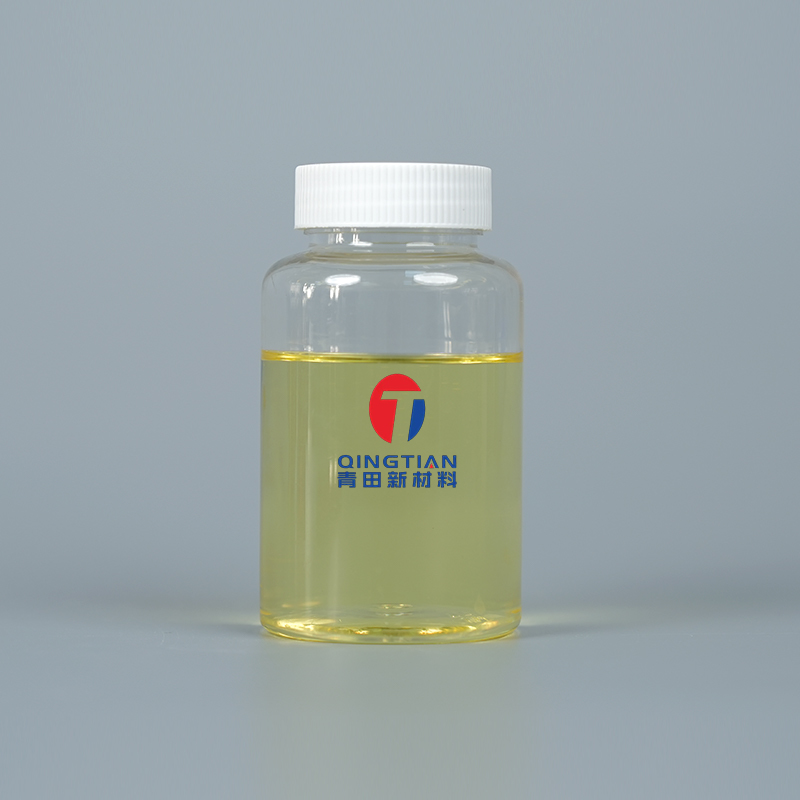 Custom DH-6321 Polymeric Dispersant Suppliers, Factory - Suzhou Qingtian New MatSuzhou Qingtian New Material Co., Ltd. is China DH-6321 Polymeric Dispersant Suppliers and Factory, details:Suitable for medium-to-high p...View Product →
How to Choose the Right Dispersing Agent for Your Water-Based Formulation
Choosing a dispersant comes down to matching chemistry to your specific system. There is no universal product, but a practical checklist covers most formulation scenarios.
- Identify the pigment and filler type. Organic pigments, including phthalocyanine blues and greens, carbon black, and several quinacridones, have large hydrophobic surfaces and usually require polymeric dispersants. Inorganic pigments such as titanium dioxide and iron oxides often respond well to smaller anionic dispersants.
- Confirm compatibility with the resin system. The dispersant must not destabilize the binder. Epoxy dispersions have their own polarity and surface chemistry, so a product designed for general acrylic systems may perform poorly. For those formulations, look for dispersants designed for epoxy resin systems
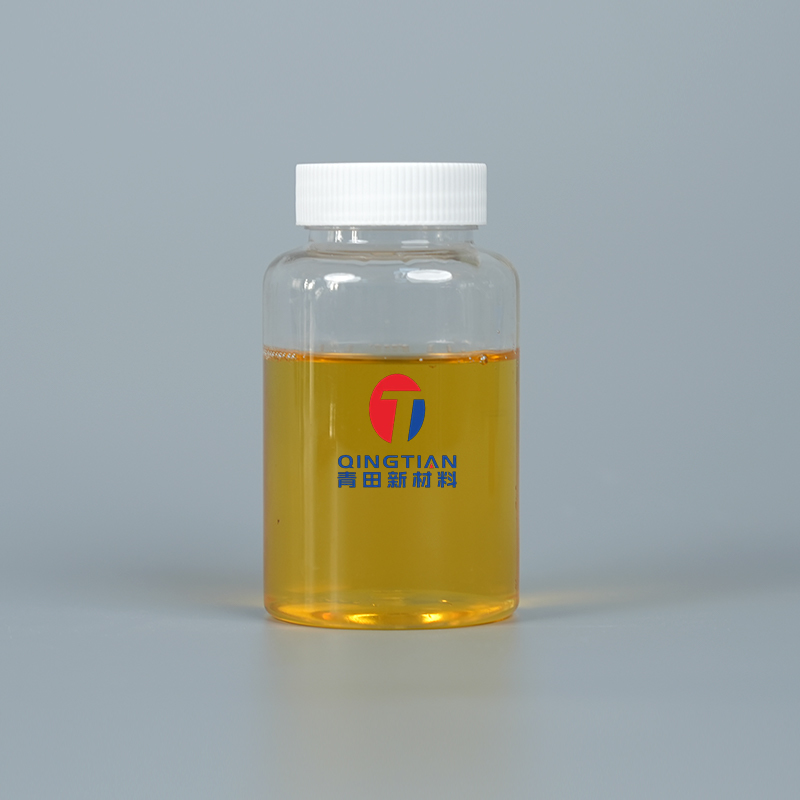 Custom DH-6200 Dispersant for Epoxy Systems Suppliers, Factory - Suzhou QingtianSuzhou Qingtian New Material Co., Ltd. is China DH-6200 Dispersant for Epoxy Systems Suppliers and Factory, details:Grinding and dispersi...View Product → instead.
 - Consider the end-use requirement. If the coating must be conductive, such as an antistatic primer containing carbon black, the dispersant must handle a high-surface-area pigment without interfering with conductivity. Specialty grades are formulated for exactly this situation.
- Screen the dosage with a gradient. A common starting range is 5% to 20% dispersant by weight of pigment, depending on pigment surface area. Too little gives poor stability; too much can raise viscosity or increase water sensitivity of the final film.
- Validate with grind and storage tests. Measure grind fineness with a Hegman gauge during milling, then check viscosity, color development, and sediment formation over controlled storage conditions. These simple tests reveal more than any theoretical calculation.
For a more detailed step-by-step approach to matching dispersant grades to your formula, see the detailed guide on selecting the right dispersant grade. To compare available options side by side, explore waterborne dispersant product range.
 Wholesale Water-based Dispersants Manufacturers, FactoryAs China Water-based Dispersants Manufacturers and Factory, Suzhou Qingtian New Material Co., Ltd. offer Wholesale Water-based Dispersant...View Product →
Conclusion
Understanding what is a dispersing agent in water comes down to a few durable points. It acts as a protective layer around each particle, allowing pigments and fillers to stay separated in a continuous water phase. It works in three steps: wetting the particle surface, supporting de-agglomeration under shear, and stabilizing the particles against re-clustering. In waterborne coatings, steric stabilization is generally more reliable than electrostatic repulsion because it resists pH shifts and electrolyte interference. And correct selection depends on pigment surface chemistry, resin compatibility, application demands, and a validated dosage test.
Dispersion quality is one of the strongest levers a formulator has over storage stability, appearance, and cost. If a water-based formula suffers from settling, floating, or weak color development, the dispersing agent is the first place to look.