


 русский
 Español
 Français
Home / News / Industry News / What Are Common Anti-Foaming Agents? Types, Selection Rules, and Defect Fixes
Industry News

Content
A coil coating line switched to a new waterborne acrylic primer last spring. Within two shifts, the applicator rollers were carrying a visible foam blanket, the cured film showed pinholes, and the batch was rejected. The formulator had dosed 0.10% of a standard dimethyl silicone antifoam, the same product that had worked flawlessly in the old solventborne system. Nothing about the foam control package was wrong on its own. It simply did not match the surfactant load, the pH, and the shear profile of the new formulation.
If you are asking what the common anti-foaming agents actually are, here is the short answer first, with the detail behind it further down.
Almost every antifoam on the market belongs to one of four chemistry families:
Picking between them is not a matter of choosing the strongest foam killer. The right antifoam has to be incompatible enough to break foam lamellae and compatible enough to leave the film defect-free. Everything below is about finding that narrow window.
A foam is not just bubbles. It is a network of thin liquid films stabilised by surfactant molecules arranged at the air-liquid interface. Three forces keep those films alive:
An antifoam only works if it interferes with one or more of these mechanisms. In practice, a working antifoam does four things in sequence: it enters the foam film, it spreads along the interface, it destabilises the surfactant layer locally, and it drains the film until it ruptures.
For entry and spreading to happen, the surface tension of the antifoam must be lower than that of the foaming liquid. That is why almost every antifoam concentrate contains a low-surface-energy component: silicone oil, modified siloxane, or a hydrophobic wax particle. The carrier oil, the emulsifier, and the hydrophobic filler together decide whether the product spreads or simply sinks.
The second condition is harder to talk about and more important in practice: the antifoam must be insoluble in the medium. If it dissolves, it stops being an antifoam and becomes another surfactant. But insolubility comes at a cost. An antifoam that is too incompatible will not disperse finely enough, and the same droplets that burst foam at the surface also create craters, fisheyes, and pinholes in the dry film. Every practical selection decision sits on that seesaw.
Mineral oil antifoams are the oldest family and, by volume, still the most widely used. A typical product is a dispersion of hydrophobic particles — fumed silica, fatty acid amides, or modified waxes — in a paraffinic or naphthenic oil carrier, stabilised with one or two nonionic emulsifiers. In waterborne systems they arrive either as an oil-in-water emulsion or as a 100% active oil that the formulator emulsifies in place.
Mineral oil antifoams are weak in high-gloss and clear systems. The oil droplets sit at a slightly different refractive index than the binder, and at higher doses they show up as haze or as a measurable loss of gloss. They also tend to lose efficiency under high shear, because mechanical action re-emulsifies the oil droplets and they lose the ability to spread on the foam surface.
Storage stability is another consideration. At elevated temperature the oil can separate and float to the surface, producing a visible film on the paint or on the printed ink. If your process runs at high agitation and needs rapid knockdown rather than long-term suppression, a straight mineral oil product is usually the wrong first trial.
Silicone antifoams dominate the coatings and inks industry for one reason: they combine the lowest surface tension available with excellent thermal stability. A polydimethylsiloxane backbone has a surface tension around 20 to 21 mN/m, well below water at roughly 72 mN/m and below most organic binders and solvents. That low surface energy is exactly what makes spreading so efficient and knockdown so fast.
The workhorse type consists of a dimethyl silicone carrier loaded with hydrophobised fumed silica. The silica particles give the droplet a rough, hydrophobic surface that punctures the foam lamella mechanically — a bridging mechanism that is far more effective than spreading alone. These products are normally supplied as a 100% active liquid or as a 10% to 30% emulsion, and they are dosed between 0.05% and 0.3% on total formulation.
The main risk is surface defect. Free silicone oil that does not fully disperse can travel far from the point of addition and produce craters, orange peel, and recoatability problems. In a topcoat, or in any system that has to accept a second coat, an unfilled dimethyl silicone should be treated with caution.
Grafting polyether chains onto the siloxane backbone changes the behaviour substantially. The polyether groups raise compatibility with organic binders and with water, which improves dispersion quality and reduces the tendency to form surface defects — but it also reduces raw antifoam efficiency. Polyether-modified siloxanes are therefore the type of choice when the system is sensitive, when defect risk is high, and when moderate foam control is acceptable.
These products also behave differently with temperature. Polyether-modified siloxanes have a cloud point; above it they become insoluble and suddenly much more effective as antifoams, but they can also fall out of solution and cause haze in a clear coat. If your application temperature varies by more than 15 degrees C across the line, test at both ends of the range.
For waterborne systems, an emulsion-based silicone antifoam is often the most practical starting point because it disperses with simple stirring and does not require a high-shear premix.
Silicone-free antifoams exist because a large part of the market cannot tolerate silicone at all. Automotive OEM and refinish lines, some electronics and display coatings, overprint varnishes that must remain recoatable, and a number of industrial adhesives explicitly forbid siloxane contamination. This family also avoids the surface-tension-driven defect mechanism entirely.
The chemistry is more varied than most people expect. Common building blocks include:
Knockdown speed is generally slower than a filled silicone product. What silicone-free types do well is long-term suppression and film quality. Because they are formulated to sit closer to the compatibility limit, they disperse more finely, stay suspended longer, and leave almost no surface signature at the recommended dose.
Dosing is normally higher than for silicones — 0.2% to 1.0% on total formulation is typical, and some ink systems run to 1.5%. Always confirm the upper limit with a drawdown, because above a certain concentration these products start to act as wetting agents and can stabilise foam instead of breaking it. That inversion point is real, and it is one of the most common formulation mistakes we see on the bench.
The table below summarises the chemistry types that usually work best in each system, together with typical dose ranges and the defect to watch for. Treat the dose ranges as starting points for a ladder study, not as fixed recommendations.
| System | Chemistry that usually works | Typical dose | Main risk to watch |
|---|---|---|---|
| Waterborne architectural paint | Mineral oil with hydrophobic silica | 0.2% to 0.5% | Gloss loss, surface oil film |
| Waterborne industrial coating | Filled silicone or polyether-modified siloxane | 0.05% to 0.3% | Craters, recoatability |
| Waterborne printing ink | Silicone-free polymer or polyether-modified siloxane | 0.2% to 0.8% | Dot gain, gloss reduction |
| Solventborne coating | Solvent-free filled silicone | 0.05% to 0.2% | Fisheyes, intercoat adhesion |
| UV and 100% solids | Silicone-free acrylic or polyether type | 0.1% to 0.5% | Surface cure interference |
| Waterborne adhesive | Mineral oil or EO/PO copolymer | 0.1% to 0.5% | Bond strength loss |
| High-pH aqueous process | Mineral oil or fatty alcohol alkoxylate | 0.1% to 0.5% | Emulsion breakdown, turbidity |
Two antifoams can have the same chemistry family on the label and behave completely differently in your formulation. These are the parameters worth requesting from a supplier before you commit to a trial.
Determines how much material you actually add and how much you pay per unit of active ingredient. A 100% active liquid and a 20% emulsion at the same price are not the same purchase.
Mineral oil, water, glycol, or solvent-free. The carrier affects VOC content, compatibility, and how easily the product mixes into the batch.
High-viscosity products are hard to pump and dose accurately. If your dosing line uses a peristaltic pump, check the viscosity at your storage temperature, not at 25 degrees C only.
The droplet or filler size distribution drives efficiency. Finer is not automatically better — very fine emulsions disperse well but can be less effective at bursting large surface foam.
Alkaline systems can saponify certain carriers. High-temperature processes can break emulsions. Confirm the stability window in writing.
VOC content, REACH status, food-contact clearance, and any restricted substance declarations. These are procurement blockers, not afterthoughts.
One more parameter deserves its own mention: compatibility. A simple compatibility screen is to add the antifoam at twice the intended dose to a small sample, draw it down on glass, and inspect under raking light after full cure. If you see haze, specks, or craters at double dose, you will see them at normal dose in a different substrate or a different film thickness.
Formulators often use the words interchangeably, but the tests measure different things and the product profiles differ.
Defoaming, sometimes called knockdown, is about destroying foam that already exists. It is dominated by the spreading coefficient and by how fast the antifoam droplet reaches the foam surface. Silicone products with hydrophobic filler are the strongest performers here.
Suppression, or antifoaming in the strict sense, is about preventing foam from forming in the first place. It depends on how long the active remains dispersed in the bulk and how well it migrates to new interfaces. Silicone-free polymers and finely dispersed emulsions tend to do better in this role.
Residual foam height measured 3 minutes after agitation stops. Model system: 1.0% nonionic surfactant solution, antifoam dosed at 0.2%, 25 degrees C, graduated cylinder shake test.
The ranking above holds in a clean model system. It changes once you put the antifoam into a real paint or ink, because binders, pigments, and rheology modifiers all compete for the same interfaces that the antifoam needs to occupy. That is why the model test tells you which chemistry to shortlist, and the application test tells you which grade to keep.
Foam control is one of the few properties in a coating laboratory that almost always gets underestimated at bench scale. A 200 mL beaker at 800 rpm generates far less air entrainment than a 2,000 L tank with a high-shear disperser running at the same tip speed. Plan the test ladder accordingly.
Add the candidate at 0.1%, 0.3%, and 1.0% to the letdown stage. Cast films on glass and on the intended substrate. Inspect for craters, fisheyes, haze, and any loss of gloss or adhesion after 24 hours.
A graduated cylinder shake test gives a fast ranking of knockdown speed. A high-speed stir test at 2,000 to 3,000 rpm for 5 minutes gives a ranking of suppression, because it keeps generating new interface for the duration of the test.
Drawdowns, roller application, and spray-outs reveal defects that a beaker test never shows. Spray application in particular creates a thin film where an unstable antifoam droplet produces a pinhole every time.
Take a sample from the tank immediately after letdown and again after 24 hours of storage. Foam height and film quality should be measured on both. A product that works on day zero but loses dispersion by day one will fail in the customer's line, not in yours.
Keep the trial batch under the same storage conditions as production. Antifoam emulsions are physical dispersions, and freezing, prolonged storage above 40 degrees C, or repeated pumping cycles can all destabilise them.
These systems carry the heaviest surfactant load of any coating category, because wetting agents, dispersants, substrates, and associative thickeners all contribute to foam. A two-component approach often works best: a filled silicone for knockdown during production, plus a small amount of a silicone-free polymer for suppression during application.
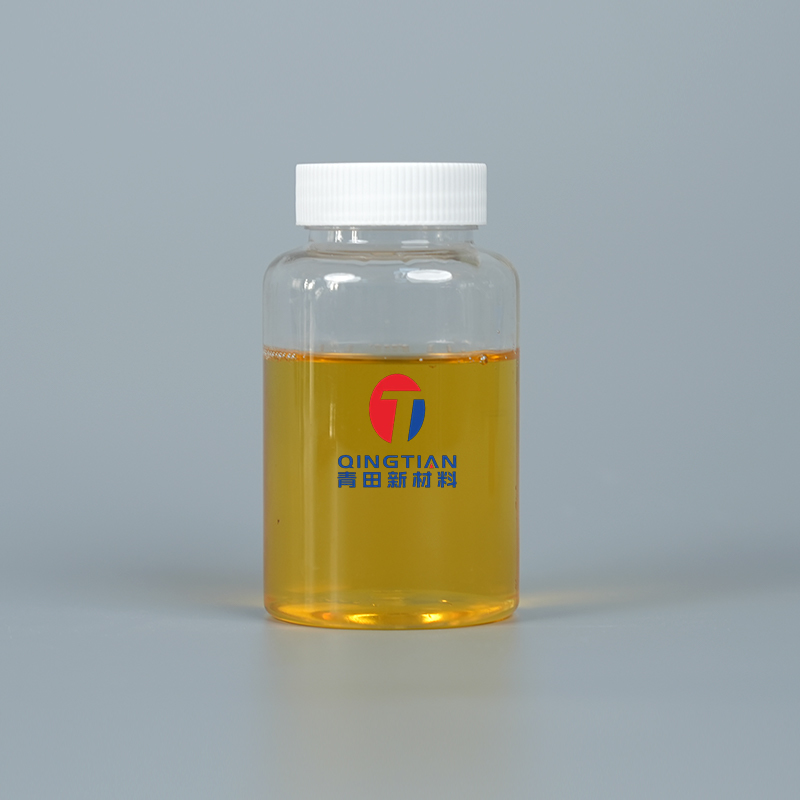 DH-2277S Water-based DefoamerNon-silicone, long-chain aliphatic hydrocarbon vegetable oil emulsion type defoamer;View Product →
Water-based inks foam during pumping, during the doctoring step, and inside the ink pan. Silicone contamination causes print defects that are hard to trace, so most ink houses standardise on silicone-free chemistry. Dose control matters more than in coatings, because the same product that kills foam can also affect surface tension and therefore dot gain, mottling, and adhesion to the substrate.
Foam in an adhesive is not only a processing problem. Entrained air reduces the effective contact area at the bond line, which shows up as reduced peel strength and as voids in the cured adhesive. Mineral oil and EO/PO copolymer types are the usual choices here, because they cause the least interference with tack and with the final mechanical properties.
Foam is less persistent in solventborne coatings because organic solvents have lower surface tension and drain faster. When foam does occur, it is usually caused by high pigment loading and by the dispersant system. A low dose of a solvent-free filled silicone, typically 0.05% to 0.2%, is usually sufficient.
These formulations have no water or solvent to drain away, so foam that forms stays. Silicone-free acrylic and polyether types are preferred because silicones can interfere with UV cure at the surface. A common symptom is a slightly tacky or hazy film after full cure, which is easy to misdiagnose as a photoinitiator problem.
If the foam problem traces back to pigment wetting rather than to the binder, the fix may belong in the dispersion step instead. Our guide on how to select the right dispersing agent grade for coatings covers the selection logic for that part of the formulation.
Silicone chemistry also interacts directly with surface control. If you are running a silicone-containing system and see flow or slip problems alongside foam issues, the companion article on acrylate leveling agents in industrial coatings explains how the two additive packages should be balanced.
When a film defect appears, the antifoam is often the first suspect and sometimes the wrong one. This table maps the visible symptom to the likely cause and to the corrective action.
| Symptom | Probable cause | Corrective action |
|---|---|---|
| Craters and fisheyes | Antifoam too incompatible or overdosed | Reduce dose, switch to polyether-modified siloxane |
| Pinholes in dry film | Foam not fully broken before cure | Increase knockdown additive, adjust addition point |
| Loss of gloss in clear coat | Oil carrier incompatible with binder | Switch to silicone-free polymer type |
| Surface haze after storage | Antifoam separating or floating | Improve dispersion, check storage temperature |
| Foam returns after 24 hours | Poor suppression, active depleted | Add a suppression-grade product, split the dose |
| Reduced intercoat adhesion | Silicone migrating to the surface | Lower silicone dose, use silicone-free alternative |
| Tacky surface after UV cure | Silicone interfering with cure | Replace with acrylic or polyether antifoam |
Antifoams are usually a small line item in a formulation, which makes it easy to overlook the practical details that decide whether they work in production.
One purchasing habit that saves a lot of time: qualify two products from different chemistry families at the same time. If a regulatory change or a raw material shortage removes one, the second is already approved and you are not restarting the work from scratch.
Most silicone antifoams are used between 0.05% and 0.3% on total formulation. Mineral oil and silicone-free polymer types usually run from 0.2% to 1.0%. Start at the low end of the range, run a ladder, and confirm that the upper end of the ladder does not introduce surface defects.
Post-addition is possible and is sometimes the only practical option for a tank that has already foamed. It works better with emulsion products and with moderate agitation. The trade-off is distribution: a product added late has less time and less shear to disperse, so it may control foam in the tank but still fail during application.
There are two common reasons. The first is overdosing: above a certain concentration, some surfactants behave as foam stabilisers rather than foam breakers. The second is poor emulsification, where a poorly dispersed antifoam forms large droplets that generate defects and simultaneously fail to reach the foam surface. Both are solved by reducing the dose and improving the mixing.
Choose silicone when you need the fastest knockdown and the lowest dose, and when the system tolerates silicone. Choose silicone-free when the film is clear or high-gloss, when the coating has to accept a second coat, when a subsequent process step is sensitive to siloxanes, or when the end application prohibits silicone for compliance reasons.
It can, and silicone-containing products are the usual culprits. Free silicone oil migrates to the surface during film formation and reduces the surface energy, which is exactly what makes the next coat fail to wet. If a system needs recoatability, either reduce the silicone dose or test a silicone-free alternative at the same efficiency level.
Typical shelf life is 12 months from the date of manufacture in an unopened container, stored between 5 and 35 degrees C. Emulsions may show slight settling, which is normal. Separation into two clear layers, or a strong odour, indicates the product should not be used without a fresh compatibility test.
Yes, and blending is often the best answer when a single product cannot deliver both knockdown and suppression. Blend a filled silicone for fast knockdown with a silicone-free polymer for long-term suppression at a ratio determined by your own ladder study. Do not blend two emulsions of opposite ionic charge without a pre-test — the mixture can break in the drum.
Run a three-point screen: add the product at half the intended dose, at the intended dose, and at twice the intended dose in separate samples, then cast films on glass. Inspect under raking light after full cure. If the double-dose sample is clean, the product has enough compatibility headroom for normal production variation.
 Wholesale Paint/ Coating Additives Manufacturers
Custom Industrial Chemical Solutions Suppliers