


 русский
 Español
 Français
Home / News / Industry News / UV Coating Leveling Always Insufficient? The Problem May Be in the Additive Selection
Industry News

In UV coatings, UV inks, and other photo-curable systems, the transition from liquid to solid state is very fast. Traditional coatings still have relatively adequate time to correct surface defects through solvent evaporation and film flow. But once UV curing begins, the resin system reacts rapidly and the film's flow window shortens. This readily causes a problem: the formulation has no obvious abnormality, but the final film is not flat enough, not smooth enough, and even develops cratering and orange peel surface defects. Therefore, in UV systems, a leveling agent needs not only to reduce surface tension and improve wetting and flow, but also to consider compatibility with the resin, durability after curing, and subsequent recoat performance.
UV system curing is its advantage, but it also means the film's self-correction time is shortened. If leveling speed cannot keep pace with cure speed, surface undulation remains.
When the interfacial tension relationship between coating and substrate is inappropriate, the coating liquid cannot spread uniformly and may form cratering, show-through, or non-uniform film.
Some UV coatings require not only flat appearance but also a certain slip feel and anti-friction capability. If only leveling is pursued without balancing surface performance, the final effect may still be unsatisfactory.
Some traditional silicone additives readily form obvious surface migration layers on the film — though short-term leveling effect is good, excess use may affect interlayer bonding in subsequent coating.
A leveling agent needs to first maintain good compatibility with the resin system, then appropriately improve surface tension and substrate wetting during application, helping the coating liquid spread more uniformly. If the additive only physically resides in the film without participating in the cured network formation, its mode of action may change during subsequent curing, storage, or recoating. Reactive acrylic-functional siloxane additives can use their reactive functional groups to participate in network formation during UV curing, making the additive more stably present in the cured film and better balancing surface performance with durability.
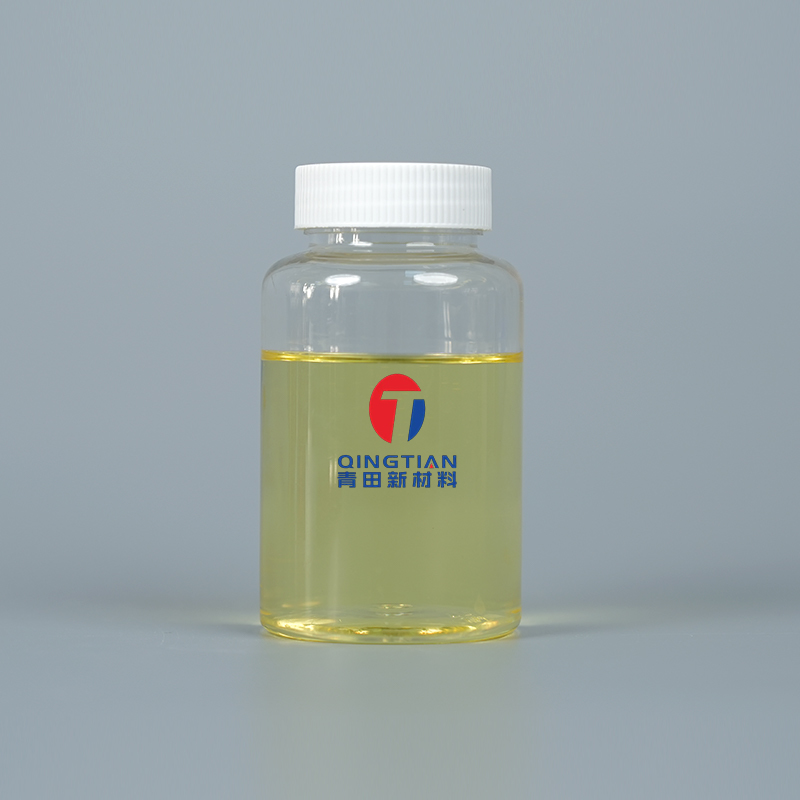
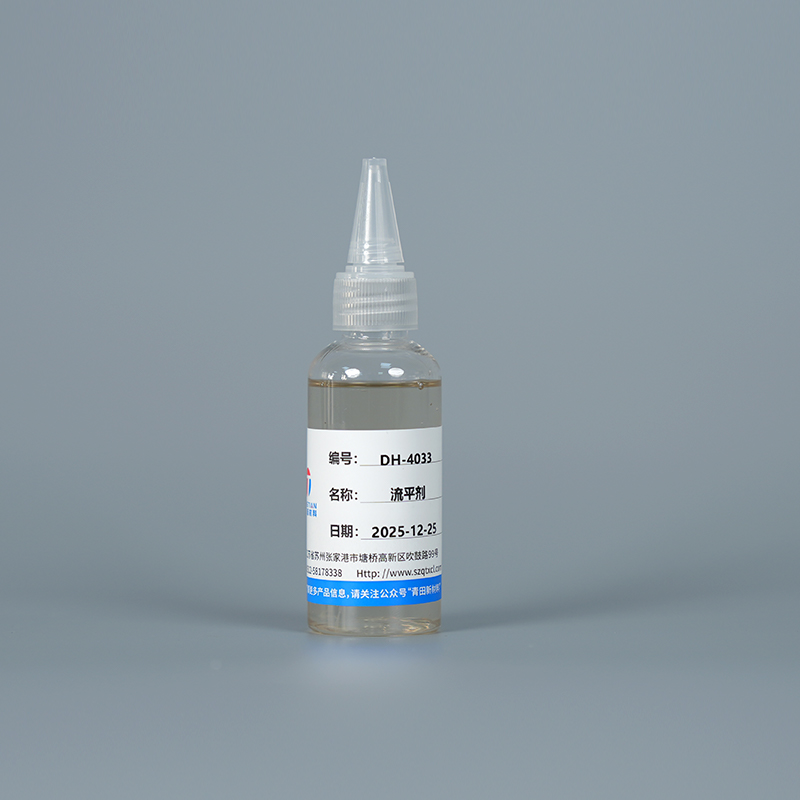
DH-4210 is a crosslinking polysiloxane acrylate leveling agent, primarily targeting UV and other photo-curable systems. Compared to traditional surface additives that rely purely on physical migration, its molecular structure has reactive groups that can participate in crosslinking — providing better adaptability to the cured system during curing rather than being completely dependent on a free state for surface action.
In practical application, DH-4210 simultaneously improves: helping the coating liquid spread better — improving film leveling effect; improving substrate wetting capability — reducing surface defects caused by insufficient wetting; improving film slip and assisting scratch resistance. Its good compatibility also helps reduce turbidity problems caused by additive-resin mismatch, while accommodating recoat and overprint requirements. Applicable systems: UV wood coatings, printing inks and surface printing varnish, can coatings, and plastic coatings. Reference dosage: wood coatings 0.05%–4%; printing inks and surface printing varnish 0.1%–1%; can coatings 0.05%–0.3%; plastic coatings 0.05%–0.6%.
The leveling problem in UV coatings and UV inks is fundamentally closely related to the short film flow time, surface tension, and substrate wetting state. Therefore, when selecting a leveling agent, not only "is the film flat after application" should be considered — the compatibility between additive and resin, and the impact on slip, recoat, and surface performance after curing, must also be considered. Reactive siloxane acrylate leveling agents can improve compatibility with UV cure systems from the molecular structure level, improving leveling, wetting, and slip while providing a more stable formulation choice for UV coatings and inks.
 Wholesale Paint/ Coating Additives Manufacturers
Custom Industrial Chemical Solutions Suppliers
Wholesale Paint/ Coating Additives Manufacturers
Custom Industrial Chemical Solutions Suppliers