


 русский
 Español
 Français
Home / News / Industry News / How Do Antifoaming Agents Work? Foam Control in Coatings, Inks & Adhesives
Industry News

Content
Foam in a paint can, an ink tank, or an adhesive batch is never just a cosmetic nuisance. It creates pinholes, craters, fisheyes, and uneven surfaces that ruin film appearance and compromise protection. It slows down production lines and increases scrap rates. When you ask how antifoaming agents work, the short answer is: they destabilize the air-liquid interface so that bubbles collapse before they can cause those defects. But the longer answer, the one that helps you select the right defoamer for a solvent-based or water-based system, involves surface tension, lamella thinning, droplet spreading, and the chemistry of the additive itself.
Every foam bubble is wrapped in a thin liquid film called the lamella. That film has two surfaces, each with its own surface tension, and as long as the film stays elastic enough, the bubble remains stable. Antifoaming agents interrupt this stability.
The classic mechanism is known as the bridging-dewetting process. When a droplet of an antifoaming agent lands on the surface of a bubble, it spreads across the lamella and forms a bridge between the two sides of the film. Because the defoamer has lower surface tension than the surrounding liquid, it pulls the film in opposite directions. The film thins, then ruptures. The bubble bursts. This sounds simple, but the effectiveness of an antifoaming agent depends on how quickly and how completely the droplet can do that job.
Surface tension is the force that makes a liquid surface behave like an elastic membrane. A liquid with high surface tension resists deformation, which makes its bubbles stronger. An antifoaming agent with very low surface tension creates an imbalance when it enters the film. The film can no longer maintain its structure, so it drains away from the droplet and breaks.
In practical terms, the defoamer needs to be insoluble or only partially soluble in the system it protects. If it dissolves completely, it loses its ability to sit at the interface and destabilize the bubbles. This is why a defoamer that works perfectly in one resin can fail completely in another.
Bubbles enter paint, ink, and adhesive systems in several ways. High-speed dispersion of pigments pulls air into the liquid. The agitation of mixing, pumping, and filling creates entrained air. Surface-active ingredients like wetting agents, dispersants, and emulsifiers stabilize the bubbles that form. Even the substrate itself can cause problems: porous surfaces such as wood, concrete, or unsealed board release trapped air into a freshly applied film.
This last scenario is common in wood coatings and architectural paints. As the coating dries, the solvent or water evaporates, and air from the substrate rises to the surface. If the film has already begun to set, that air cannot escape quickly enough. The result is a foam crater or pinhole that only becomes visible after the coating has cured.
Foam stabilization also depends on the type of resin. Acrylic emulsions, polyurethane dispersions, and epoxy systems each have their own surface chemistry. An emulsifier or a wetting agent in the formulation can create a rigid, elastic lamella that resists drainage. This is why a defoamer must be matched not just to a general chemistry, but to the specific surfactant package in your formula.
| Source | Process Stage | Typical Consequence |
|---|---|---|
| High-speed dispersion | Mill base preparation | Entrained micro-bubbles |
| Pumping and recirculation | Transfer and filling | Surface foam that is hard to break |
| Substrate porosity | Application | Pinholes, craters, foam marks |
| Surfactant stabilization | Formulation | Persistent foam even after mixing |
Antifoaming agents are commonly divided into two broad families: silicone-based and silicone-free. The difference is not just chemical; it affects how the defoamer works in your system, what side effects it may cause, and where it is best applied.
Silicone defoamers, usually based on polydimethylsiloxane, are extremely effective at low dosage. They have very low surface tension, spread quickly across the lamella, and work well in both water-based and solvent-based systems. This makes them the default choice for many paint and ink manufacturers.
The trade-off is compatibility. A silicone defoamer that is not perfectly dispersed can cause craters, fish eyes, or poor intercoat adhesion. Some silicone products also create a surface slip that changes the final feel of the coating. For applications where recoatability is critical, such as industrial primers or automotive basecoats, this can be a problem. Products like 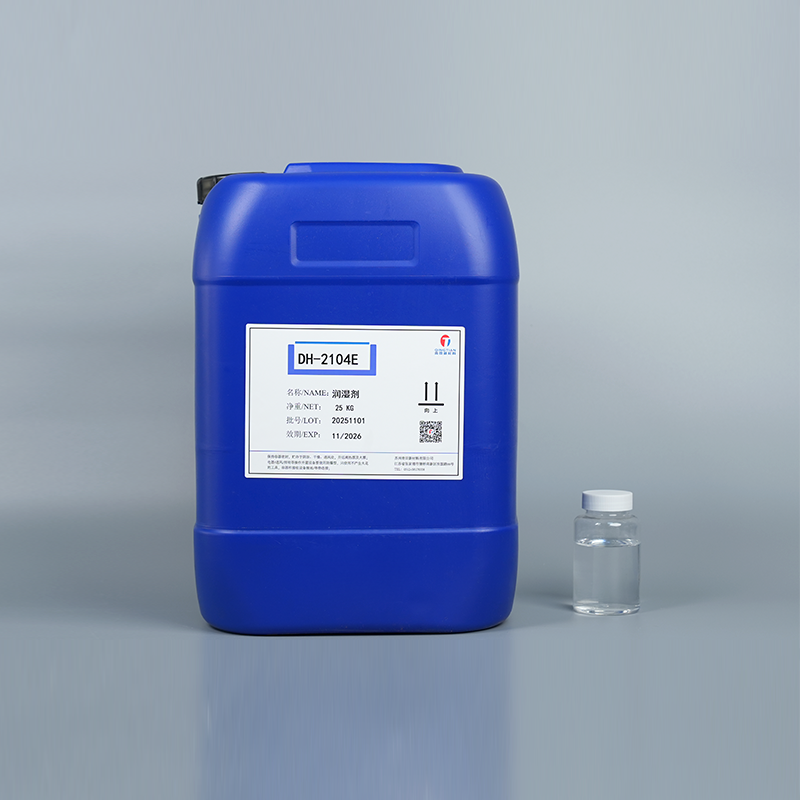 DH-2104E Water-based Defoamer for Stable Pigment ConcentratesThis silicone-free defoamer offers rapid foam suppression with low surface tension, helping water-based coatings avoid craters and adhesion problems. Its thermal and alkali stability suits pigment concentrates and inkjet inks.View Product → are designed to minimize these side effects while retaining strong foam control. That is the kind of balance a formulator looks for when a coating needs both defect-free surfaces and reliable adhesion.
Non-silicone defoamers use mineral oils, fatty alcohols, glycols, or acrylic copolymers as the active material. They are often chosen when silicone is undesirable for a particular application, such as in certain food-contact formulations, or when a system is especially sensitive to cratering.
Non-silicone defoamers have a different mechanism. Instead of spreading across the film surface as rapidly as silicone, they penetrate the lamella and cause localized dewetting. They can be highly effective in specific systems but often need more careful optimization of dosage and stirring conditions. They may also provide only short-term foam suppression and lose efficacy during storage.
For manufacturers producing both solvent-based and water-based coatings, holding both product families is common: a silicone defoamer for the toughest foam, and a non-silicone product when compatibility is the deciding factor. The product line also includes  DH-2022A Solvent-Based Defoamer with Silicone-like PerformanceDesigned for solvent-based systems, this defoamer combines powerful deaeration with excellent compatibility, reducing the risk of cratering. It suits coatings, sealants, and cutting fluids where both foam control and recoatability matter.View Product →, a non-silicone option that offers an alternative when a silicone component is unwanted. This type of choice is what distinguishes a raw material supplier from a solution partner.
The same antifoaming agent can behave very differently in different resin systems. This is because the chemistry of the resin, the solvent package, and the surfactant profile all affect how the defoamer droplet interacts with the lamella.
Water-based systems are inherently more foamy. The combination of water, surfactants, and high-speed dispersion creates a stable foam that is difficult to break. Water is also a poor solvent for most defoamer droplets, so the droplet must be hydrophobic enough to spread at the interface, but not so hydrophobic that it separates from the formulation.
Water-based defoamers are often supplied with a carrier or emulsifier package that helps them incorporate into the system during the letdown phase. The timing of defoamer addition matters. Adding it during the grind phase exposes the defoamer to high shear and may cause it to be over-emulsified, reducing its effectiveness. Adding it during letdown, after the resin and pigments are dispersed, often preserves the defoamer droplet size and improves performance.
Solvent-based coatings have lower surface tension than water-based ones, so foam is generally less stable. This means that a defoamer can work at lower concentrations and often with faster results. However, the solvent itself can act as a carrier for the defoamer droplet, and if the solvent is too aggressive, it can dissolve the defoamer before the droplet has a chance to reach the bubble surface.
Aromatic solvents, ketones, and esters each interact with defoamers in a slightly different way. A formulator working with a specific resin, such as a polyurethane or an epoxy, needs a defoamer whose carrier fluid is compatible with that solvent blend. This is where a broad product portfolio makes a real difference. The ultimate guide to adhesion promoters for glass, metal, and plastic touches on a similar theme: matching additive chemistry to the substrate and resin system is the essence of industrial formulation work.
Some applications push defoamers into extreme conditions. UV-curable coatings, for example, are applied at room temperature, but the cure step involves rapid crosslinking and intense heat generation from the UV lamps. A defoamer that is not stable at these temperatures can break down, release gas, and create pinholes after curing.
Similarly, coatings that are baked at high temperatures, such as coil coatings or automotive primers, require defoamers with high thermal stability. Silicone defoamers usually outperform non-silicone types in this area, which is why they are preferred for high-temperature industrial applications.
There is no single best defoamer for all coatings, inks, and adhesives. Selection is always a compromise between foam control and film quality. The following criteria are the ones that formulators and production managers should evaluate when comparing defoamers.
First on any list is compatibility. If the defoamer is incompatible with the binder or the solvent package, it will not just underperform; it may create hazing, glosss reduction, or craters. A quick laboratory test, such as a simple draw-down application and cure, will reveal compatibility issues early.
An antifoam has to be effective at the dosage you are willing to use. A product that works at 0.1% is much more cost-efficient than one that needs 0.5% for the same result. Efficiency depends on the droplet size distribution and the spreading coefficient of the defoamer. For example, 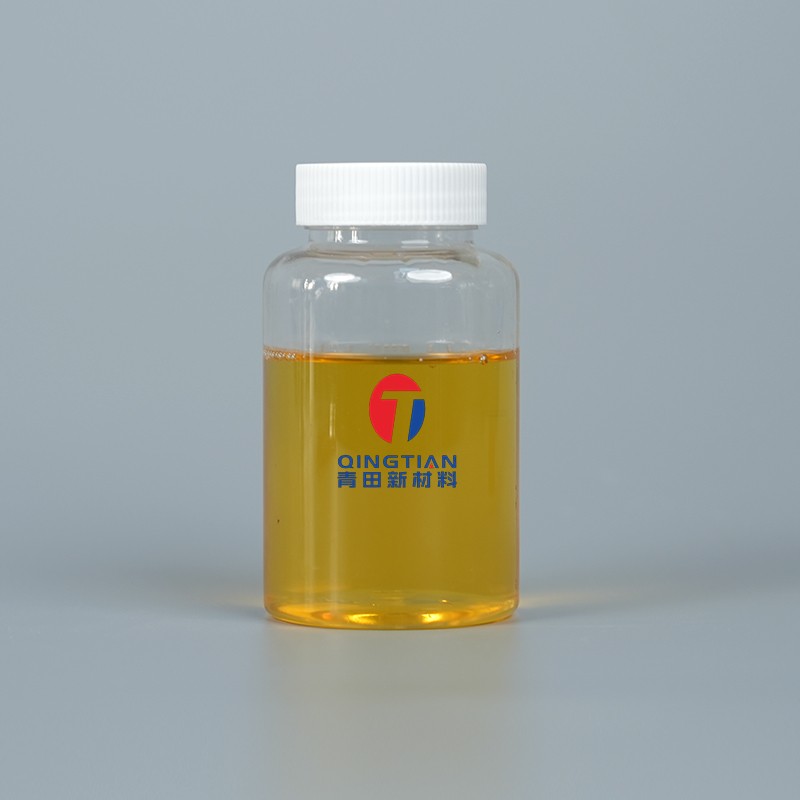 DH-2277S Non-Silicone Emulsion Defoamer for Micro-BubblesA vegetable oil emulsion defoamer that quickly eliminates micro-foam while maintaining high compatibility in aqueous systems. It works efficiently at low dosages, supporting cost-effective foam control in water-based formulations.View Product → is one of the options formulated for efficient foam suppression in aqueous systems, which can help reduce total additive load.
A defoamer must survive the shear of mills, mixers, and pumps, and it must continue working after months in storage. Some defoamers lose effectiveness after prolonged stirring because the droplets get too small to bridge the lamella. Others may separate from the formulation over time and rise to the surface. Evaluating a defoamer under simulated production conditions is essential.
The final film properties matter as much as foam control. Tan, gloss, adhesion, hardness, and chemical resistance can all be affected by a defoamer. If the defoamer is not fully dispersed, it can act as a weak boundary layer and reduce adhesion to the substrate. This is especially important in industrial coatings where long-term durability is critical.
Technically, an antifoaming agent prevents foam from forming, while a defoamer breaks foam that already exists. In practice, the two terms are used interchangeably. Most commercial products perform both functions to some degree. A defoamer added to a formulation before processing will suppress foam from the beginning, while the same product added to an already foamy liquid will knock it down.
It is risky. Water-based systems require a defoamer with a certain droplet size and spreading behavior, while solvent-based systems have different surface tension values. A product designed for one may work passably in the other, but not optimally. For best results, use a defoamer that is specified for your system.
Excessive defoamer dosage is a common cause of recoatability failure. When too much defoamer remains on the surface, it prevents the next coat from wetting and adhering. This can cause intercoat delamination. Reducing the dosage or switching to a more compatible silicone-free defoamer usually resolves the issue.
It depends on the finishing system. For a clear polyurethane topcoat where gloss is critical, a silicone defoamer may create micro-craters and reduce gloss. In that case, a non-silicone alternative is safer. For a pigmented primer, where surface appearance is less important, silicone defoamers are effective and economical.
There is no universal number. Typical starting points are between 0.1% and 0.7% based on total weight. The right amount depends on the resin, the surfactant load, and the process. Start with the supplier's recommended range, then optimize based on laboratory tests and production trials. Adding too much defoamer can cause defects, so it is not a case of the more the better.
This usually means the defoamer has lost its effectiveness over time. The defoamer droplets may have coalesced and become inactive, or they may have dissolved into the resin matrix. This is more likely with non-silicone defoamers in low-viscosity systems. Re-testing after a storage period is a good practice when qualifying a new defoamer.
 Wholesale Paint/ Coating Additives Manufacturers
Custom Industrial Chemical Solutions Suppliers
Wholesale Paint/ Coating Additives Manufacturers
Custom Industrial Chemical Solutions Suppliers