


 русский
 Español
 Français
Home / News / Industry News / How Can Advanced Dispersing Agents Optimize Your Coating Formulation Efficiency
Industry News

Content
In the fields of modern fine chemicals, coatings industry, and environmental management, the effective dispersion of chemical substances is a key factor in determining product performance. To ensure that particles remain stable and evenly distributed in a medium, dispersing agent plays an irreplaceable role. Understanding its physical and chemical mechanisms not only helps to improve product quality but is also the core of optimizing production processes.
what are dispersing agents? Chemically speaking, dispersing agents are a class of additives that can reduce the surface tension of solid particles and prevent particles from agglomerating in liquid media. They are usually composed of surfactant molecules with hydrophilic and lipophilic groups. When these molecules adsorb on the particle surface, they keep the particles suspended in the system through steric hindrance effects or electrostatic repulsion. According to their function and chemical structure, these additives are mainly divided into anionic, cationic, non-ionic, and polymeric types.
In water-based coating systems, water serves as the continuous phase, and the hydrophilicity and wettability of pigments or fillers directly affect the smoothness and hiding power of the coating film. The core roles of dispersing agent for water based paints include reducing interfacial tension, charge stabilization, and steric hindrance. Polymer chains extend on the particle surface, preventing contact and coalescence of particles through physical obstruction.
| Additive Type | Mechanism | Effect on System Viscosity | Applicable Pigment Type |
| Small molecule anionic | Electrostatic repulsion | Significantly reduced | Inorganic pigments |
| Polymeric block copolymer | Steric hindrance | Slightly increased | Organic/Inorganic composite |
| Non-ionic | Steric hindrance | No significant effect | Special functional fillers |
To analyze how do dispersing agents work, it is necessary to interpret them from the perspective of interface chemistry. The action process of dispersing agent is usually divided into three stages: wetting, shear dispersion, and stabilization. Under the action of shear force, additive molecules quickly and directionally adsorb onto the fresh surface of particles, anchoring onto the particles via polar groups, while non-polar segments extend into the medium.
As a dedicated manufacturing facility, we engineer solutions. Our laboratory is equipped to adjust the chemical architecture of dispersing agent formulations to match your specific viscosity requirements and resin compatibility. By controlling the molecular weight distribution, we ensure that your final coating system achieves superior pigment wetting efficiency and long-term shelf stability.
Quality at the source is the cornerstone of our factory operations. Unlike standard market offerings, our production processes adhere to rigorous international standards, ensuring consistent performance for dispersing agent for water based paints.
| Parameter | Standard Industry Grade | Our Factory Specification |
| Active Content Purity | 92% - 95% | 99.2%+ |
| VOC Content | Compliant | Ultra-low / Zero |
Referring to the spraying of chemical agents, how was agent orange dispersed demonstrates the application of large-scale liquid diffusion technology. This process emphasizes the role of additives in improving liquid rheological properties and ensuring the stability of spray coverage and droplet size. chemical agents are often dispersed by which of the following methods in high-gloss industrial coatings? Our technical team suggests a multi-stage approach, optimizing the dispersing agents dosage based on specific particle surface areas.
Insight: By shifting from traditional surfactants to our proprietary high-molecular-weight dispersing agent, one partner reduced their grinding time by 35% while increasing the final film gloss level from 85 to 92 units. This demonstrates how localized factory support and technical consultation provide value beyond the commodity level.
As a manufacturer, we provide direct access to our technical documentation, including TDS and MSDS, along with personalized samples tailored to your specific application environment. Reach out to our technical department today to streamline your production efficiency.
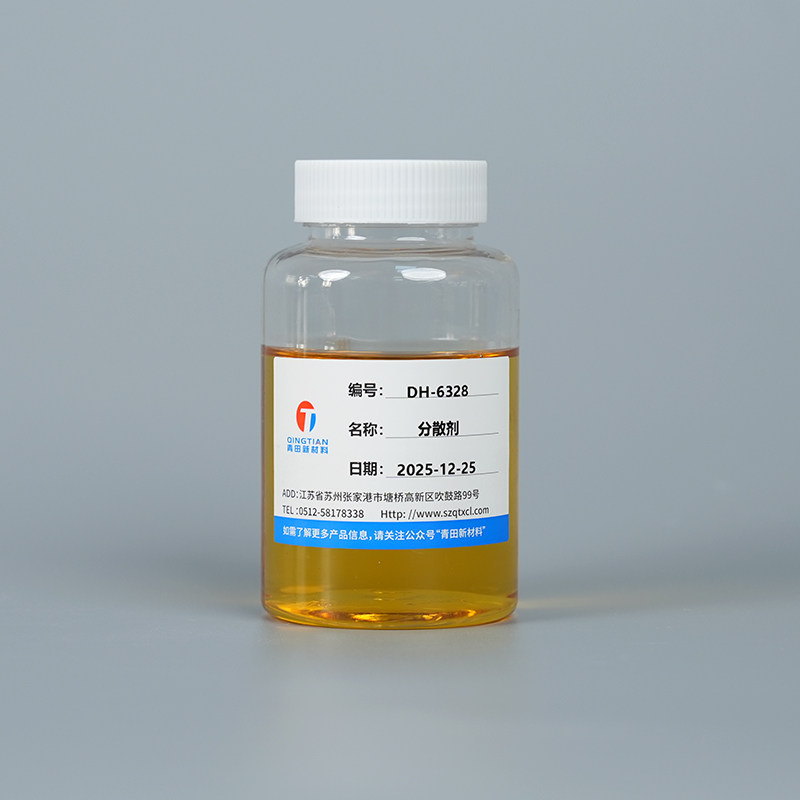
 Wholesale Paint/ Coating Additives Manufacturers
Custom Industrial Chemical Solutions Suppliers
Wholesale Paint/ Coating Additives Manufacturers
Custom Industrial Chemical Solutions Suppliers