


 русский
 Español
 Français
Home / News / Industry News / Fish-Eyes Keep Coming Back in the Same Spots — Is It a Substrate Problem or a Leveling Problem
Industry News

When a coating is applied, the wet film is not a uniform surface — it has inherent variation in surface tension arising from slight differences in solvent concentration, temperature, contamination, and the presence of any incompatible material on the substrate. Zones of lower surface tension pull coating toward them; zones of higher tension are left behind with less material. Fish-eyes form where a localized low-tension area draws a ring of coating away from its center. Cratering is a related phenomenon where the low-tension zone is more severe or the viscosity builds too quickly for the film to recover.
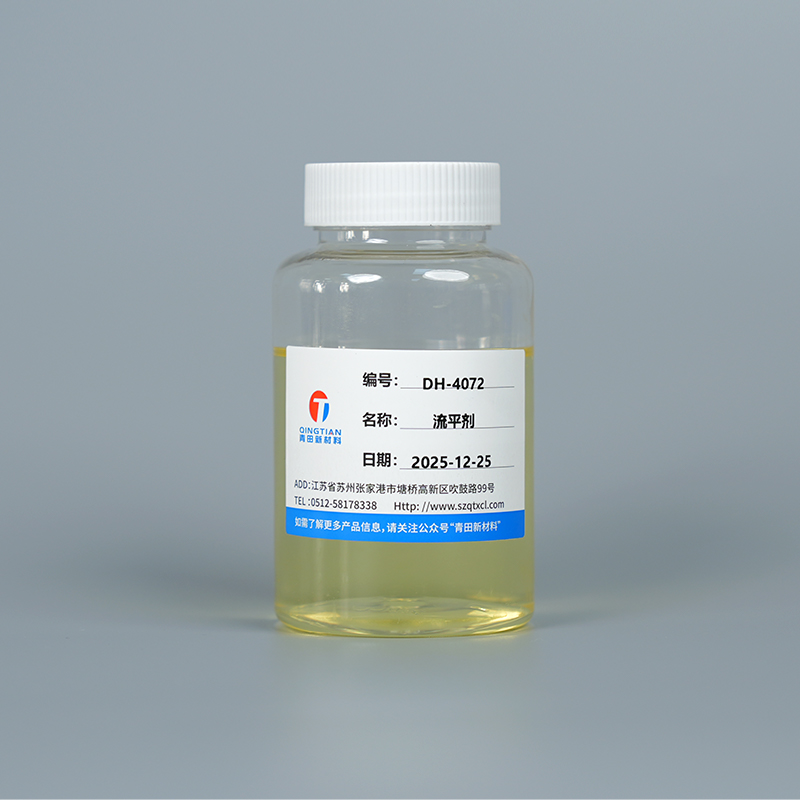
DH-3062 is a non-silicone leveling agent designed to improve the flow and leveling behavior of coatings during application, helping the wet film distribute surface tension more evenly and reducing the occurrence of fish-eyes, cratering, and orange-peel defects. Because it contains no silicone, it avoids the recoat adhesion risks associated with silicone-based additives — making it suitable for multi-coat systems where interlayer compatibility is a requirement.
| Fish-Eye & Cratering Reduction | Reduces the occurrence of surface-tension-driven circular defects by evening out tension distribution across the wet film |
| Flow & Leveling Improvement | Supports better flow of the wet film during the open time, producing a smoother and flatter cured surface |
| No Silicone Structure | Eliminates the interlayer adhesion risk that silicone-based leveling agents can introduce in recoat and multi-coat systems |
| Recoat Compatibility | Maintains stable interlayer adhesion performance when the coating is used as an intermediate or base coat in a multi-layer build |
| Resin Compatibility | Good compatibility across a range of resin systems — reduces formulation-specific compatibility testing burden |
If fish-eyes keep appearing in the same location, does that point to a substrate contamination problem rather than a leveling additive issue?
Yes — if fish-eyes repeatedly appear in the same location, a fixed contamination source on the substrate (oil, silicone release agent, mold release) is the most likely cause. A leveling agent can make the film more tolerant of minor surface tension variation but is not designed to compensate for active surface contamination. Substrate cleaning should be addressed first in this scenario.
Can DH-3062 address orange peel as well as fish-eyes and cratering?
Yes — orange peel is primarily a leveling issue related to the film not flowing adequately during the open time before viscosity builds. Improving flow and leveling efficiency directly addresses orange peel, though application method, film thickness, and viscosity at application also need to be within the appropriate range.
Will it affect the gloss of the cured film?
Improved leveling generally supports higher and more consistent gloss by producing a flatter, smoother film surface. At the correct dosage, DH-3062 should not negatively affect gloss — overdosing any leveling agent can lead to surface slip or reduced intercoat adhesion, so evaluation at the recommended range is important.
Is it suitable for waterborne as well as solventborne systems?
DH-3062 is evaluated for compatibility across multiple resin systems. Please request the technical data sheet for specific system compatibility information.
Fish-eyes, cratering, and orange peel are surface tension management problems — they can be reduced through a leveling agent that distributes surface tension more evenly across the wet film during the flow window.
Dealing with persistent fish-eyes, cratering, or orange peel — especially in multi-coat systems where silicone leveling agents have caused recoat adhesion problems? Request technical data on DH-3062.
 Wholesale Paint/ Coating Additives Manufacturers
Custom Industrial Chemical Solutions Suppliers
Wholesale Paint/ Coating Additives Manufacturers
Custom Industrial Chemical Solutions Suppliers