


 русский
 Español
 Français
Cooling Agent Wholesale
Introduction: Understanding Adhesion Promoters and Surface Bonding What Is an Adhesion Promoter? An adhesion promoter is a chemical or chemical formulation applied to a substrate surface prior to the ...
READ MORE
Cooling agents are used to control heat buildup during the curing or drying process of coatings, preventing film cracking or bubble formation. They work by altering the thermal conductivity of the coating or absorbing heat to achieve temperature control.
Introduction: Understanding Adhesion Promoters and Surface Bonding What Is an Adhesion Promoter? An adhesion promoter is a chemical or chemical formulation applied to a substrate surface prior to the ...
READ MOREHow Do Dispersing Agents Influence Pigment Wetting and Stabilization? 1. The Thermodynamics of Pigment Wetting and the Role of Dispersing Agents Pigment wetting is the first and most fundamental...
READ MOREUnderstanding Acrylate Leveling Agents: The Backbone of Surface Excellence In the sophisticated world of industrial coatings, achieving a flawless, mirror-like finish is not merely an aesthetic prefer...
READ MOREThe essence of snow-melting agents is that they are "phase change regulators" that lower the freezing point by altering the phase change mechanism of water. This characteristic, while different in app...
READ MOREFirst Generation: Sodium Chloride – A Classic “Pioneer” Industrial salt is a relatively traditional and economical de-icing agent. Raw materials are readily available, costs are low, and it works well...
READ MOREIn modern coating systems, the curing and drying stages are often accompanied by significant heat accumulation, especially under thermosetting, thick-film application, or rapid curing conditions. Taking thermosetting systems such as epoxy, polyurethane, and unsaturated polyester as examples, their crosslinking reaction is exothermic. When the coating thickness is large or the reactivity is high, the internal temperature rises rapidly. If the heat cannot dissipate or be buffered in time, a significant temperature gradient will form, leading to inconsistent curing rates between the surface and the interior, resulting in structural defects.
In industrial production, uncontrolled thermal management can lead to a series of quality risks. For example, excessively high local temperature peaks can cause violent vaporization of solvents or moisture, forming bubbles or pinholes; excessively rapid surface hardening can close internal evaporation channels, resulting in a "dry outside, wet inside" problem; excessive temperature differences can exacerbate uneven volume shrinkage, leading to internal stress concentration and ultimately microcracks or even crazing. When applying to metal or plastic substrates, temperature fluctuations can also affect adhesion or cause substrate deformation.
The following is an overview of typical thermal problems and their impacts:
| Thermal Management Issues | Causes | Typical Defects | Long-Term Impacts |
| Localized Overheating | Concentrated Exothermic Reactions | Bubbling, Pinholes | Decreased Surface Integrity |
| Large Temperature Gradient | Uneven Heat Dissipation | Asynchronous Internal and External Curing | Decreased Adhesion |
| Excessive Heating Rate | Rapid Curing | Surface Sealing | Residual Solvent Retention |
| Shrinkage Stress Concentration | Differences in Crosslinking Rates | Microcracks | Reduced Durability |
The core value of the Cooling Agent lies in "actively regulating the reaction environment temperature." By reducing peak temperatures and controlling the heating rate, it makes the curing process more uniform and stable. Especially in high-solids-content, low-VOC, and thick-film systems, its internal thermal management function is crucial for ensuring film quality and industrial stability.
Cooling agents in coating systems primarily achieve temperature control through two main mechanisms: "thermal conduction regulation" and "thermal buffer absorption," offering differentiated advantages in various application scenarios.
The first mechanism is thermal conduction regulation. By introducing functional materials with high thermal conductivity, cooling agents can improve the internal heat diffusion efficiency of the system, enabling localized exothermic areas to rapidly transfer heat to the surrounding environment, thereby reducing the probability of hotspot formation. As the temperature distribution becomes more uniform, the synchronicity of the cross-linking reaction is enhanced, helping to reduce internal stress concentration and film structural defects.
The second mechanism is thermal buffer absorption. Some cooling agents possess high specific heat capacity or phase change endothermic capabilities, absorbing the heat of reaction during temperature rise, weakening instantaneous peaks; when the temperature drops, they slowly release the heat, achieving dynamic equilibrium regulation. This "peak-shaving and valley-filling" temperature control method is particularly effective in high-exothermic systems.
The comparison of the two mechanisms is as follows:
| Mechanism Type | Core Function | Advantages | Applicable Systems |
| Thermal Conductivity Regulation | Improved Heat Diffusion | Reduced Local Hot Spots | Thick Film or High-Filler Systems |
| Thermal Buffer Absorption | Absorbs Reaction Heat | Controls Peak Temperature | Highly Exothermic Epoxy Systems |
| Synergistic Mechanism | Thermal Conductivity + Heat Absorption | More Precise Temperature Control | High-End Functional Coatings |
Compared to simply relying on external air cooling or equipment temperature control, the advantage of internal cooling agents lies in faster response and more precise regulation. They can optimize reaction kinetics and film formation processes at the molecular level, making them an important tool for the refined design of modern coating formulations.
With increasing demands for high performance and environmental friendliness, the coating industry is facing greater technological challenges. The trend towards high solids content and low VOCs makes it more difficult to release internal heat; rapid UV curing and short-duration high-temperature baking improve production efficiency but exacerbate the problem of instantaneous heat release; while emerging applications such as thick-film corrosion protection, insulating coatings for new energy batteries, and photovoltaic module coatings place even stricter requirements on the integrity of internal structures and long-term reliability.
In this context, Cooling Agent is no longer just an auxiliary additive but has become a core thermal management module in high-end formulations. Replacing single external temperature control with an embedded temperature regulation mechanism not only improves product stability but also reduces defect rates, rework costs, and optimizes energy efficiency.
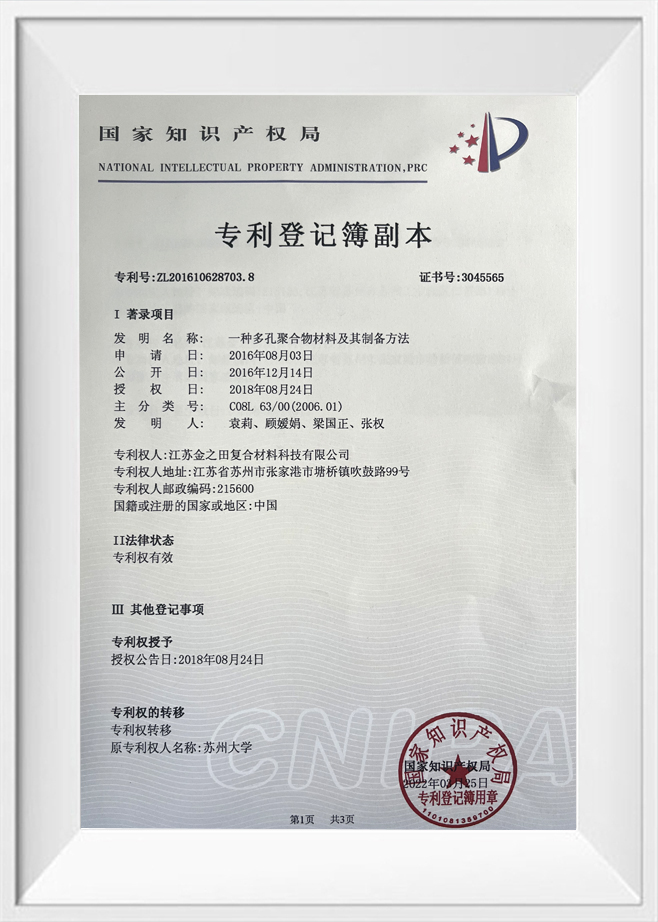
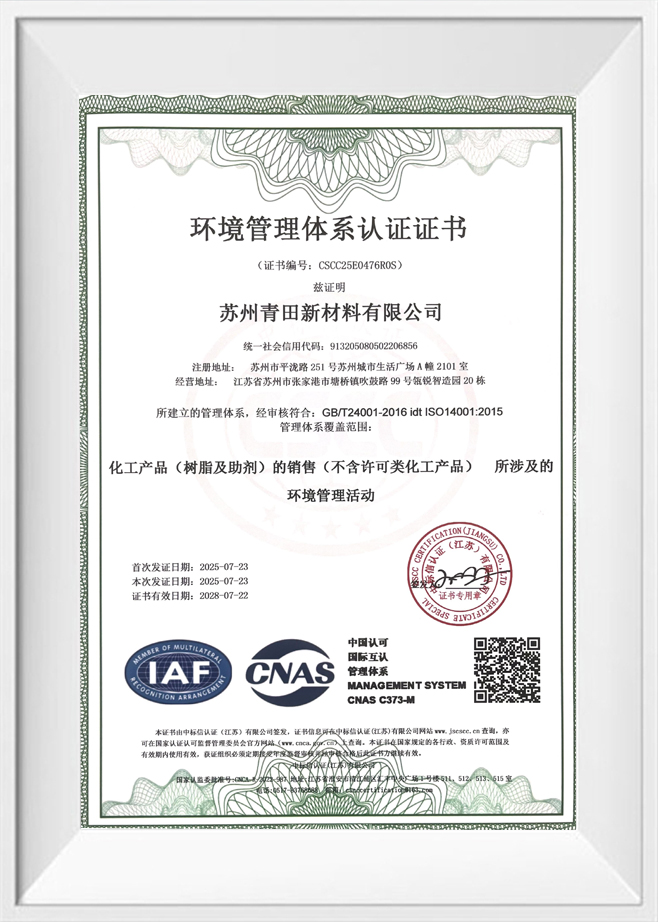
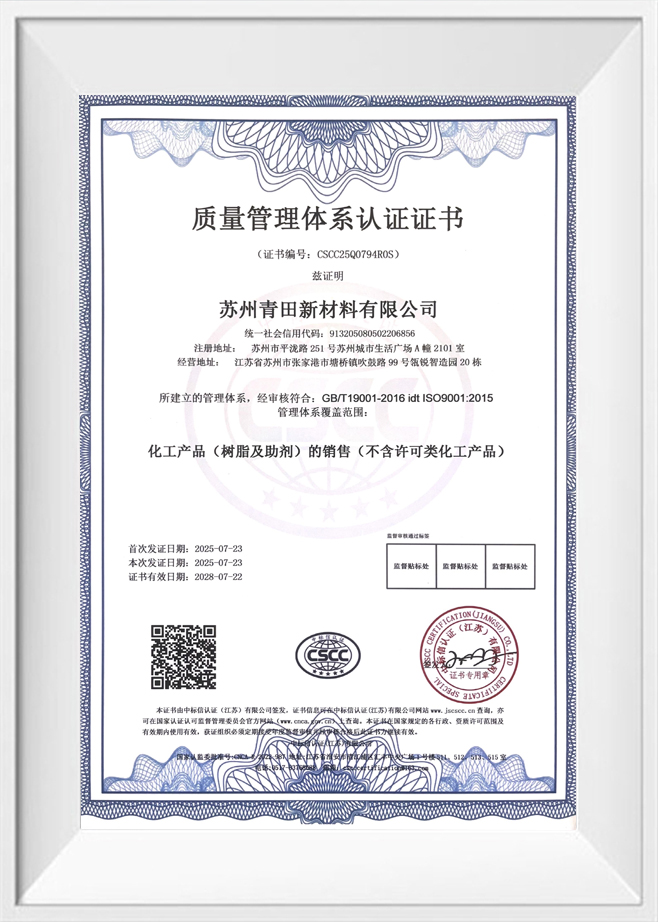
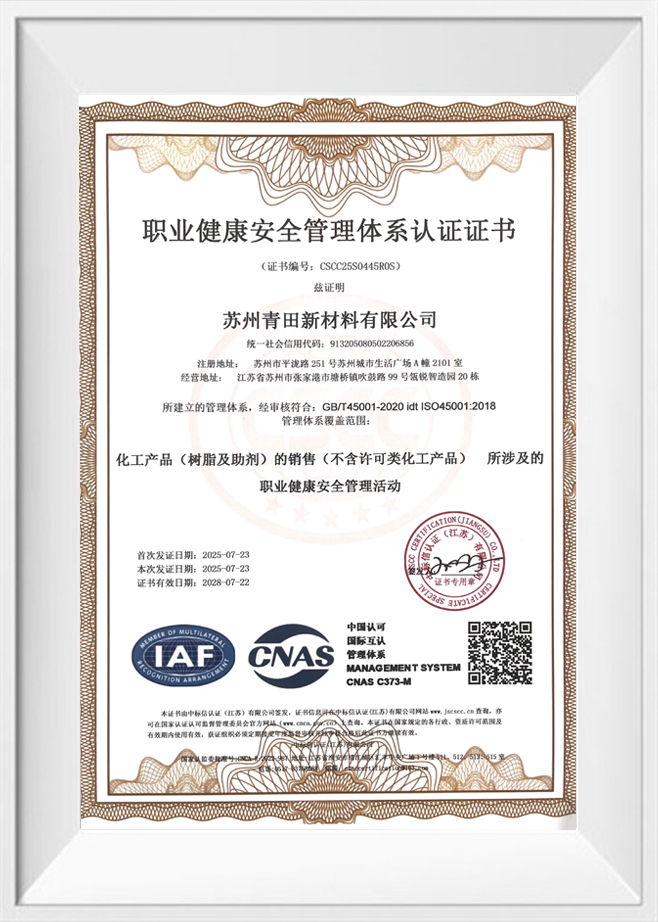
Taking Suzhou Qingtian New Material Co., Ltd. as an example, the company focuses on raw materials for coatings, inks, and adhesives. Through years of dedicated work, it has established a mature R&D team, a professional sales system, and modern production facilities, equipped with advanced testing equipment and cutting-edge technical talent. Its product portfolio encompasses a wide range of functional additives, including dispersants, leveling agents, defoamers, adhesion promoters, anti-settling agents, cooling agents, conductive agents, orange peel agents, texture powders, and wax powders.
In applications such as steel and aluminum coil coatings, plastic coatings, UV curing systems, anti-corrosion coatings, wood coatings, glass coatings, epoxy flooring, printing inks, power batteries, and photovoltaic modules, the cooling agent creates a synergistic effect with other functional additives. For example, in UV curing or power battery coatings, rapid reactions are accompanied by significant heat release. By optimizing the formulation of the cooling agent, temperature peaks can be effectively controlled, preventing film cracking or interface failure. In the photovoltaic and heavy-duty anti-corrosion fields, thick-film construction demands higher requirements for thermal uniformity, and internal thermal management directly affects long-term weather resistance.
Leveraging its comprehensive product portfolio and technical support capabilities, the company can provide integrated solutions, synergistically designing the cooling agent with dispersing, leveling, and anti-settling systems to achieve more stable film formation and higher production efficiency.
Therefore, the development of cooling agents is no longer just a matter of optimizing material properties, but also an integral part of formulation systems engineering. In the future, with advancements in smart materials and efficient thermal conductivity technologies, their strategic position in the high-end coating market will be further enhanced.
 Wholesale Cooling Agent Manufacturers