русский
 Español
 Français
Industry News
Waterborne Coatings · Adhesives · Thickener · DH-7216S
Waterborne coating viscosity adjustment looks like a simple "thickening" problem — but in actual formulation development, two opposite requirements are frequently encountered simultaneously. At rest, the coating needs a certain viscosity to reduce settling during storage and film flow after application. During stirring, pumping, brushing, or spraying, the material needs to flow freely and spread. Simply raising the overall formulation viscosity may improve the static state but makes the coating feel draggy during application, affecting spreading and film appearance. Therefore, waterborne coating thickening cannot focus on a single viscosity value — the material's behaviour change across different shear states must also be observed.
Four Common Problems in Waterborne Thickening
1
Static Viscosity Fine — Application Feels Too Thick
If the thickener primarily brings overall viscosity increase with little differentiation between static and dynamic state, high viscosity at rest translates directly into high resistance during brushing or spraying — making application laborious and spreading poor.
2
Flows Well During Application — Sags After Stopping
After application shear, the material temporarily becomes more fluid. If the system structure does not re-build sufficiently quickly after shear stops, the film on a vertical surface may continue flowing under gravity — producing sagging and runs.
3
Thickener Addition Affects Pigment Dispersion
After the thickener changes the internal structure of the system, it may also affect the flow environment around pigment particles. Initial viscosity is not the only relevant indicator — changes to pigment wetting, dispersion, and storage state after addition also need to be observed.
4
Same Addition Level — Viscosity Varies with Temperature
Associative thickeners are temperature-sensitive. As temperature changes, the association state between molecules may also change — so the viscosity in low-temperature and high-temperature conditions will not be identical. If the product needs to undergo seasonal temperature variation or different storage environments, temperature change should also be incorporated into formulation testing.
Why Thickener Selection Requires Looking at Shear State
From resting in the container to final application, waterborne coating goes through multiple different states: storage → stirring → transfer → spraying/brushing → film leveling → film formation at rest. Each stage experiences different shear. The ideal rheological state is not to keep the coating at high viscosity throughout — but to make it exhibit relatively matched flow characteristics at each stage.
At low shear (resting), maintaining a certain structure helps storage stability and the film state after application. Under shear (stirring, spraying), viscosity decreases to support coating flow and spreading. When shear stops, gradual structure re-formation helps the film maintain a certain thickness. This is the meaningful difference between a pseudoplastic thickener and simply raising static viscosity.
DH-7216S: Polyurethane Associative Thickener
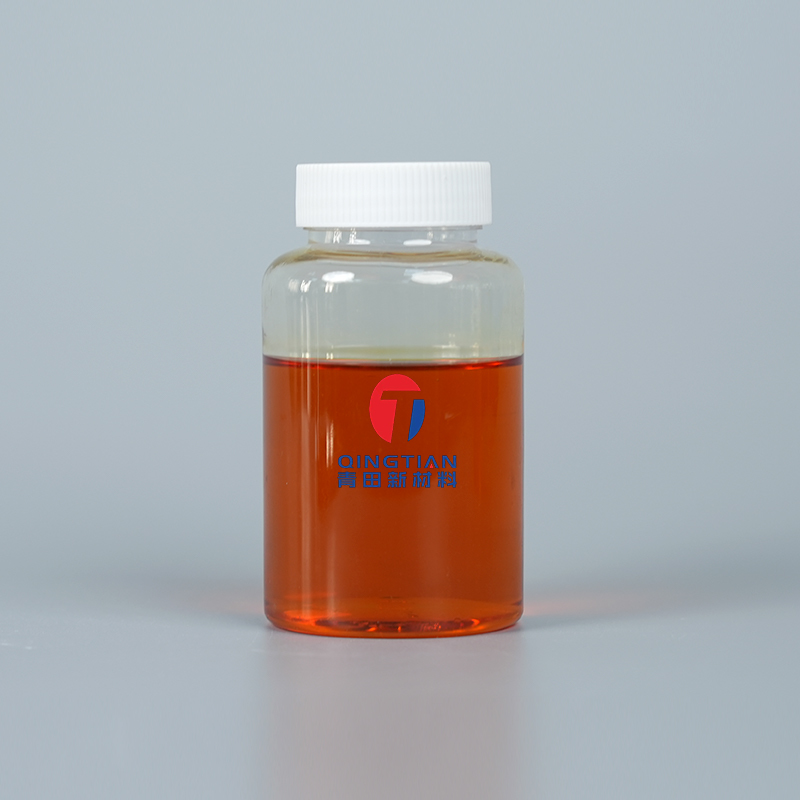
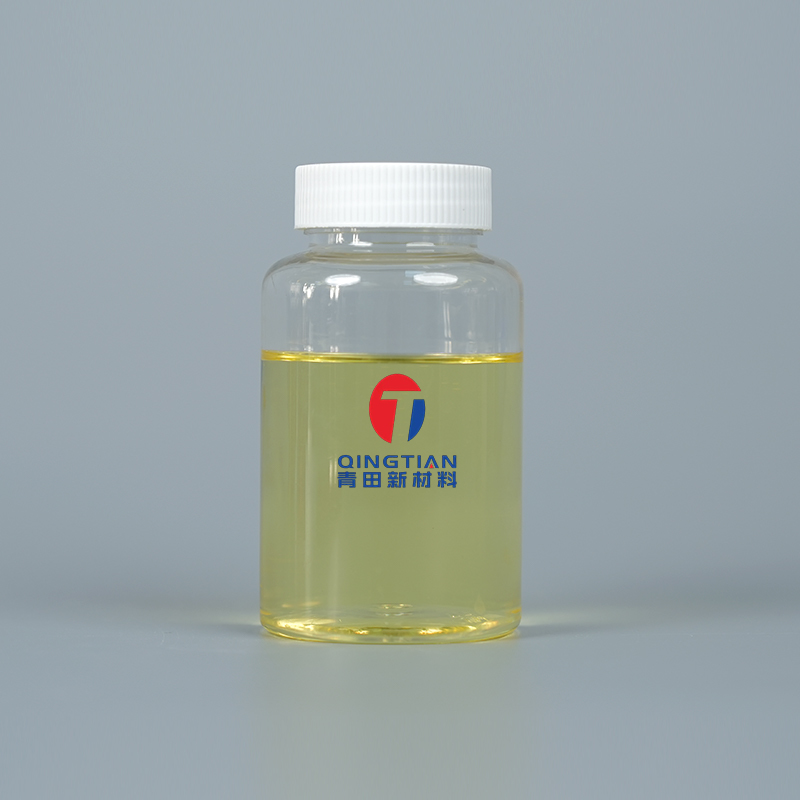
DH-7216S is a polyurethane associative waterborne thickener with high viscosity at low shear and pronounced pseudoplasticity. In waterborne coatings and adhesives, this rheological characteristic can be used to adjust formulation application state and static state simultaneously. The product is non-ionic, meaning its applicable range is not easily affected by formulation pH changes, and it has no significant effect on film gloss.
DH-7216S also has a certain pigment wetting and dispersion assisting effect — so when adjusting viscosity, changes to the colour paste or pigment system can also be observed simultaneously. In use, it can be added directly to the coating with stirring, or pre-diluted with 3–5 times water before addition. Recommended addition: 0.5%–1% of total formulation.
Recommended Evaluation Indicators
Low-shear viscosity
Flow state during stirring and application
Film spreading after brushing or spraying
Film sagging state
Pigment wetting and dispersion
Viscosity change before and after storage
Final film gloss and surface state
Observing these indicators together — rather than measuring viscosity at a single point — makes it easier to judge whether the thickener is well matched to the formulation.
Temperature and Storage Considerations
DH-7216S is an associative thickener, so temperature affects its viscosity. Typically viscosity is higher at low temperature and decreases somewhat at high temperature. The product may also crystallise at lower storage temperatures. If crystallisation is observed during storage, warming is needed to re-melt the crystallised portion before use — this crystalline state does not change the product's performance. In actual production and storage, in addition to addition level, the effects of transport, warehousing, and seasonal temperature change on material state also need to be considered.
Waterborne coating thickening is not simply raising viscosity. For formulations that need to balance storage state, application flow, and film performance simultaneously, the more important consideration is the material's rheological change across different shear conditions. DH-7216S can adjust system state through associative structure, giving the coating different viscosity characteristics at low shear and under application shear. Gradient testing combined with the specific resin, pigment, filler, and application method is recommended to confirm the appropriate addition level. Temperature effects on product viscosity and storage state should also be considered.
Frequently Asked Questions
Why does a HEUR (polyurethane associative) thickener provide better sag resistance than a purely viscosity-building thickener at the same application viscosity?
HEUR thickeners build viscosity primarily through reversible hydrophobic associations that form a network structure in the aqueous phase. After shear is applied (during spraying or brushing), this network is disrupted, lowering viscosity for easy application. When shear stops, the network re-forms, creating a low-shear yield stress that resists film flow under gravity — this is the anti-sag mechanism. A purely viscosity-building thickener (such as HEC) does not form this reversible network, so its low-shear viscosity and high-shear viscosity are more similar — providing less differentiation between the application state and the anti-sag state.
Can DH-7216S be combined with HEC or ASE/HASE thickeners in the same formulation?
Yes — combining thickener types is standard practice for building a full rheological profile. DH-7216S provides high-shear viscosity and flow, which HEUR types are effective at. HEC provides mid-shear thickening; ASE/HASE types provide low-shear structure and sag resistance but are pH-dependent. The combination ratio should be developed through formulation testing targeting the specific viscosity profile at each shear rate relevant to the application — storage, pump transfer, spray, and film formation.