русский
 Español
 Français
Industry News
Electrostatic spraying
Film performance depends on the spray equipment and application parameters, and also on the conductivity of the coating itself.
When coating resistance does not match what electrostatic spraying requires, workpiece coverage and film thickness uniformity may suffer. Adjusting the conductivity of the formulation and testing it on real workpieces under real application conditions helps improve spraying results.
1
Introduction
Electrostatic spraying uses an electric field to deposit charged coating on the workpiece surface. It is commonly used for metal products, industrial equipment and other items that need spray processing.
In practice, even when the equipment runs normally, differences in the coating's own conductivity can change the result: some areas of the workpiece get too little paint, edges and recessed areas are covered poorly, or film thickness differs from place to place.
When this happens, besides checking gun settings, workpiece grounding and spraying distance, you can also analyse coating resistance and the conductivity of the formulation.
2
Coating conductivity and electrostatic deposition
Electrostatic spraying needs a coating whose electrical properties suit the equipment and the process. If coating resistance does not match the spraying conditions, the deposition of the charged coating may be affected.
So when adjusting a formulation, do not look only at viscosity, levelling or hiding. Also consider whether the coating meets the conductivity requirements of electrostatic spraying.
3
Coverage can differ across the workpiece
Workpiece shape, grounding condition, electric field distribution and spraying parameters all affect how the coating deposits on the surface.
If the conductivity of the coating is unsuitable, coverage may suffer even when other application conditions have not visibly changed. However, uneven film thickness is not always caused by coating resistance. Workpiece structure, equipment condition and application parameters still need to be judged together.
4
Adjusting conductivity while protecting the film
A conductive agent is added to make the coating's electrical properties better suited to the target spraying process. At the same time, watch the paint film appearance, adhesion and other application properties, and avoid judging a formulation by the resistance value alone.
5
What a conductive agent does in formulation work
For solvent-borne coatings, a conductive agent can adjust the resistance behaviour of the system so that it fits the requirements of electrostatic spraying.
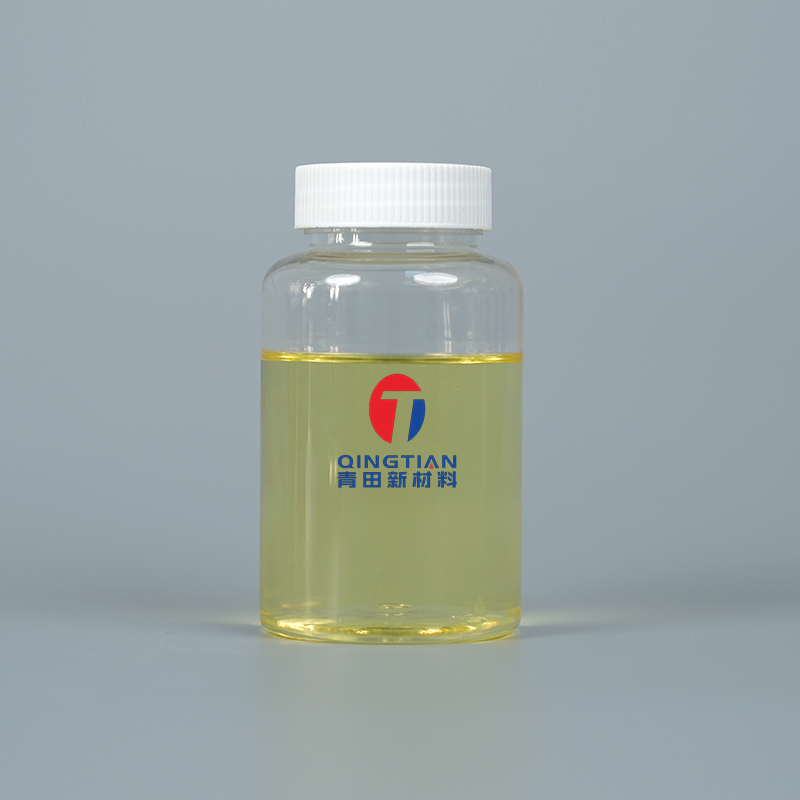
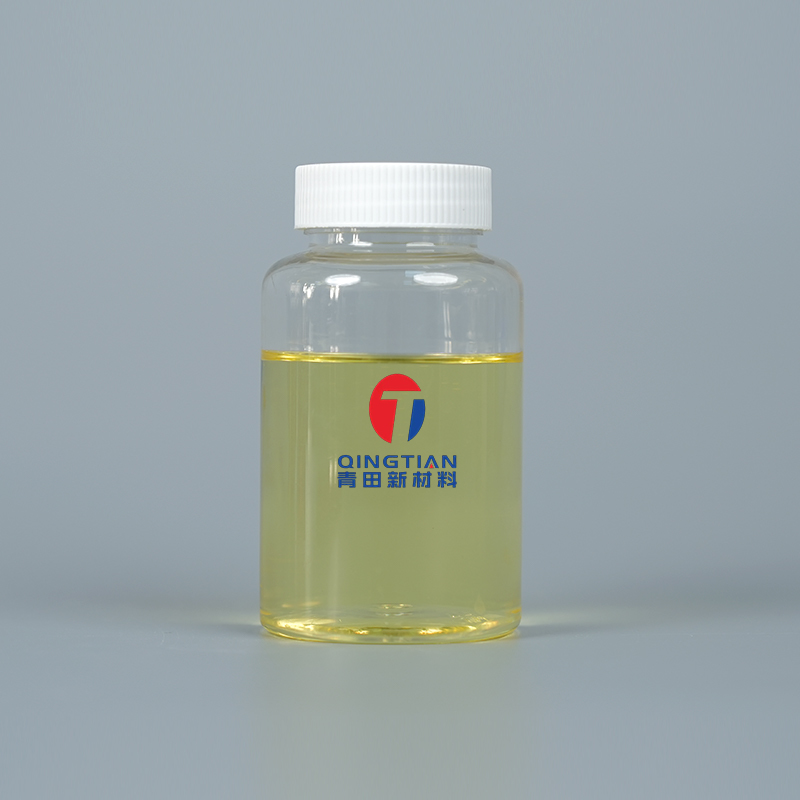
ES-80 is a conductive agent for solvent-borne coatings. According to the product data, its main role is to lower coating resistance, improve conductive behaviour during electrostatic coating, and help the coating cover the object so that film thickness is distributed more evenly.
The effect depends on the resin, the solvent and the other formulation components. Initial resistance and target process differ between coatings, so the addition level should be set by small-scale trials rather than by copying a fixed figure.
6
ES-80 features and use
Appearance Yellow-brown liquid
Solid content 100%
Specific gravity 0.95 g/cm³
Reference addition 0.2%–2% of total formulation
It can be used in all kinds of solvent-borne coating systems and is mainly intended for conductivity adjustment during electrostatic spraying. According to the product data, it has no obvious effect on film properties in suitable formulations.
It can be added at different stages of production, and the data suggests diluting it with isobutanol first. Make sure it is mixed thoroughly, and decide the exact method according to the product system and production process.
Use a gradient addition method for testing: record coating resistance before and after adding, and under the same equipment and application conditions compare spray coverage, film thickness distribution and film appearance.
7
Other factors to keep in view
A conductive agent cannot replace checking the electrostatic equipment and process. If the workpiece is poorly grounded, the gun parameters are unsuitable, or the workpiece has areas that are hard to cover, adjusting coating resistance may not solve every problem.
Combine coating resistance tests with real spraying evaluation. If resistance has changed after adjusting the conductive agent but film thickness uniformity is still unsatisfactory, check spraying parameters, workpiece grounding and electric field distribution further.
Frequently Asked Questions
Does coating resistance alone decide spraying performance?
No. The final result is decided jointly by coating properties, equipment condition and application conditions. Resistance is worth watching but cannot be the only basis for judging spraying results.
What is the reference addition level of ES-80?
0.2%–2% of the total formulation. The actual ratio should be set through small-scale trials rather than a fixed number.
How should the conductive agent be tested?
Use gradient addition, record resistance before and after, and compare coverage, film thickness distribution and film appearance under the same equipment and conditions.
What if resistance has changed but film thickness is still uneven?
Check spraying parameters, workpiece grounding and electric field distribution, because a conductive agent does not replace checking the equipment and process.
Summary
The final result of electrostatic spraying is decided jointly by coating properties, equipment condition and application conditions. Coating resistance is worth attention in formulation evaluation, but it cannot be the sole basis for judging spraying results.
ES-80 conductive agent can be used to adjust the conductivity of all kinds of solvent-borne coatings, with a reference addition of 0.2%–2% of the total formulation. In practice, run gradient tests against the target resistance, the spraying process and the paint film performance to find the ratio that suits your formulation.